



By Pat Trevino | 10/15/2026
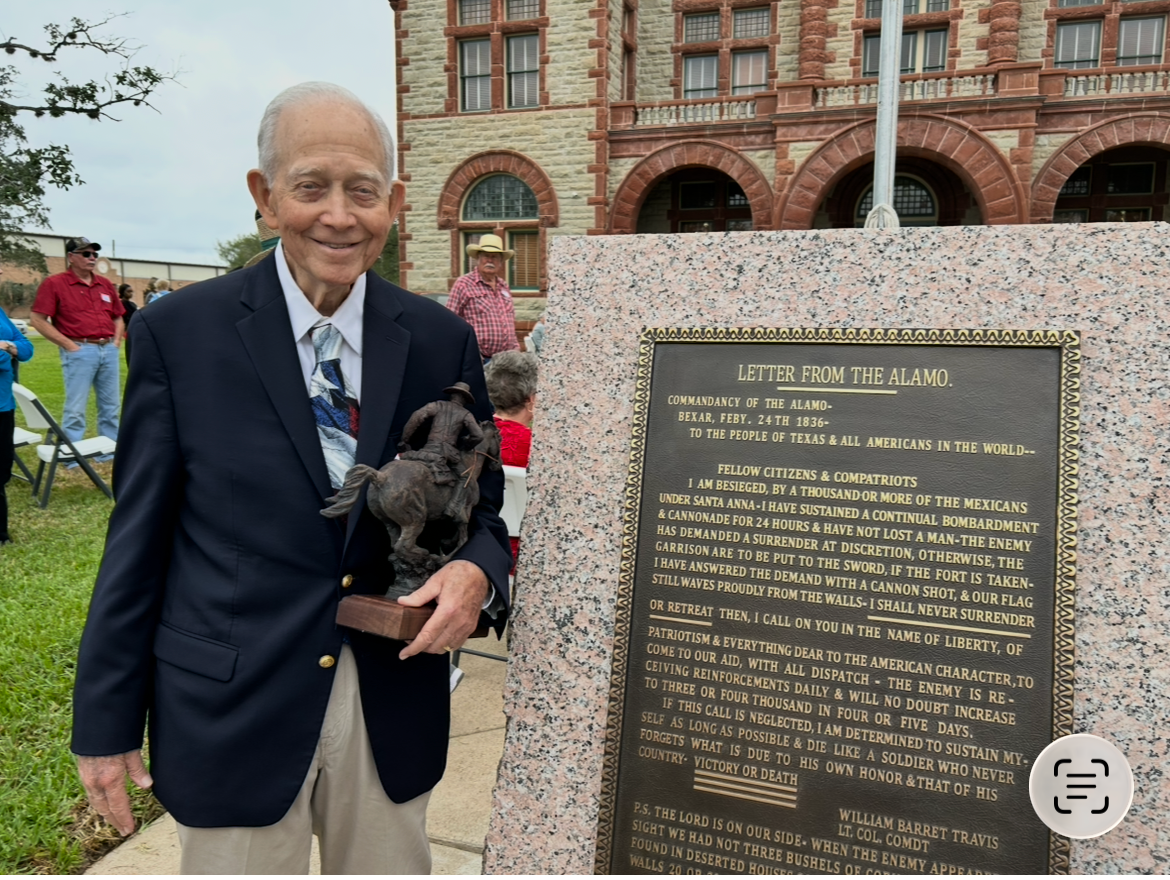
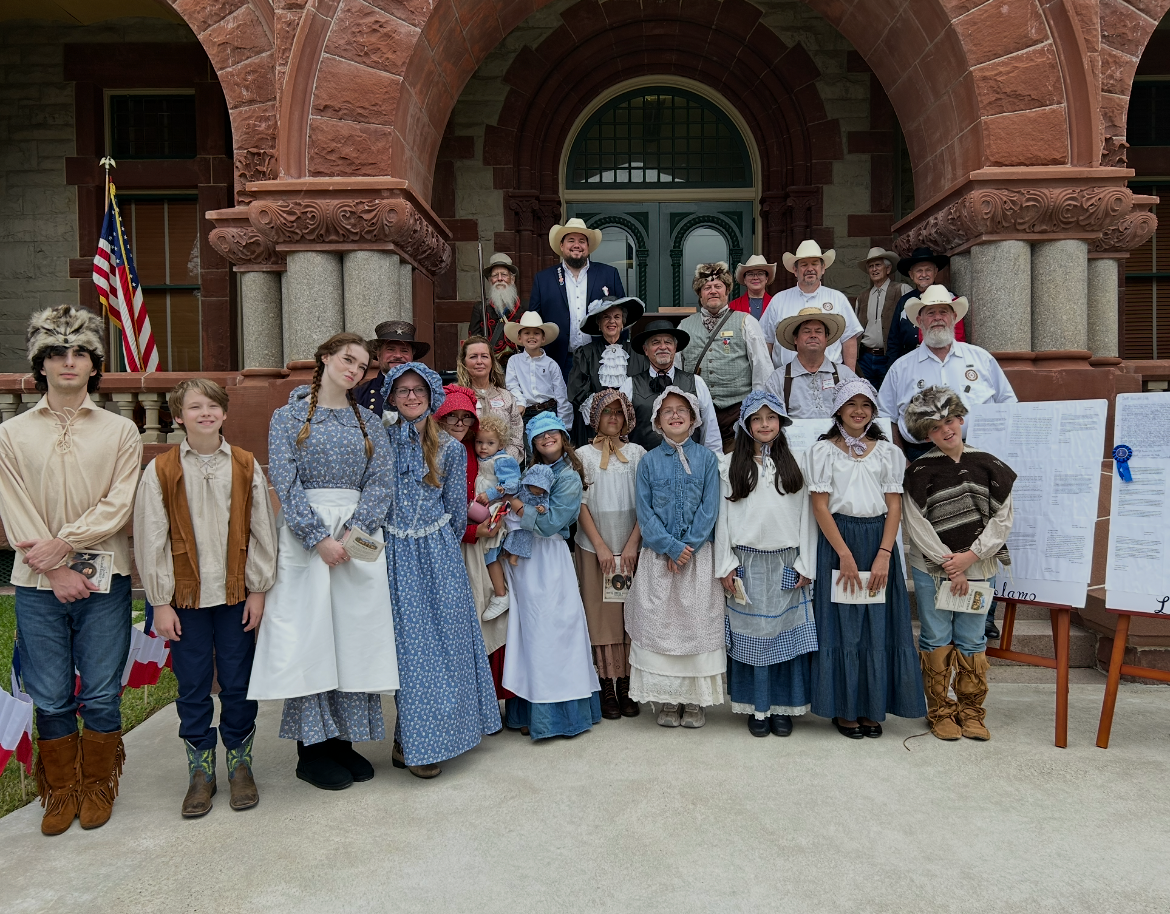
CUERO, Texas — Under unexpectedly mild skies, DeWitt County hosted a historic dedication ceremony Sunday, Oct. 4, unveiling a bronze replica of Col. William Barret Travis’ 1836 “Victory or Death” letter. The event, held at 2 p.m. on the front lawn of the DeWitt County Courthouse, marked a rare collaboration between the Alamo Letter Society and the DeWitt County Historical Commission, drawing descendants, veterans, students, and local residents.
The ceremony mirrors similar events held across Texas in recent years, as counties work to install permanent plaques honoring Travis’ urgent appeal for reinforcements during the siege of the Alamo. These dedications emphasize the letter’s enduring role as one of the most iconic documents of the Texas Revolution.
POLITICAL ADVERTISEMENT

DeWitt County Judge Daryl Fowler opened the program, stepping to the podium in a distinctly Texan look — a black cowboy hat and a Texas‑themed shirt — a noticeable departure from the traditional suit Cuero residents are accustomed to seeing him in. His attire set the tone for a ceremony rooted deeply in Texas heritage.
After welcoming the crowd, Fowler introduced Peggy Ledbetter, president of the DeWitt County Historical Commission. Ledbetter, dressed in a colonial‑era gown reminiscent of the Texas Revolution period, guided the audience through the printed program and introduced each participant. Her introductions connected modern DeWitt County residents to the descendants of Alamo defenders, veterans, and students who contributed to the day’s events.
She recognized descendants of David Crockett, Gregorio Esparza, and Captain Albert Martin, along with representatives from the Sons of the Republic of Texas and veterans participating in ceremonial roles. Similar descendant presentations have been featured at other Travis Letter dedications statewide, underscoring the living legacy of the Alamo and the families who continue to preserve its history.
Tejano Heritage Highlighted
One of the speakers, George Benavides, addressed the audience as a descendant of José Gregorio Esparza, the only Alamo defender permitted to bring his family into the compound. Esparza’s wife, Ana Salazar, and their four children entered the Alamo on February 23, 1836, and survived the battle. Benavides explained that Esparza is his fourth‑great‑grandfather, offering a personal connection to the Tejano role in the Texas Revolution.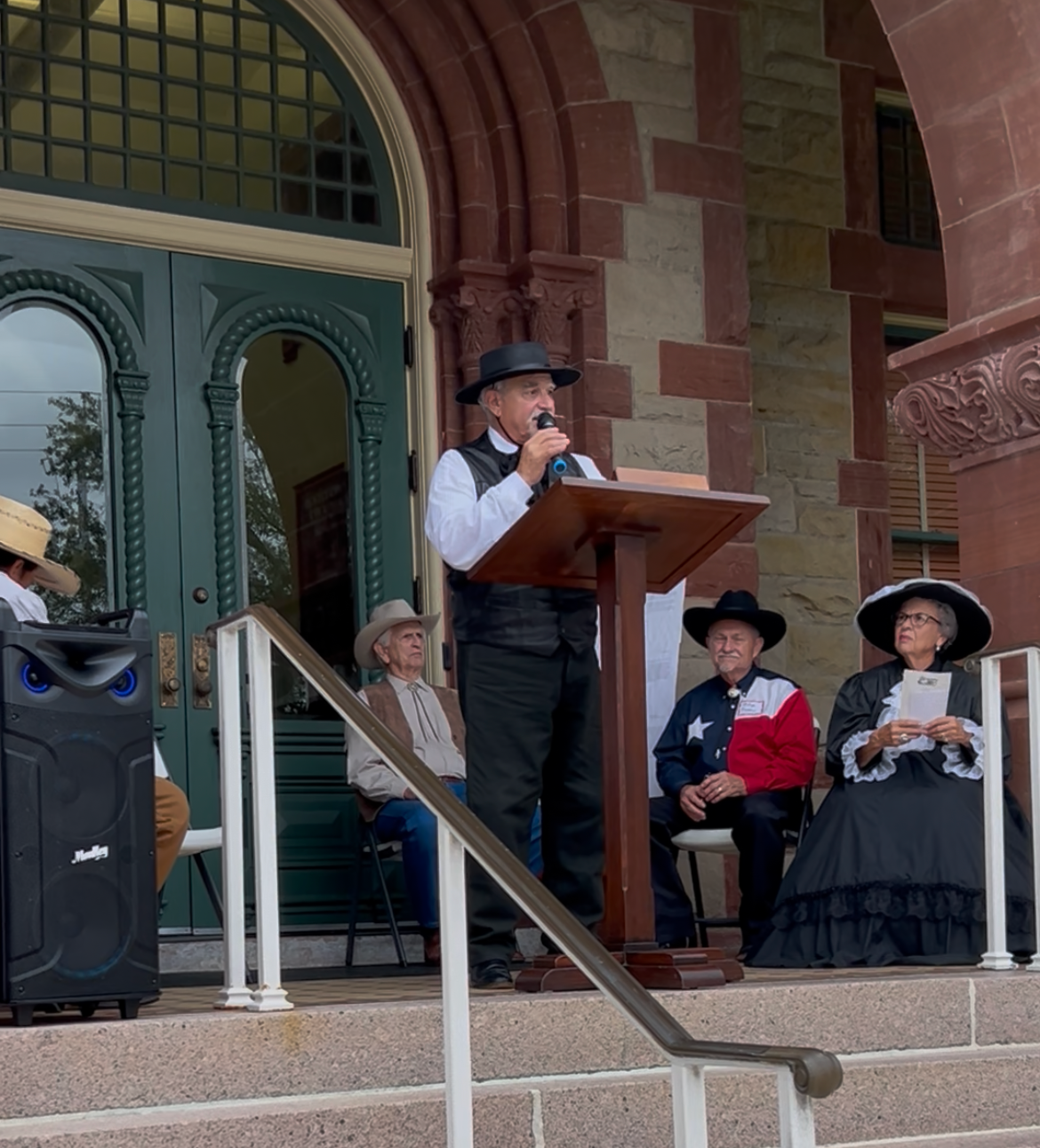
Benavides also spoke about the broader Tejano presence at the Alamo, noting that Esparza fought alongside other Tejano defenders such as Juan Abamillo, Juan Antonio Badillo, Carlos Espalier, José María Guerrero, Toribio Losoya, Andrés Nava, and Juan A. Toribio. He mentioned the Jiménez family, including María de Jesús Jiménez, mother of defender Toribio Losoya, whose family lived near the Alamo during the siege.
He further highlighted the contributions of Captain Juan Seguín, the highest‑ranking Tejano officer in the Texas Revolution. Seguín fought with Travis and Bowie during the siege and was sent out as a courier shortly before the final assault, which allowed him to survive. After the battle, Seguín returned to San Antonio to lead the burial detail for the Alamo defenders — including Esparza and the other Tejanos who died inside the compound.
The Recovery and Burial of Gregorio Esparza
After the battle, Esparza’s brother Francisco Esparza, who served in Santa Anna’s presidial company, approached the Mexican commander and requested permission to retrieve Gregorio’s body. Santa Anna granted the request, allowing the Esparza brothers to enter the ruined compound while the ashes of the battle were still settling.
Francisco and two of his brothers searched through the debris of the Alamo until they located Gregorio’s body near one of the cannons. They carried him out of the compound themselves, refusing to leave him among the dead who would soon be burned. Because of Santa Anna’s permission and the persistence of his family, Gregorio Esparza became the only Alamo defender to receive a Christian burial.
The Esparza brothers took Gregorio to Campo Santo Cemetery, on the west side of San Pedro Creek — the area now known as Milam Park.
In 1907, Gregorio’s oldest son Enrique Esparza, who was eight years old during the battle and witnessed his father’s death, was interviewed by a reporter for the San Antonio Express. He said:
“All the others are dead. I alone live of they who were within the Alamo when it fell. There is none other left now to tell its story, and when I go to sleep my last slumber in the Campo de los Santos, there will then be no one left to tell.”
He continued:
“You ask me do I remember it, I tell you, yes. It is burned into my brain and indelibly seared there. Neither age nor infirmity could make me forget, for the scene was one of such horror that it could never be forgotten.”
Benavides’ remarks underscored the historical fact that Tejanos were present, active, and essential in the fight for Texas independence, even though their contributions are often overlooked in modern discussions.
Crockett Descendant Participates
Errol Flannery, the fourth‑great‑grandson of Alamo defender Davy Crockett, also participated in the ceremony. Flannery is known statewide for traveling to Travis Letter dedications, where he often reads the historic “Victory or Death” message. His presence in DeWitt County connected the modern ceremony to one of the most recognized families of the Texas Revolution.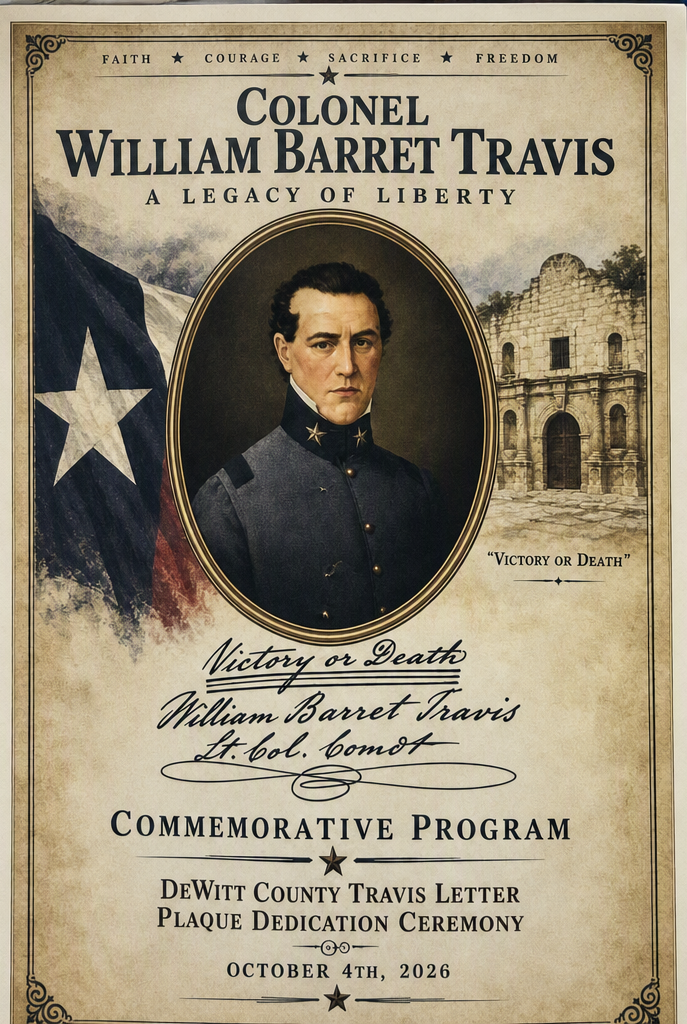
Heritage Section: The Travis Letter
In the early morning hours of February 24, 1836, with the Alamo surrounded and the outcome all but certain, Lt. Col. William Barret Travis wrote the message that would become the most iconic document of the Texas Revolution. Addressed “To the People of Texas & All Americans in the World,” the letter served both as a plea for reinforcements and a declaration of unwavering resolve. Travis described the overwhelming Mexican forces under Santa Anna, the constant bombardment, and the defenders’ determination to hold their position despite impossible odds.
Couriers carried the letter out of the Alamo at great personal risk, spreading Travis’ words across settlements, military camps, and newspapers. The message quickly became a rallying cry, shaping public understanding of the siege and inspiring volunteers to join the fight. Over time, the letter came to symbolize the spirit of sacrifice that defined the Texas Revolution — not only for the Anglo volunteers who fought there, but also for the Tejanos whose families and futures were bound to the same struggle.
Travis ended his message with the words that would echo across generations: “Victory or Death.” The phrase was not bravado, but a stark acknowledgment of reality. The defenders knew reinforcements might never arrive. They knew the Alamo could not be held. Yet they remained, choosing to stand together in a moment that would become central to Texas identity.
What many do not realize is that Travis was only 26 years old when he wrote the letter — a young officer facing overwhelming forces, responsible for the lives of the men beside him, and fully aware of the cost of his decision.
Today, the Travis letter is recognized as a heritage document — a piece of Texas history that belongs to all Texans, regardless of background. Its placement in counties across the state, including DeWitt County, reflects a statewide effort to ensure future generations understand not only the battle itself, but the courage, desperation, and determination captured in Travis’ words.
Student Essay Winners Recognized
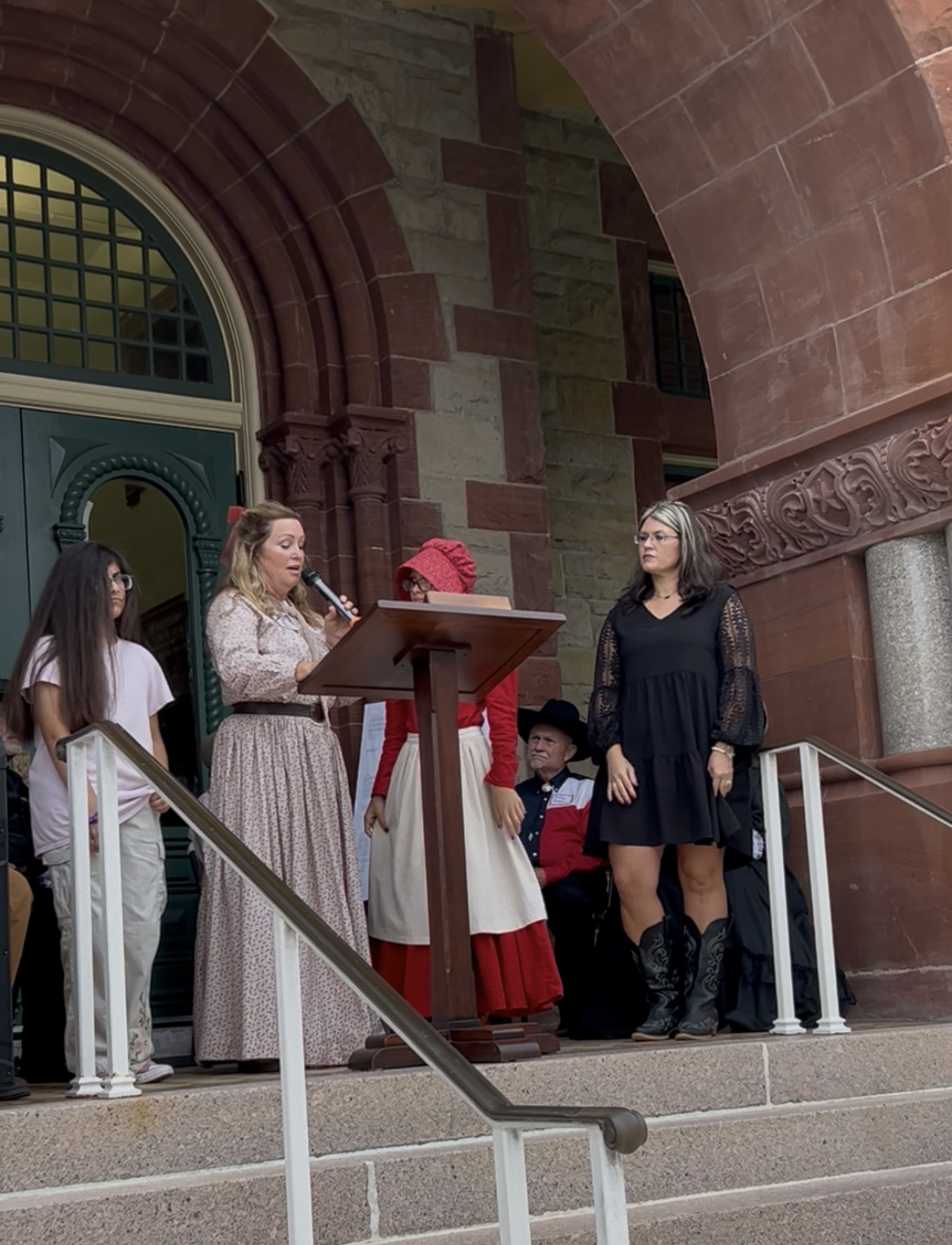
Brenda Lord introduced the student winner of the Letters From the Alamo essay contest, highlighting the educational component of the ceremony and the effort to connect younger generations to Texas history. Yoakum ISD Texas History teacher Jennifer Chumchal guided her seventh‑grade class through the project, resulting in 72 entries. Madelyn Rosas earned first place.
Statewide Effort
The DeWitt County dedication joins a growing list of Texas counties installing permanent plaques honoring Travis’ letter. Across the state, similar ceremonies have drawn crowds, descendants, historians, and veterans, all emphasizing the letter’s role as a symbol of courage and sacrifice.
The Alamo Letter Society has stated its long‑term goal of placing a Travis Letter plaque in all 254 Texas counties — a statewide effort already underway in places such as Kendall County, Taylor County, and others.
POLITICAL ADVERTISEMENT