




By Pat Trevino | June 9, 2026
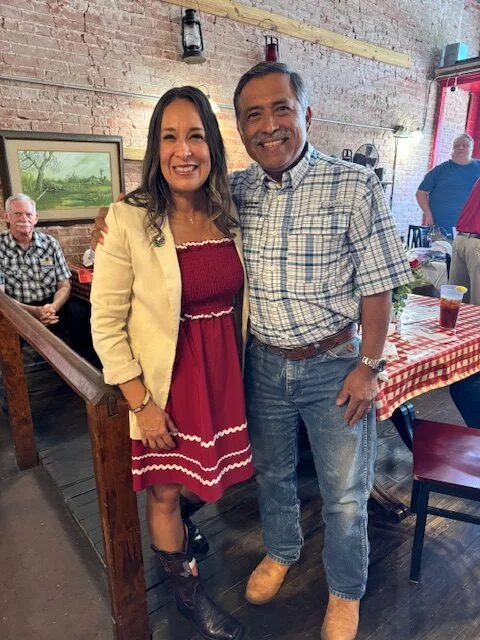
Cuero, Texas — Congresswoman Monica De La Cruz, who represents Texas’ 15th Congressional District, made a campaign stop in Cuero on Friday, May 29, meeting residents at the Bahnhof Café during a casual meet‑and‑greet sponsored by the local Republican Party. While the event did not include formal remarks, her visit comes as her voting record on border enforcement, detention, and federal surveillance systems is drawing increased attention — particularly because of the financial impact these policies may have on Texans — as she faces Democratic challenger Bobby Pulido in the November 2026 election.
De La Cruz has consistently supported legislation that expands mandatory detention for asylum seekers, requiring most individuals who request asylum to remain in federal custody until their cases are resolved. For Texas taxpayers, the cost difference between detention and community‑based alternatives is significant. Housing a single person in an ICE detention facility typically costs between $150 and $200 per day, and family detention can run even higher. By contrast, allowing asylum seekers to stay with relatives or sponsors — the current practice for many — costs the government under $10 per day, largely for check‑ins and case management. The shift toward mandatory detention therefore represents a dramatic increase in federal spending, much of which flows into Texas‑based facilities and contracts. For rural counties like DeWitt, this means more federal dollars spent on detention infrastructure, more pressure on local services, and a higher overall cost to taxpayers.
The congresswoman has also supported legislation expanding the use of expedited removal, a process that allows the government to deport individuals more quickly and with fewer procedural protections. These measures would extend expedited removal to more regions of the United States and reduce early access to legal counsel. While supporters argue that this speeds up the immigration system, critics note that faster removals can increase the risk of errors and wrongful deportations, which can have long‑term consequences for families and communities. For Texans, the financial impact comes through the increased need for detention space, transportation, and processing — all of which are funded by taxpayer dollars.
Another major area of De La Cruz’s voting record involves the expansion of biometric and data‑tracking systems, which significantly increase the federal government’s ability to monitor, track, and store information about people. The legislation she has supported broadens the use of fingerprinting, facial‑recognition technology, continuous vetting databases, and large‑scale information‑sharing between the Department of Homeland Security, the FBI, and local law enforcement agencies. These systems require substantial investment in hardware, software, data storage, and ongoing maintenance. The cost of these technologies is high, and the money flows directly to major defense and surveillance contractors that hold federal contracts.
Companies such as Raytheon, Northrop Grumman, Palantir, Anduril, and IDEMIA have long been involved in supplying biometric and surveillance tools to federal agencies. Their revenues increase as Congress authorizes more surveillance infrastructure. Supporters of these systems argue that they modernize law enforcement and improve national security. Civil‑liberties groups counter that they expand government surveillance powers in ways that raise concerns about privacy, data retention, and misidentification — issues that can affect both migrants and U.S. citizens. Regardless of perspective, the financial reality remains: these systems require continuous taxpayer funding, and the costs grow as the technology expands.
For Texans, the combined effect of these policies is substantial. Mandatory detention increases federal spending dramatically compared to community‑based alternatives. Expanded expedited removal requires more detention capacity and transportation resources. And the growth of biometric surveillance systems channels billions of federal dollars into private technology and defense companies. These are not abstract policy debates; they shape how much taxpayers spend, how federal resources are allocated, and how much personal information the government collects and stores.
As De La Cruz continues her campaign and visits communities like Cuero, voters across South Texas are weighing not only her positions but also the financial implications of the policies she supports. With the 2026 election season gaining momentum, residents of DeWitt County can expect more opportunities to hear from candidates and examine how their decisions in Washington affect everyday life here at home.