



Pat Trevino | March 5, 2026
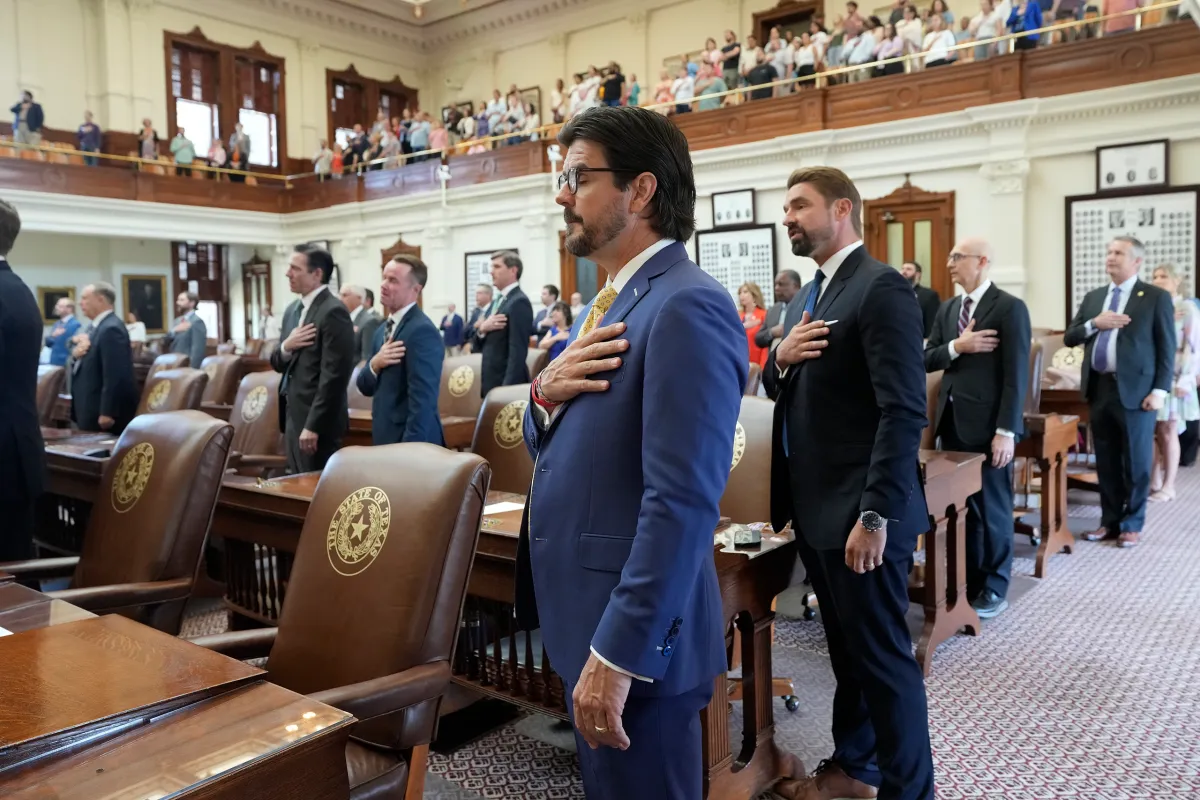
According to the Victoria Advocate on Wednesday, March 4, 2026, several Texas House Republicans responded to the Austin mass shooting by signing a letter calling for a nationwide “immigration pause.” Their message warned that “more Americans will be killed” if the nation does not tighten its borders. They are using this tragedy to urge lawmakers to fully fund Homeland Security and ICE. The rhetoric followed a familiar pattern: blame the border, blame visas, blame religion, and frame immigration as the central threat to public safety.
But the facts surrounding the Austin case — and the documented history of federal agency cuts — point in a very different direction.
Here we have A Suspect Who Followed the Legal Path
The alleged shooter, Ndiga Kiagne, did not enter the United States illegally. He arrived on a tourist visa, became a lawful permanent resident, married a U.S. citizen, and naturalized in 2013. By every standard used in political messaging, he is someone who “came here the right way.”
That reality raises a critical question: if the suspect was already a U.S. citizen, why is immigration being blamed at all?
The Overlooked Factor: The Gutting of Agencies that kept us safe from Domestic‑Threats
During the Trump administration, several federal offices responsible for tracking domestic extremism and preventing violence experienced significant cuts, reorganizations, or loss of personnel. These reductions occurred despite repeated warnings from federal intelligence agencies that domestic violent extremism—particularly the documented rise in white supremacist‑motivated attacks—posed one of the most serious threats to Americans. Analysts note that these findings were often politically contentious, and some Republican leaders dismissed or downplayed them. As a result, safeguards that once helped identify and monitor domestic threats were dismantled. Many specialists who had spent years developing expertise in extremist‑threat surveillance saw their units shut down, reassigned, or redirected toward immigration enforcement instead, leaving critical gaps in the nation’s domestic‑threat infrastructure.
These changes were widely reported at the time — and I raised concerns about them repeatedly in earlier coverage.
Documented impacts included:
- The FBI’s Domestic Terrorism Operations Section lost staff and key tracking tools used to tag and monitor domestic‑terror cases nationwide.
- The Department of Justice’s Domestic Terrorism Counsel was hollowed out; its senior counsel resigned, saying the office had been “effectively gutted.”
- DHS intelligence analysts who monitored extremist threats were reassigned, and their reporting was reduced.
- Community‑level prevention programs — which help schools, local governments, and law enforcement identify individuals on a path toward violence — lost funding or were redirected. These cuts weakened the very infrastructure designed to detect threats before they reached communities.
Analysts and former federal officials have also noted that, during the Trump administration, efforts were made to replace experienced career personnel with individuals viewed as politically loyal. According to multiple reports at the time, specialists with years of expertise in intelligence, threat assessment, and national‑security operations were pushed out, reassigned, or sidelined. In several agencies, long‑standing professional roles were filled by appointees who had little or no background in the work those offices traditionally performed. Critics argued that this shift weakened institutional knowledge, disrupted established security practices, and left key departments without the seasoned leadership needed to manage complex domestic‑threat environments
A Pattern Texans Have Seen Before
The instinct to shift blame away from federal failures is not new, except that this time Texas Republicans are also trying to distance themselves from their counterparts in Washington — despite having supported many of the same decisions that created today’s vacuum of expertise. Texans saw similar deflection after catastrophic flooding in Kerr County, when investigations showed that cuts to specialized staff and institutional knowledge contributed to critical safety lapses. The disasters still would have occurred, but the loss of trained personnel meant essential warnings and safeguards fell through the cracks. The pattern is repeating now: instead of acknowledging how weakened federal infrastructure left communities without the experts needed to identify emerging threats, the blame is being redirected toward immigrants who had no connection to the failure.
The same pattern is now emerging in the national conversation about the Austin shooting.
A Misplaced Blame Game
Blaming immigrants — particularly Mexican, Central American, or Muslim communities — distracts from the real issue: weakened domestic‑threat infrastructure.
You cannot cut analysts, eliminate tracking tools, reassign attorneys, reduce intelligence reports, cancel prevention programs, and then express shock when a threat slips through. And you cannot preach “come here the right way” while ignoring that the Austin suspect did exactly that.
What “Fully Funding DHS” Should Actually Mean
If lawmakers want to talk about strengthening homeland security, experts say the conversation must begin with rebuilding the agencies responsible for identifying and preventing domestic threats. That includes:
- Restoring the FBI’s domestic‑terror tracking tools
- Rebuilding the DOJ Domestic Terrorism Counsel
- Restaffing DHS intelligence units
- Reinstating community‑level prevention grants
- Strengthening threat‑assessment programs
These are the tools that actually protect Americans — not immigration pauses, not fear‑based rhetoric, and not scapegoating entire communities.
Texans Deserve Accuracy, Not Distraction
The Austin shooting has reignited a national debate, but the facts remain clear: the suspect was a naturalized U.S. citizen, and the agencies responsible for detecting threats were weakened long before this tragedy.
Public safety depends on honesty. Texans deserve a conversation grounded in facts, not political deflection. Rebuilding the nation’s domestic‑threat infrastructure — not blaming immigrants — is the path toward preventing future tragedies.