




Pat Trevino | December 31, 2025
On December 8, 2025, the Cuero City Council quietly approved a Memorandum of Agreement (MOA) with U.S. Immigration and Customs Enforcement (ICE) under the federal 287(g) program. With almost no discussion, no visible hesitation, and no meaningful public engagement, the council voted to give certain Cuero officers the authority to perform federal immigration‑enforcement duties under ICE supervision.
For a document that spans more than twenty pages and grants sweeping powers — including warrantless arrests, immigration questioning, detainer issuance, and the authority to transport individuals to ICE detention centers — the speed and silence of this approval should concern every resident of Cuero.
This was not a routine housekeeping item. This was a major shift in how policing will operate in our community.
And yet, the council moved through it as if it were nothing.
A Troubling National Record That Cannot Be Ignored
Across the country, ICE has been repeatedly criticized for wrongful detentions, civil‑rights violations, and the mistreatment of both immigrants and U.S. citizens. Investigations over the past decade have documented cases where:
- U.S. citizens were detained or deported because ICE failed to verify identity
- Lawful residents, including military veterans, were held for months without cause
- Individuals were taken into custody in ways that resembled abductions rather than lawful arrests
- Communities reported racial profiling and fear after local agencies entered 287(g) agreements
These are not fringe allegations. They are documented cases that have led to lawsuits, federal court orders, and national scrutiny.
When a city signs a 287(g) agreement, it is not simply “partnering with ICE.” It is stepping into a system with a long history of mistakes, abuses, and civil‑rights concerns.
Why Did Cuero Approve This Without Asking Hard Questions?
The December 8 council meeting offered no meaningful debate. No council member publicly questioned:
- the civil‑rights implications
- the financial liability
- the impact on community trust
- the national record of wrongful detentions
- the risks of racial profiling
- the complexity of the MOA’s legal obligations
Residents deserve to know:
How long did council members actually review this document before voting?
The MOA is dense, technical, and filled with legal obligations that will shape policing in Cuero for years. Yet the council approved it with no visible pause — as if the consequences were minor.
This is not transparency.
This is not accountability.
This is not how major policing decisions should be made.
What the MOA Actually Allows
Under this agreement, Cuero officers — once trained and certified by ICE — will have the authority to:
- question individuals about immigration status
- arrest without a warrant under certain conditions
- fingerprint, photograph, and interview individuals for immigration purposes
- prepare immigration charging documents
- issue ICE detainers
- transport individuals to ICE detention facilities
These are federal powers.
They are extraordinary powers.
And they come with extraordinary risks.
When mistakes happen — and nationally, they have happened often — it is the local community that pays the price.
Civil Rights Are Not Optional
The MOA states that officers must follow federal civil‑rights laws and provide interpreters for people with limited English proficiency. But history shows that civil‑rights violations often occur not because rules don’t exist, but because oversight fails.
When ICE has a documented pattern of:
- detaining citizens
- deporting lawful residents
- ignoring complaints
- mishandling investigations
…it is fair to ask whether Cuero is prepared to prevent the same mistakes.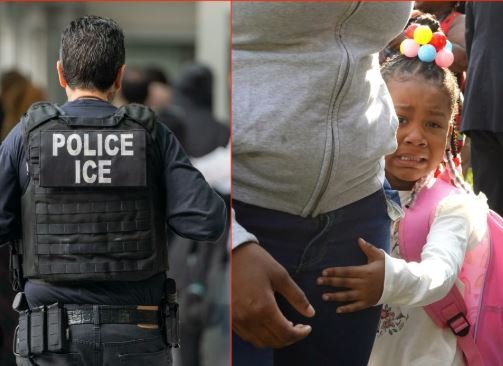
Community Trust Is on the Line
287(g) programs across the country have led to:
- decreased crime reporting
- fear among immigrant families
- reluctance to call 911
- strained relationships between police and residents
Cuero is a small town built on relationships, familiarity, and trust.
Inviting ICE into our policing structure threatens that foundation.
Cuero Deserves Answers — And Accountability
Before this program is implemented, the council owes the public a clear explanation:
- Why was this agreement approved so quickly?
- How thoroughly was it reviewed before the December 8 vote?
- What safeguards will protect residents from wrongful detention?
- How will the city prevent racial profiling?
- What oversight will ensure officers follow civil‑rights standards?
- Why was there no public forum before the vote?
These are not radical questions.
They are the bare minimum a community should expect when its leaders hand local officers federal arrest powers.
Editorial Position: Cuero Must Reconsider This Agreement
The council’s approval of the 287(g) MOA was rushed, quiet, and lacking the transparency such a consequential decision demands. Cuero residents deserve a full accounting of how this agreement was evaluated — and why no concerns were raised publicly.
This is not simply a policy decision.
It is a decision that will shape policing, civil rights, and community trust in Cuero for years to come.
The people of Cuero deserve a voice in that future.
Go to 3:15 to view discussion
https://www.facebook.com/reel/1239882888043962
Editorial Section: The Gap Between What’s Promised and What’s Possible
What makes the council’s December 8 approval even more troubling is what we didn’t see. Based on the meeting video, there was little to no discussion about the scope of the 287(g) agreement or the risks that come with it. Council members briefly referenced the idea that this program would help “locate or arrest serious criminals,” which is a goal every resident can support. But the MOA itself grants far broader powers than simply targeting violent offenders. It authorizes Cuero officers to question immigration status, arrest without a warrant, issue detainers, and transport individuals to ICE detention facilities — powers that extend far beyond the pursuit of dangerous criminals.
So the question becomes: How do we know these sweeping authorities will be used only for the serious offenders the council mentioned? The truth is, we don’t. The MOA does not limit enforcement to violent or high‑risk individuals. It does not restrict officers from using immigration authority during routine stops or low‑level encounters. And it does not require ICE or the LEA to publicly report who is being targeted, detained, or transferred. Without clear safeguards, oversight, or transparency, the promise of “going after serious criminals” becomes just that — a promise, not a guarantee.
If the council intends for this program to focus solely on dangerous individuals, then the public deserves to see that commitment written into policy, not left to interpretation. Sweeping authority without clear limits has led to civil‑rights violations in other communities. Cuero cannot afford to assume that “trust us” is enough.
You’re saying don’t trust the cops but do trust the illegals. Regarded like Tim
Daniel, your comment- “you’re saying don’t trust the cops but do you trust the illegals does not reflect anything written in my editorial.
The piece titled “Cuero approves 287(g) agreement- But at what cost to civil rights and community trust?” raised questions about policy implementation, and community impact. It did not tell anyone to distrust law enforcement, nor did it suggest placing trust in individuals who are in the country without legal status. That interpretation is not supported by what I wrote.
My editorial focused on:
How the 287 (g) agreement functions.
What oversight and safeguards exist
How the program affect civil rights
How it may influence, community, trust, and cooperation
These are standard public policy questions, not attacks on officers or endorsements of unlawful behavior.
Raising concerns about civil rights does not mean opposing law-enforcement. It’s important that you understand this. Supporting transparency and accountability does not mean signing with anyone who breaks the law. These issues are not mutually exclusive, And reducing them to a “trust cops versus trust illegals” Argument oversimplifies a much more complex discussion.
My goal when writing this editorial was to encourage informed dialogue about a significant policy decision— Not to undermine our officers or elevate any group over another. – Pat Trevino