



By Pat Treviño, | June 19, 2026
As Cuero prepares for another quiet Juneteenth — with city offices closed but no official observance planned — it is worth remembering that our community once celebrated this holiday with pageantry, unity, and a deep sense of purpose.
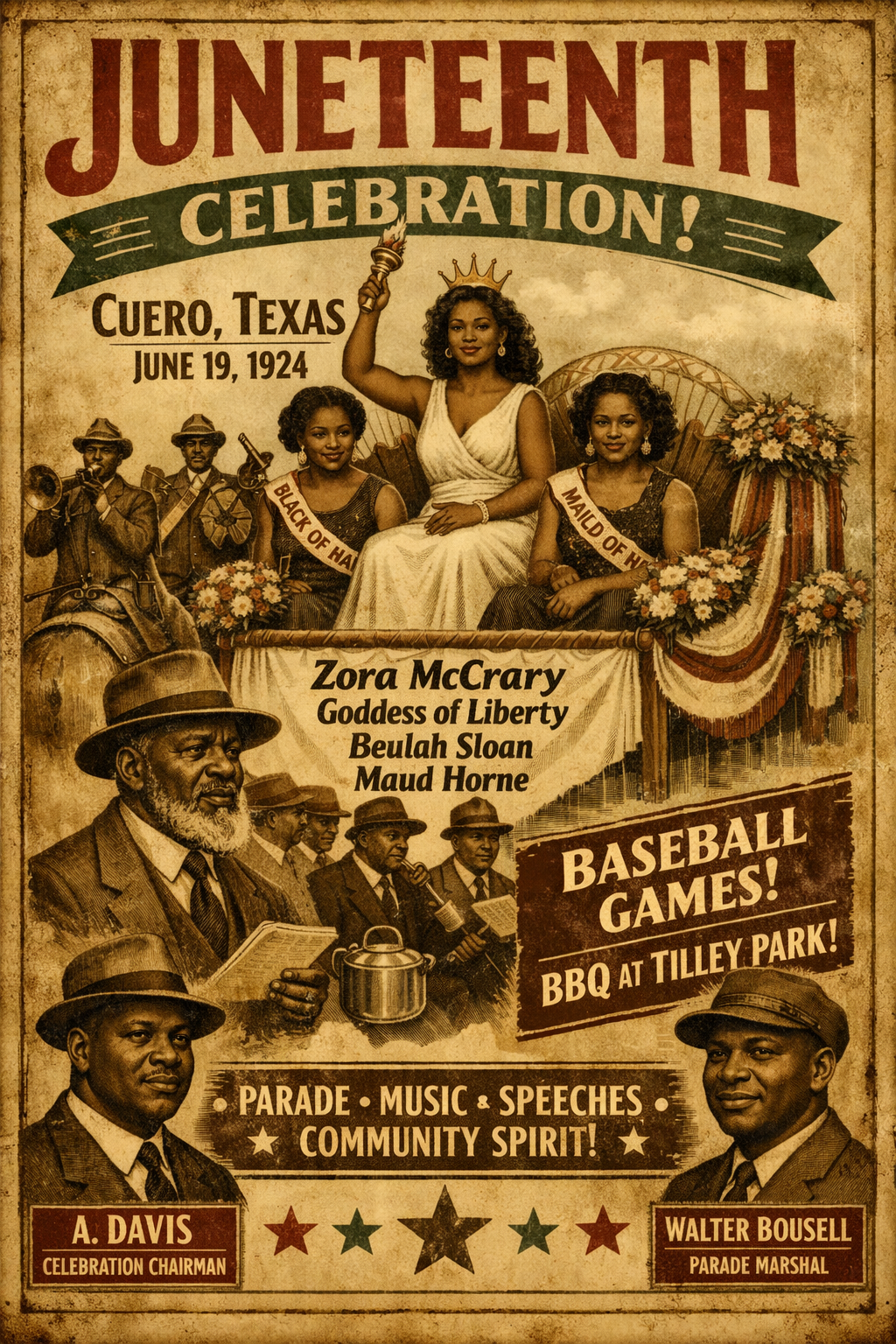
Nearly a century ago, on June 19, 1924, DeWitt County hosted one of its largest Juneteenth celebrations on record. The event drew families from across the county, filling the streets of Cuero with music, decorated floats, horseback riders, and the voices of people who had lived through slavery and emancipation themselves.
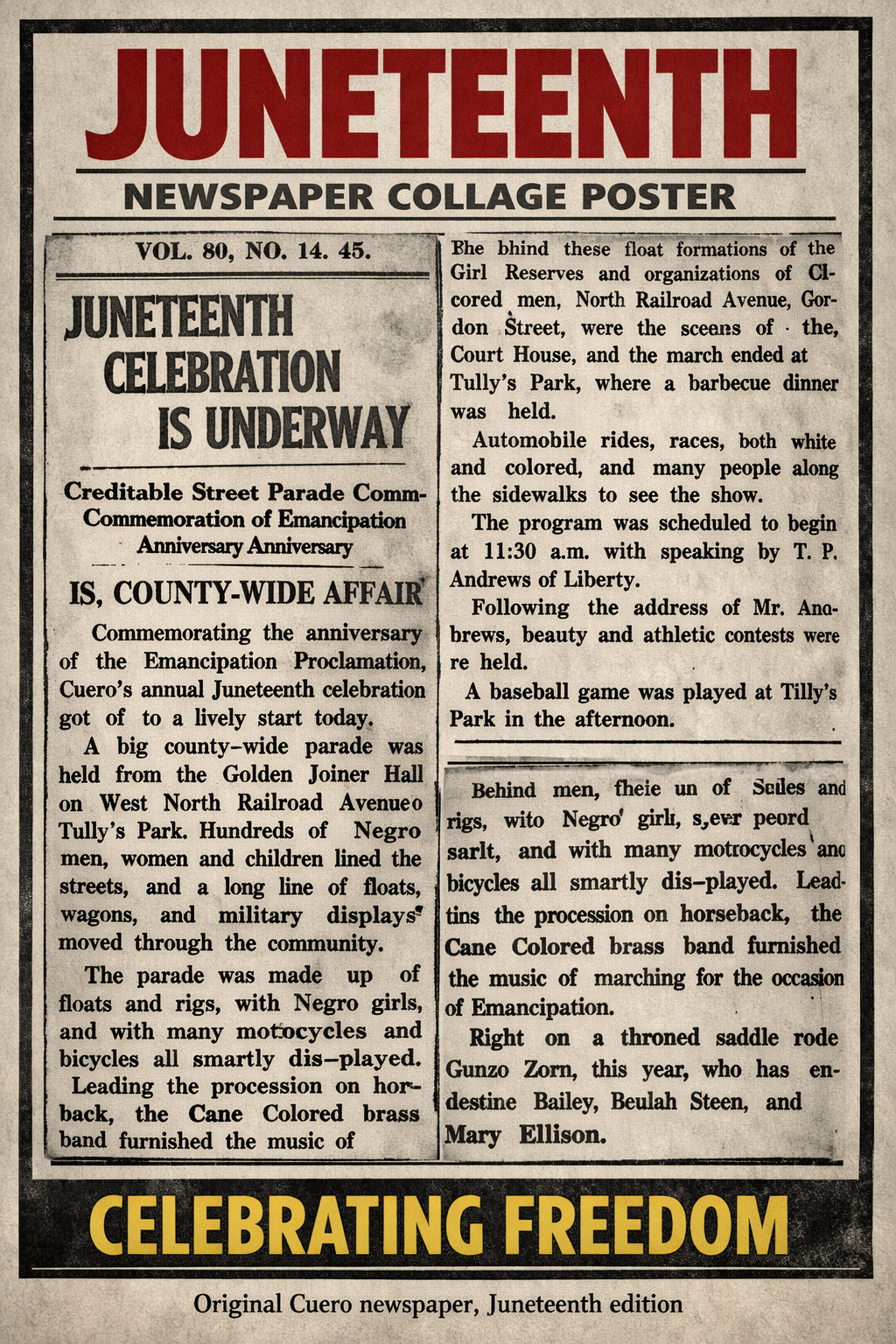
What follows is a restored account of that day, based on a 1924 newspaper article. The names, the pride, and the spirit of the celebration belong to Cuero’s own history.
A Parade Led by Music and Community Pride
The morning began near the fairgrounds, where a mounted band assembled at the head of the parade. Their music carried down the streets as the procession moved toward the courthouse, setting the tone for a day dedicated to freedom and remembrance.
Behind the band came a series of floats and decorated automobiles representing communities from across DeWitt County. Riding on the lead float was Miss Zora McCrary, honored as the Goddess of Liberty. She was accompanied by her Maids of Honor — Miss Beulah Sloan and Miss Maud Horne — whose presence added elegance and symbolism to the celebration.
Other floats followed, representing local organizations, artists, and civic groups. The parade route stretched from North Railroad Avenue to Gordon Street, where the procession paused before continuing on to the park.
Spectators lined the streets — Black and white residents alike — standing shoulder to shoulder or watching from automobiles parked along the route. The turnout reflected the broad interest in the day’s events and the significance of Juneteenth in the lives of DeWitt County families.
A Gathering at Tilly Park
After the parade reached the courthouse, the procession continued to Tilly Park, where a large barbecue dinner awaited the crowd. The park, long a gathering place for Cuero’s Black community, became the center of the day’s festivities.
There, the crowd listened to speeches delivered by formerly enslaved residents — elders who had lived through bondage, emancipation, Reconstruction, and the long struggle for dignity that followed. Their words were a powerful reminder of the meaning of Juneteenth and the resilience of the Black community in DeWitt County.
These speeches, now lost to time, would have been among the last public addresses in Cuero given by people who personally experienced slavery.
Baseball, Community, and a Second Parade
The afternoon continued with a series of baseball games, including a match featuring the Juvenile team, which drew enthusiastic applause from the crowd. Baseball was a cornerstone of Black community life in the early 20th century, and Juneteenth games were often the highlight of the day.
Later in the afternoon, a second parade was held, again drawing crowds and showcasing the community’s commitment to honoring the anniversary of emancipation.
The celebration committee was led by A. Davis, listed as president, with assistance from Walter Bousell, who helped coordinate the parade and maintain order throughout the day.
A Legacy Worth Remembering
The 1924 Juneteenth celebration in Cuero was more than a parade — it was a declaration of identity, pride, and freedom. It was a day when the entire county came together to honor the people who had endured slavery and lived to see emancipation.
Today, as Cuero marks Juneteenth quietly, this historical record reminds us that the holiday is not new to our community. It is woven into our streets, our families, and our shared history.
The names of Zora McCrary, Beulah Sloan, Maud Horne, A. Davis, Walter Bousell, and the unnamed elders who spoke that day deserve to be remembered. Their celebration in 1924 was not just an event — it was a legacy.