



By Pat Trevino | Cuero Online News
CUERO, TX — April 25, 2026
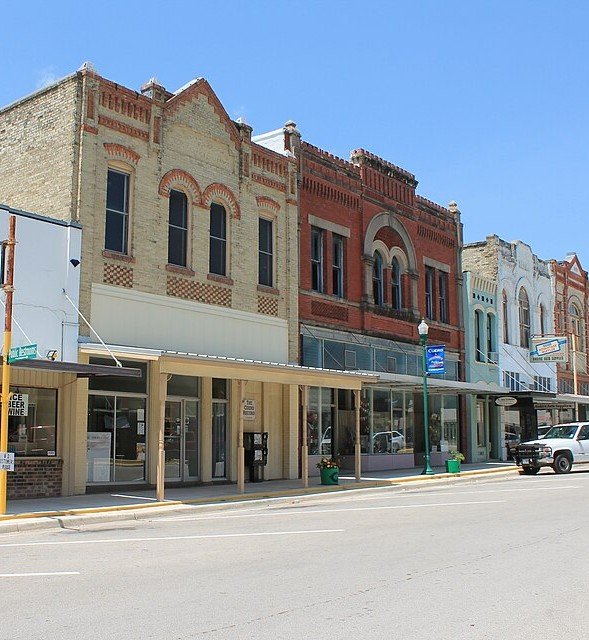
The Cuero Record — a Pulitzer Prize–winning newspaper and one of DeWitt County’s oldest institutions — has entered a period of uncertainty following the abrupt and unannounced closure of its Main Street office. The shutdown occurred less than two months after Times Media Group (TMG), an Arizona‑based media chain, acquired the paper. The deal included both of DeWitt County’s traditional newspapers — The Cuero Record and the Yorktown News-View — along with 30 other small-town Texas papers stretching from the Gulf Coast to the Red River.
For a community long accustomed to in‑person access to its newspaper, the sudden disappearance of a physical newsroom has raised concerns about transparency, accountability, and the future of local reporting.
The closure was not announced publicly, and even those closest to the paper were unaware of how little time remained.
Earlier in the week, The Cuero Record had published a notice inviting readers to stop by the office to look through old photographs. Dr. Cynthia Orozco, a member of the DeWitt County Historical Commission, visited the office and alerted the Commission that historical materials were present — but no one was informed of any deadline, nor was the Commission told that the building would soon be closed.
On the day of the shutdown, Historical Commission member Diana Bartosh happened to be inside the office sorting through photographs. Believing she had plenty of time to continue her work, she asked staff when she could return.
That was when she was told that corporate had just called and ordered the office closed immediately.
She was given ten minutes.
There was no warning, no scheduled transition, and no opportunity for the Historical Commission to prepare for the removal of decades of irreplaceable materials.
With only minutes to act, Bartosh loaded as many boxes of historical photographs as she could into her vehicle — rescuing a portion of Cuero’s visual history that might otherwise have been lost forever.
Those photographs are now in the custody of the DeWitt County Historical Commission, where members hope to identify, catalog, and index them for public preservation.
As far as is known, the staff member present that day is no longer employed, and the office is now closed.
In response to questions about the closure, Steve T. Strickbine, President of Texas Local Media and founder of Times Media Group, confirmed that the Main Street office has been shut down.
“Because this building is still owned by Jim Moser, who plans to sell it, we had to close this office when we purchased the newspapers,” Strickbine said.
He emphasized that the closure was tied to the building’s ownership, not the paper’s future, and said TMG is working to stabilize operations across its newly acquired Texas publications.
Strickbine also reiterated that his goal is to keep community newspapers alive:
“Most of the Texas papers we purchased were teetering on the brink of extinction. Our hope is to save them and to continue to tell the story of the communities they serve.”
For now, TMG is relying on the Cuero Chamber of Commerce for newspaper pickup and payment locations.
The most pressing question for residents is whether The Cuero Record still has a reporter assigned to DeWitt County.
Recent editions have consisted almost entirely of: community‑submitted announcements, press releases, and event notices with no bylines from a locally based journalist.
Community members report that the person handling content is based in Dallas, not Cuero. For a newspaper that has historically covered county commissioners court, city council meetings, school boards, public safety, as well as community issues the absence of a local reporter raises concerns about who — if anyone — is attending meetings, asking questions, or documenting decisions that affect daily life here in DeWitt county.
While the situation in Cuero is still developing, concerns mirror findings from a 2025 Nieman Journalism Lab investigation into TMG’s operations in other states. The study found that the company relied heavily on freelancers, with only two executive editors responsible for overseeing content across the entire chain, often editing publications from hundreds of miles away.
Strickbine acknowledged that TMG cannot fulfill a traditional watchdog role in all communities. These findings do not determine what will happen in Cuero, but they provide context for the questions now emerging locally.
Corporate Vision vs. Local Impact
Just days before the office closure, Strickbine published a column describing the acquisition as an opportunity to strengthen community journalism. He emphasized:
- the need for reliable local news
- the importance of “showing up, paying attention, and caring about the place you are writing for”
- a commitment to free digital access
- the belief that newspapers strengthen civic life
But the closure of the Cuero office — and the absence of a local reporter — stands in contrast to those ideals.
Strickbine maintains that TMG is still assessing staffing needs across Texas:
“Integrating over 30 newspapers into our business is complicated. We are in the process of figuring out our newsroom needs throughout Texas.”
He added that all but two of the journalists employed by Moser Community Media at the time of acquisition remain with the company unless they left voluntarily. However, he did not identify any full‑time reporter currently assigned to DeWitt County.
A Newspaper Without a Newsroom
For generations, The Cuero Record has been the county’s primary source of government accountability, legal notices, public records, and community history. With the office closed and reporting shifting off‑site, residents are left to consider what this means for transparency, accessibility, and the preservation of local identity.
The rescued photographs now housed with the DeWitt County Historical Commission are a reminder of what can be saved when community members act quickly. But the broader question remains:
What does “local journalism” mean when the newsroom is no longer local?
As TMG continues integrating its Texas newspapers, DeWitt County residents will be watching closely — not just to see what is printed, but what is missing.
Will there or won’t there be a Cuero newspaper printed? For purchase only? What happens to those who have prepaid subscriptions to the paper?
Judy,
The Cuero Record is still being published. They will continue to print the Cuero Record, and I was assured that they would honor all subscriptions.