68 F
Cuero
Tuesday, March 3, 2026
Home Blog Page 112

Cuero ISD Closed Tuesday 21, 2024 Due to Severe Weather

The following notice was posted on Cuero ISD FaceBook

In an abundance of caution for the safety of our students and staff, Cuero ISD will be closed Tuesday the 21st due to severe weather. We will actively monitor to determine whether we will have school on Wednesday. Stay warm, be safe, and GO MEAN GREEN!!!


Yoakum Independent School District Announces Trustee Election

Yoakum, Texas – The Yoakum Independent School District (YISD) has an upcoming election to fill one trustee position on the board. The election will take place on May 3, 2025.

Interested candidates can pick up election packets at Yoakum City Hall, located at 808 Highway 77 S, Yoakum, Texas. The packets are available between 7 AM and 7 PM. All applications for placement on the ballot must be filed with the superintendent, who serves as the chief elections officer for YISD, at 315 East Gonzalez, Yoakum, Texas. The filing deadline is 5 PM on February 14, 2025.

Declarations of write-in candidates must be submitted by 5 PM on February 18, 2025. Early voting will be held at the City Clerk’s office in City Hall from April 21, 2025, to April 29, 2025, between 8 AM and 5 PM. Applications for mail-in ballots should be sent to Teresa Bowe, Early Voting Clerk, at Post Office Box 738, Yoakum, TX 77995. These applications must be received by 5 PM on April 22, 2025.

The Board of Trustees has appointed the City Clerk and Deputy City Clerk as early voting clerks for the election. Steve Cuellar will serve as the election judge, with Rachel Gomez as the alternate election judge. A minimum of two and a maximum of four clerks will be present at the election day polling place, excluding the election judge and alternate election judge. The presiding election judge and at least two election clerks will also serve on the early voting ballot board to count ballots received during early voting in person and by mail.

General Election – Saturday, May 3, 2025

For more information, please see School Board Policy Online (Section B)

Candidate Eligibility/Qualifications.

  • January 15, 2025 (30th day before the filing deadline)
    First day to file for a place on the ballot. Applications may be obtained at Yoakum ISD Administration Office, 315 E Gonzales St., Yoakum, Texas 77995
  • February 14, 2025 (5:00 p.m. on the 78th day before election day)
    Last day to file for a place on the ballot
  • February 18, 2025 (5:00 p.m.) Last day for declaration of write-in candidacy
  • April 22, 2025
    First day of early voting by personal appearance
  • April 22, 2025
    Last day to apply for ballot by mail (received, not postmarked)
  • April 29, 2025
    Last day of early voting by personal appearance
  • May 3, 2025
    Election Day: Polls open 7:00 a.m. to 7:00 p.m. at Yoakum City Hall, 808 Hwy 77A South, Yoakum, Texas 77995

Car Crash Causes Traffic Disruption in Cuero

1

On January 16, 2025, at approximately noon, a car crash occurred in the 1700 block of Esplanade in Cuero. The incident prompted an ambulance to be called to the scene, causing an unusual traffic backup in our typically quiet town. Following the accident, the Cuero City Electric crew was seen working on the electric pole, addressing any potential damage caused by the crash. The community is grateful for the swift response of emergency services and city workers in handling the situation.

Department of Homeland Security Update Face Recognition & Face Capture Technologies

0
Jan 16, 2025

Face Recognition and Face Capture (FR/FC) are powerful Artificial Intelligence (AI) technologies that the Department of Homeland Security (DHS) uses to improve how the public interacts with us and support critical law enforcement investigations, while protecting privacy and individual rights. But when used incorrectly, these technologies, like any advanced technologies, can introduce new risks and challenges.

Recognizing this, in September 2023 Secretary Alejandro N. Mayorkas and I announced that DHS was instituting the most extensive requirements of any Federal agency to ensure that FR/FC technologies were used properly. DHS Directive 026-11, “Use of Face Recognition and Face Capture Technologies,” includes requirements that:

  • All uses of FR/FC technologies are thoroughly tested to ensure there is no unintended bias or disparate impact in accordance with national standards.
  • U.S. citizens are afforded the right to opt out of face recognition for non-law enforcement uses unless otherwise authorized or required, and FR/FC cannot be used as the sole basis of any law or civil enforcement related action.
  • Department oversight offices, including the Privacy Office, the Office for Civil Rights and Civil Liberties (CRCL), and the Office of the Chief Information Officer, review all new and existing uses of FR/FC technologies.

FR/FC is a subset of AI technologies, and these requirements complement DHS’s implementation of government-wide AI risk management policies, which I discussed in a December 2024 blog post. You can see all of DHS’s AI use cases, which include FR/FC uses, in our AI Use Case Inventory.

After we issued our FR/FC Directive, teams across DHS worked diligently to review all current uses of the technology and ensure compliance with these requirements. For our most significant FR/FC uses, we conducted extensive testing with hundreds of volunteers through the DHS Science & Technology Directorate’s Maryland Test Facility, an internationally recognized lab with experts in biometric research and evaluation. We’ve also engaged extensively with civil society organizations on how we use and test FR/FC. We will continue to consult with them, as well as with the general public, on an ongoing basis.

Today, DHS is publishing a report on our use of FR/FC which includes more information than ever previously shared about how we use and govern these technologies. This blog post shares some highlights, and I encourage you to read the full report for additional details.

The Difference Between Face Recognition and Face Capture

Face capture and face recognition technologies are often used together, but they have some important differences.

Face recognition and face capture systems use “biometric samples,” which are usually a picture of an individual’s face. These images can be taken live or come from an identity document like a passport or driver’s license. “Biometrics” refers to measuring physical traits, such as facial features, to identify a person.

Face capture means taking a picture of an individual’s face so that it can be used in a face recognition system and then applying different automated methods to verify that the photo taken is actually of a person’s face and is of high quality.

Face recognition technology compares an individual’s facial features to available images for:

  • Verification: “One-to-one” matching to confirm a photo matches a different photo of the same person.
  • Identification: “One-to-many” matching a photo of a person against a selection of photos from a larger group. This can happen against a database of millions of photos, but at DHS this most often involves matching against a limited, pre-built gallery of photos, such as the passport photos of passengers on a flight manifest. This limited gallery matching is more efficient and effective.

Services using FR/FC technologies comply with all applicable federal laws, including the Privacy Act of 1974, the Homeland Security Act of 2002, the E-Government Act of 2002.

How DHS uses Face Recognition and Face Capture Technologies

We identified 14 distinct uses of FR/FC at DHS, which you can see in full in our AI Use Case Inventory. Most of our FR/FC use falls into two categories:

  1. Automating identity verification during domestic and international travel, to help travelers get through checkpoints more efficiently and securely.
  1. Supporting law enforcement investigations as a part of investigative due process, including identifying victims of crimes and potential leads or suspects.

For our first round of testing and reporting, we focused on eight use cases based on frequency of use and public


Public Notice, Feedback, and Opt-Outs

DHS provides notice in multiple ways when we are using FR/FC, including:

  • Posting physical signage in public settings like airports to let passengers know when participation is optional, and the procedures for participating or opting out.
  • Publishing Privacy Impact Assessments (PIAson public websites to describe how they’re implementing Face Recognition and Face Capture (FR/FC) technologies and how they handle personal data.
  • Publishing Systems of Records Notices (SORNs) that describe the relevant system(s) of record, including the purpose, categories of individuals and categories of records covered by the system, and routine uses of the records maintained by the system.

We also provide multiple ways to provide feedback or seek redress if you have an issue:

These options are available to all travelers, regardless of citizenship status.

U.S. citizens can opt out of interacting with FR/FC technology in most cases by requesting manual identity verification and/or notifying an officer. For example, if you approach a TSA checkpoint and tell the officer you are opting out of face recognition, the officer will manually inspect your ID and you will not lose your place in line. The full report details opt-out procedures in additional travel scenarios.

Testing Face Recognition and Face Capture Technologies

The DHS Science and Technology Directorate (S&T) oversees testing and evaluation for FR/FC technologies. Testing happens both before technologies are put in the field where you might interact with them and at least every three years during operational use.

The Maryland Test Facility conducts robust, independent testing and evaluation of FR/FC technologies. Volunteers who represent a range of demographics sign up to help test biometric technologies in a lab set up to resemble real world conditions.

In addition to these performance tests, DHS program teams also work to continuously improve services to the public to ensure that you are having the best possible experience while DHS ensures national security.

DHS completed performance reviews of several priority uses of FR/FC, based on direct testing, analysis of operational reporting statistics, and reviews of third-party testing results. We analyzed demographic differentials where possible. Through this testing, we learned that:

  • Overall, FR/FC systems performed extremely well for diverse demographic groups. On average, the technology worked more than 99% of the time for systems that are fully operational, like ID checks for travelers at the airport and ports of entry to the U.S.
  • TSA Credential Authentication Technology, which is used to verify authenticity of IDs and flight reservations at TSA checkpoints, had no performance issues across any demographic group.
    • Our testing revealed an important finding for TSA PreCheck’s prototype Touchless Identity Solution. While the face matching worked well, we encountered issues with the face detection algorithm used to verify if a photo contains a face before matching. This algorithm was accurate 88% to 97% of the time, with performance varying based on skin tone and self-reported race, gender, and age. To address this, TSA quickly introduced a manual photo capture step, which only adds 2-3 seconds to the process and does not affect the overall screening experience. TSA and DHS S&T are currently evaluating new algorithms to improve this step and plan to test and implement them later this year.

We noticed two other minor trends in test results that will be monitored going forward:

  • For some CBP use cases, there were very small differences in measured face matching performance based on skin tone and self-reported race and age, ranging from less than 1% to 2-3%. Face matching still performed well overall, and the lowest success rate for any demographic group was 97%. This round of testing was only designed to reliably detect differences of 5% or greater, so we can’t say if smaller measured differences reflect true underlying differences in performance. We will continue to monitor these trends, refine our testing practices, and take action as appropriate.
  • People interacted with systems quickly – in seconds, not minutes. The time to move through the FR/FC process ranged from less than 10 seconds for a Global Entry Touchless Portal to less than 30 seconds to do an ID check at an airport security checkpoint. In general, it took a few seconds longer for those aged 61 years and over to complete FR/FC interactions than those 60 years and under. While not a cause for immediate concern, we will work to ensure our systems continue to be usable across all age groups.

You can view detailed test results in the full report.

Conclusion

DHS will continue to implement our policies on responsible use of FR/FC and conduct ongoing monitoring, testing, and evaluation to make sure that we are living up to our commitments to use AI in safe, responsible, and trustworthy ways.

Keywords

Cuero High School Advanced Culinary Arts Students Shine at FFA Cattleman’s Ball

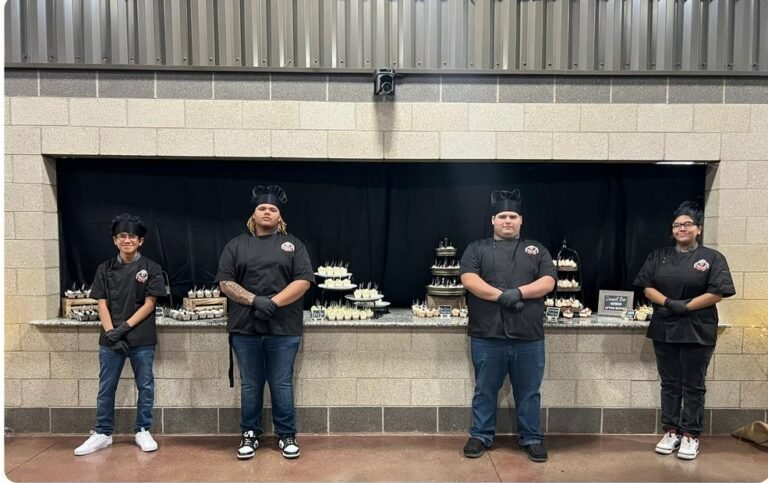
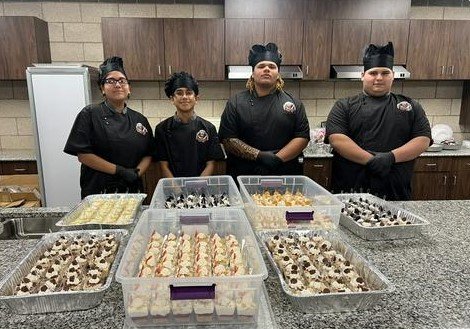
Cuero High School’s Advanced Culinary Arts students Jaelen Garibay, Hayden Carter, Joe Rodriguez, and Deja Marie-Baldez demonstrated their exceptional culinary skills by providing catering for the annual FFA Cattleman’s Ball.

The event was a resounding success, with a large turnout of attendees. The talented students prepared over 500 dessert shooters, delighting guests with their delicious creations and showcasing the impressive skills they have developed in their culinary program. Their hard work and dedication contributed significantly to the evening’s success, leaving a lasting impression on all who attended.

Cuero ISD Awarded Safety Grant by Texas Political Subdivisions JSIF

Cuero Independent School District (Cuero ISD) has been awarded a $13,564.57 Safety Grant for 2025 by the Texas Political Subdivisions JSIF (TPS). This grant will enable Cuero ISD to procure essential tools, equipment, and training to enhance workplace safety and develop a solid loss prevention program.

Cuero ISD may use the grant money to purchase approved safety equipment, enhancing the safety of their employees and property.  Their successful grant application underscores their commitment to fostering a safer work environment. TPS JSIF is proud to support Cuero ISD in their efforts to implement effective safety practices and loss prevention programs.

Cuero ISD is holding Career and Technical Education Night February 19, 2025

Cuero Independent School District (ISD) is thrilled to announce a Career and Technical Education event featuring Texas Education Agency (TEA) approved programs of study. All Cuero ISD students and their parents are invited to attend this enriching event.

Event Details:
– Date: February 19, 2025
– Time: 5:30 – 7:00 p.m.
– Location: CHS Cafeteria

Admission to these programs is open to all Cuero ISD students, limited English language skills are not a barrier to admission and participation in any of our educational and career and technical education programs. We are committed to providing an inclusive environment where every student can thrive.

For more information, please contact Title IX Coordinator, Kimberly Fleener.

cisd@cueroisd.org

960 E Broadway St, Cuero, TX, United States, Texas

361-275-1900

Cuero City Council Member Matthys Announces He Will Not Seek Re-Election

Cuero, TX – January 2025 – Cuero City Council-Member-at-Large, William Bill Matthys who also serves as Mayor Pro Tem, has announced that he will not be seeking re-election in the upcoming May 2025 term.

Matthys, who has served on the City Council for seventeen years, has been a dedicated public servant and a strong advocate for the community.  During his tenure, Matthys has been instrumental in various initiatives. His leadership and commitment to the residents of Cuero have left a lasting impact on the city.

Matthys expressed his gratitude to the community for their support over the years and said that serving as a Councilman has been one of the greatest honors of his lifetime.

The filing period for candidates interested in running for the Council-Member-At-Large for May 3, 2025, begins Wednesday, January 15, 2025.  Candidate Packets are available in the City Secretary’s Office no later than the first day of the filing period.

AlphaLyfe Nutrition is excited to announce the addition of delicious coffee drinks to their menu! Get ready to indulge in these irresistible new offerings:


City Council Candidate Packet

Council Places 1, 4, and (2) At Large will appear on that ballot. The links below are from the 2025 Candidate Packet.

The filing period for the May 3, 2025, General Election begins Wednesday, January 15, 2025. All necessary forms will be linked on this page, and printed Candidate Packets will be available in the City Secretary’s Office no later than the first day of the filing period.

To appear on the ballot, qualified persons must submit the following to the City Secretary’s Office (212 E. Main, Cuero, TX 77954) no later than 5:00 p.m. Friday, February 14, 2025: 
Mandatory Filings

The Redemption Story: Dr. Kennon Vaughan Lone Survivor of Yoakum Plane Crash


The Redemption Story being held this weekend reflects on the events that took place on January 18, 2023, when a single-engine Piper PA-46 plane carrying five members of the Harvest Church, based out of the Memphis suburb of Germantown, Tennessee, went down and crashed in an open field south of the Yoakum airport. The tragic incident resulted in the deaths of four church members, with the only survivor, Lead Pastor Kennon Vaughan, sustaining injuries that required his hospitalization.

        The Redemption Story: A Weekend of Uplifting Music and Worship

The victims of this heartbreaking accident were Bill Garner, the church’s Executive Vice President; Steve Tucker, a church elder; and Tyler Patterson and Tyler Springer. These individuals were beloved members of Harvest Church, and their loss left a profound impact on their community.
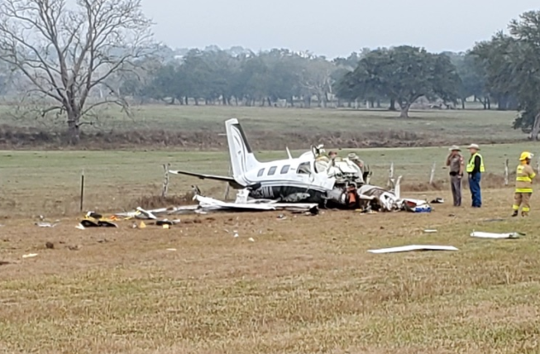
In the aftermath of the tragedy, Lead Pastor Kennon Vaughan has shown remarkable resilience and strength. Despite his injuries, he continues to lead and inspire the Harvest Church community.

Uplifting Music and Worship

In honor of those lost and to celebrate the spirit of hope and renewal, Harvest Church is hosting “The Redemption Story,” an event filled with uplifting music, worship, and a powerful message from Dr. Kennon Vaughan, the sole survivor of the plane crash. This revival event promises to be a significant and inspiring occasion.

Event Schedule:

Saturday, January 18:
– Pre-Event Activities (4:00 PM – 6:00 PM): Enjoy family activities and entertainment by Jellie Holcomb.
– Main Event (6:00 PM – 8:00 PM): Worship by Harvest Memphis.

Sunday, January 19:
– Pre-Event Activities (4:00 PM – 6:00 PM): Enjoy family activities and entertainment by Aaron Watson.
– Main Event (6:00 PM – 8:00 PM): Worship by Harvest Memphis.

Location: 37 County Road 462, Yoakum, TX 77995

Attendees are encouraged to bring lawn chairs and picnic blankets to enjoy the event comfortably. The family activities include a kid’s fun zone with a bounce house, inflatables, face painting, and more.

Mark your calendars for this incredible weekend of faith, music, and community. We look forward to seeing you there!


Fall Clean-Up Achieves Major Environmental Milestones

1

Cuero, TX  –

The Fall Clean-Up event held from October 21st to October 26th, 2024, was a resounding success, bringing together community efforts to significantly impact the environment positively. The event saw extensive participation and resulted in impressive outcomes, demonstrating the community’s commitment to sustainability.

Summary of Clean-Up Activities:
– Equipment Hours: 38 hours
– Man Hours: 198 hours
– Brush Collected: 76 loads at Cheatham Rd
– Tires Collected: 14
– Batteries Collected: 29 batteries + 81 lbs
– Trash Collected: 81.09 tons (12.5 containers)
– Metal Collected: 400 lbs
– Oil Collected: 35 gallons

The efforts didn’t stop there. The clean-up resulted in substantial environmental benefits, with significant savings in tree preservation, landfill space, energy, and electricity.

Environmental Impact:
– Tree Preservation: Recycling cardboard saves 17 trees per ton.

– Landfill Space: One ton of cardboard saves over 9 cubic yards of landfill space (equivalent to 3 metal dumpsters). The event saved over 1,197 cubic yards of landfill space, equivalent to 400 dumpsters.
– Energy Savings from Aluminum Cans: Recycling one aluminum can saves enough energy to run a TV for 3 hours. With approximately 32 cans making a pound, the community saved 9,600 days of 24-hour TV running time.
– Electricity from Used Motor Oil: Recycling 2 gallons of used motor oil can generate enough electricity to power an average household for almost 24 hours. The clean-up event saved 24-hour days of electricity for 14.5 months.

These results underscore the importance of community involvement in environmental initiatives and highlight the significant positive impact that concerted clean-up efforts can have.

The community is encouraged to continue supporting and participating in such events to ensure a cleaner, greener future for everyone.

For more information and future clean-up events, please contact the Cuero Environmental Services Department.

Together, we can make a difference!