



Cuero Gobbler All Sports Booster Club features Jake Janssen as Touchdown Player of the Game

99 YARDS!
Congratulations to Jake Janssen, our Touchdown Player of the Game, after breaking loose for an incredible 99-yard touchdown in the Gobblers hard-fought game against the Calhoun Sandcrabs!
Thank you to Countryside Electric for sponsoring our Touchdown Player of the Game and supporting Cuero Gobbler football!
– Advertisement –
Cuero City Council Advances Budget, Utility Rate Changes, and Community Projects in September 14 Meeting
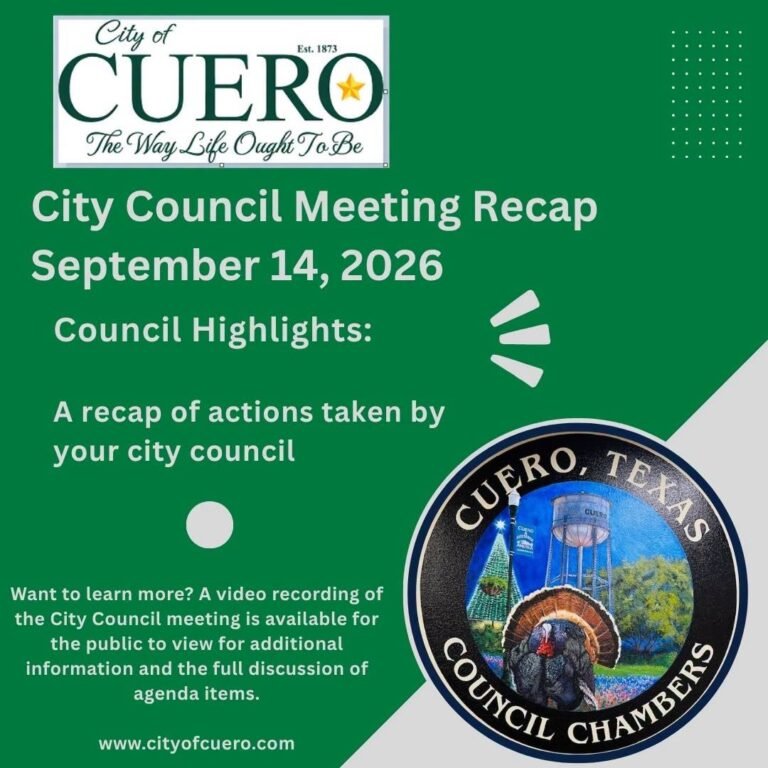
City Council Meeting Recap | September 14, 2026
The Cuero City Council recently held their regular called meeting to discuss and take action on several important items affecting our community.
The Cuero City Council met on Monday, September 14, 2026. Mayor Emil Garza called the meeting to order at 5:00 p.m., with all Councilmembers present.
• Miss Cuero Organization – Ms. Leah Hernandez, representing the Miss Cuero Organization, addressed the Council regarding the organization’s continued partnership with the City and provided information to further the Council’s understanding of the organization and its purpose.
• Public Hearings on FY 2026–2027 Budget & Tax Rate- City Council first conducted the required public hearings on the proposed Fiscal Year 2026–2027 Budget and Tax Rate, providing residents an opportunity to offer comments regarding the proposed budget and tax rate.
Following the public hearings, the City Council unanimously approved:
-Adoption of the Fiscal Year 2026–2027 Budget.
-Ratification that the Fiscal Year 2026–2027 Budget will raise less revenue from property
taxes than the Fiscal Year 2025–2026 Budget.
-Levying an ad valorem tax rate of $0.29702 per $100 of taxable valuation for Tax Year 2026 for the use and support of the City of Cuero and providing for the allocation of the levy for specific purposes.
POLITICAL ADVERTISEMENT

• Utility Rates & Fees – The City Council unanimously approved the second and final readings of rate adjustments for sewer/ wastewater, water and bulk water, solid waste/garbage, electric services, and hauled waste fees. The new rates will take effect October 1, 2026, and will be reflected on customers’ November utility bills.
• New Cuero Pickleball Courts – Rules and regulations for the City’s Pickleball courts were approved. The courts are not yet open for play, as final preparations are still underway. Court painting is scheduled to be completed in October, and a grand opening will be announced at a later date.
• Scary Schleicher Street Haunted House – Council approved temporary traffic modifications for the 300 block of Schleicher Street and authorized the City Manager and Police Chief to make necessary traffic adjustments for the October haunted house event.
• Fire Protection Services – Council held an extensive discussion regarding the proposal submitted to DeWitt County concerning fire protection services outside the Cuero city limits. Representatives from DeWitt County, Emergency Management, Fire, EMS, and other stakeholders provided input regarding the proposed services. Following the discussion, Council determined that additional review and discussion are needed before any action is taken.
• Cuero Comprehensive Plan – Council received the draft Comprehensive Plan report. No questions or comments were received from the Council. A Public hearing will be held at the next regularly called meeting in October.
Community Reminders:
 Fall Clean-Up: October 19–24
54th Annual Turkeyfest October 9-12
The meeting adjourned at 7:33 p.m
Joe Ruben Carisalez – Sep 29, 1964 — Sep 22, 2026 (61)

CUERO — Joe Ruben Carisalez, 61, of Cuero passed away Tuesday, September 22, 2026. He was born September 29, 1964, in Cuero to Zeferina Gonzales and Thomas Carisalez Sr.
Joe was a very outspoken and caring man who loved to hunt and fish. He worked for many years as a master mechanic, a trade he took pride in and excelled at.
He is survived by his sister, Mary Jane Carrisalez; his brothers, Thomas Carisalez Jr., Johnny Carisalez, and Daniel Carisalez; and many nieces and nephews.
He was preceded in death by his parents; his sisters, Gloria Carrisalez Hernandez and Josephine Carrisalez; and his brothers, Victor Carisalez, Henry Carisalez, Reynaldo Carisalez, and David Anthony Carisalez.
Pallbearers include Johnny Carisalez, Thomas Carisalez Jr., Daniel Carisalez, Albert Carisalez, Caiden Rosales, and Henry Henkes.
Visitation will be held Saturday, September 26, 2026, at 9:00 a.m. at Freund Funeral Home. Funeral services will begin at 10:00 a.m. at Freund Funeral Home with Pastor Tony Gonzales officiating. Interment will follow at San Miguel Cemetery in Thomaston.
Kenneth Edwards – May 14, 1948 to September 16, 2026 (78)
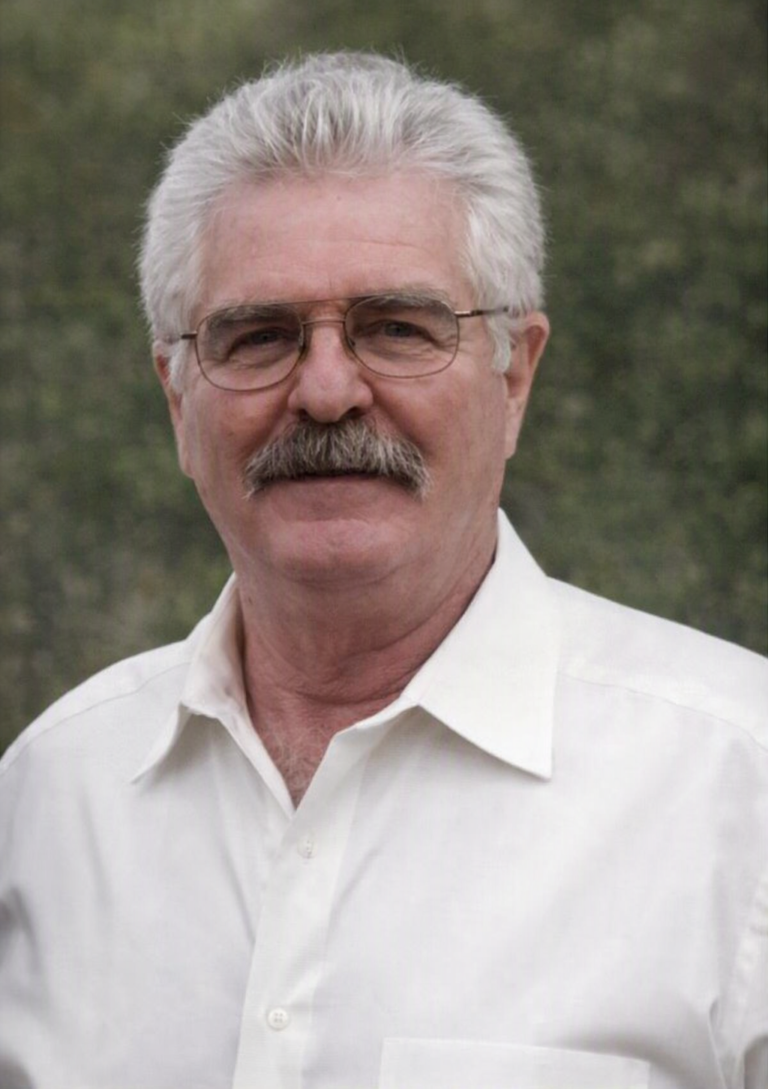
DALLAS: Kenneth Ray Edwards, 78, passed away on Wednesday, September 16, 2026. He was born on May 14, 1948, in Texarkana, TX, to the late Guy Vernon and Ellen Margaret (Keeton) Edwards. Kenneth was an electronic engineer. He retired from Raytheon in 2012.
Survivors are his wife, Moorilee (Ford) Edwards; daughter, Kenna Elaine Edwards.
Preceded in death by his parents; siblings, Barbara Ann, Lee Ellen, Verna, Harry Guy, Margie and John.
Funeral Service were held with Pastor Elvis Whaley officiating. Kenneth is buried at Pilot Grove Cemetery, Yoakum.
Memorial contributions may be given to Pilot Grove Cemetery Association.
Little Gobblers Lift Their Voices in Prayer at “See You at the Pole” 2026
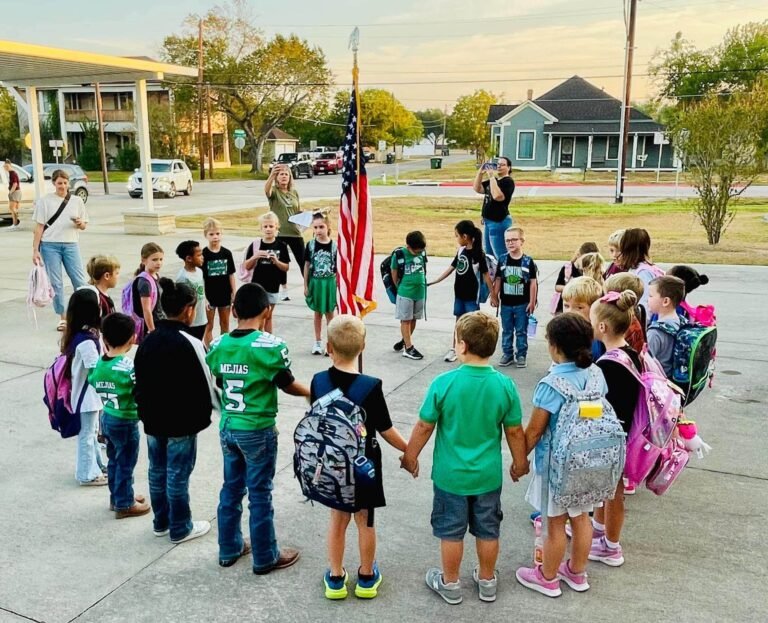
 By Pat Trevino | 9/24/2026
The Little Gobblers Football League began their morning in a powerful way this week, gathering players and cheerleaders around the flagpole for See You at the Pole 2026, a moment filled with prayer, unity, and team spirit.
Sponsored and organized by the Little Gobblers Football League, the event brought the young athletes together before school to read Scripture, sing, and pray aloud. Coaches said the children prayed with conviction and sincerity, lifting up their schools, teachers, classmates, teammates, friends, and families. The sound of their voices joined together in prayer created a moving scene that reflected both their faith and their bond as a team.

League leaders emphasized how meaningful it was to see the players and cheerleaders stand side‑by‑side, supporting one another not just on the field but in their spiritual lives as well. They described the gathering as a reminder that teamwork extends beyond football — it includes character, courage, and shared values.
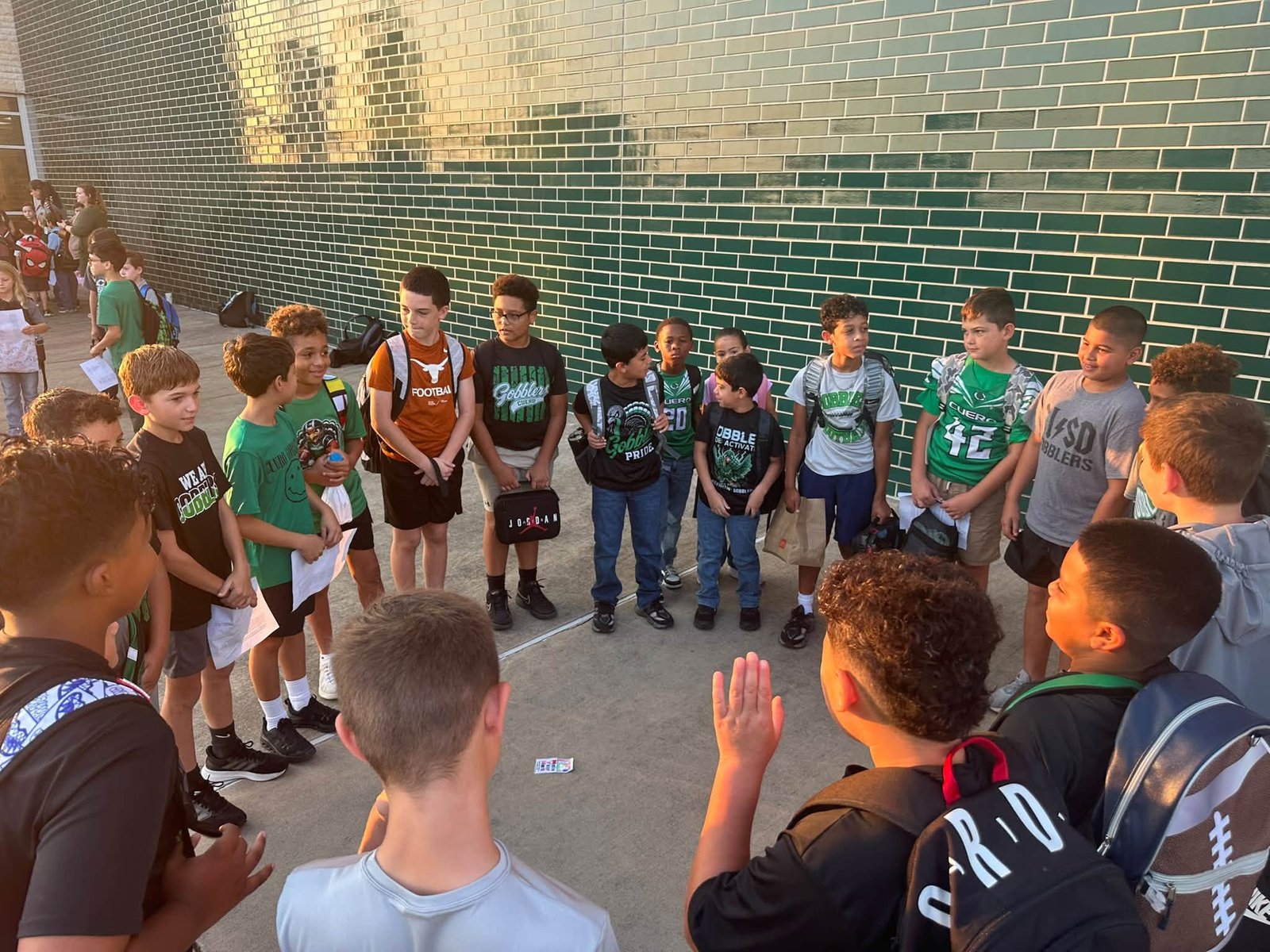
Parents and volunteers who attended said the moment showcased the heart of the Little Gobblers program: building young athletes who are confident, grounded, and willing to lead with faith. The children closed their gathering with a resounding “Amen and AMEN,” marking the start of the day with gratitude and strength.
For the Little Gobblers, See You at the Pole wasn’t just a prayer event — it was a celebration of unity, purpose, and the team’s commitment to lifting one another up.
Fall Festival Returns to Meyersville With Food, Fellowship, and Community Traditions

By Pat Trevino | 9/24/2026
Sts. Peter & Paul Catholic Church in Meyersville will welcome families from across DeWitt County this Sunday, September 27, 2026, for its annual Fall Festival, a long‑standing community tradition that blends food, fellowship, and family‑friendly activities.
The event will take place at the parish grounds at 11220 FM 237, beginning mid‑morning and continuing through the afternoon. Organizers say the festival remains one of the church’s most anticipated gatherings of the year, offering a mix of homemade goods, local hospitality, and lively fundraising events that support parish needs.
POLITICAL ADVERTSEMENT

A Country Store will open with baked goods, canned goods, and plants prepared and donated by parish members. The popular BBQ meal will be served from 10:30 a.m. to 12:30 p.m., with both dine‑in and to‑go plates available for $15.
The festival’s Live Auction will begin at 12:30 p.m. inside the parish hall, featuring a variety of items contributed by supporters. A Silent Auction will run concurrently, giving attendees additional opportunities to participate. The parish raffle drawing will be held after the live auction, with tickets priced at $10 each or six for $50.
Children attending the festival will have access to games and activities throughout the afternoon, adding to the family‑friendly atmosphere that has defined the event for generations.
Church representatives encourage the public to attend, noting that the Fall Festival is not only a fundraiser but also a celebration of community spirit. They describe the day as an opportunity for neighbors to gather for “good food, good fellowship, good fun” as the parish ushers in the fall season.
Arlene Lois (Krueger) DeForest- May 10, 1945 ~ September 18, 2026 (age 81)
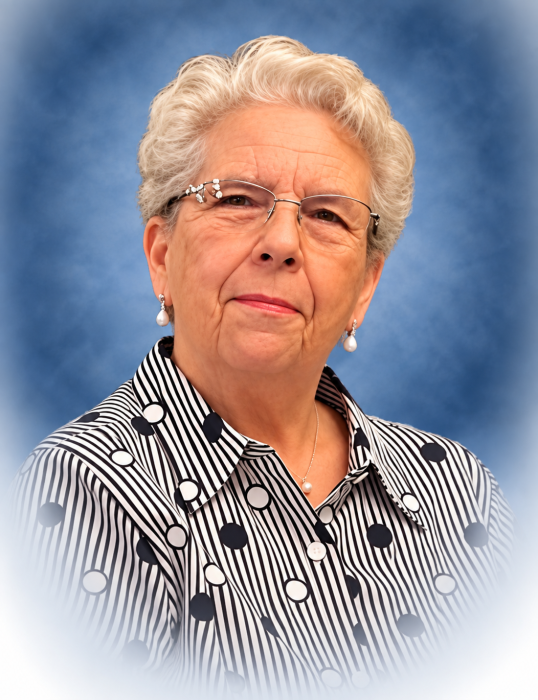
Arlene DeForest, a loving wife, mother, grandmother, and great grandmother died on September 18, 2026 at the age of 81. She was born May 10, 1945, in Victoria, Texas to the late Alois and Emilee Bethke Krueger, she grew up in Goliad County and graduated from Goliad High School.
Arlene married Alvin DeForest on September 21, 1963 and together they made their home in Ander/Goliad County where they raised two children. Her various jobs included Teacher’s Aide, County Attorney Secretary, and County Judge’s Secretary where she retired in 2004.
She was an active member of St. Peter’s Lutheran Church in Ander for 74 years where she was confirmed and married. She was very active in Bible Study, Sunday School, and Choir. She was also a member of the Worship and Music Committee.
Outside of church, Arlene and her husband had a small cattle operation. She enjoyed crocheting prayer shawls and putting quilt tops together for Lutheran World Relief. She tremendously enjoyed her four grandchildren and three great grandchildren.
She is survived by her husband of 63 years Alvin, her children Karen Saxton (Ken), and Shannon DeForest (Kari), four grandchildren: Kaid, Lucas, Emilee (Justin), Fischer, and a bonus granddaughter Michelle, three great-grandchildren Elliana, Abigail, and Olivia, her sister Eva Nell Griffith (Gerald), her sister-n-law Ina DeForest, and numerous nieces and nephews.
She was preceded in death by her parents.
Funeral Service were held at St. Peter’s Lutheran Church, Ander, Texas. Arlene is buried at St. Peter’s Lutheran Church Cemetery.
In lieu of flowers, the family kindly requests memorial contributions be made to St. Jude Children’s Hospital or St. Peter’s Lutheran Church in Ander.
Pallbearers were Kaid Brand, Lucas DeForest, Fischer Saxton, Eric Griffith, Adam Griffith, and Leo Henke. Honorary pallbearers were Marilyn Young, Emilee DeForest, Glenn Karnei, Ken Reininger and all the St. Peter’s Lutheran Church Family.
Yoakum FFA Launches Brisket Baked Potato Fundraiser to Support Local Students

By Pat Trevino | 9/23/2026
The Yoakum FFA has kicked off a community‑focused fundraiser featuring hearty brisket baked potatoes, inviting residents to support the organization’s ongoing agricultural education efforts. The event centers around the sale of meal tickets, each priced at $15, now available through Yoakum FFA members.
POLITICAL AD
According to the organization, students participating in the fundraiser are responsible for returning all money and any unsold tickets by Wednesday, October 7. The fundraiser serves both as a community engagement opportunity and a practical lesson in responsibility for the students involved.
Meal pickup is scheduled for Wednesday, October 14, from 4:30 to 6:00 p.m. at the Yoakum High School cafeteria. Community members who purchase tickets will receive a fully prepared brisket baked potato meal, with proceeds helping support FFA activities, leadership development programs, and agricultural projects throughout the school year.
The Yoakum FFA continues to emphasize hands‑on learning and community partnership, and this fundraiser reflects the organization’s tradition of blending practical skills with civic involvement.
Cuero Gobblers All Sports Booster Club – Special Teams Player of the Game.

Congratulations to Warner Hancock, our Special Teams Player of the Game!Warner came up big in the Gobblers’ battle against Calhoun, recovering two squib kicks and making a major impact on special teams.
A big thank you to JW Buys Houses for sponsoring our Special Teams Player of the Game and supporting Cuero Gobbler football!