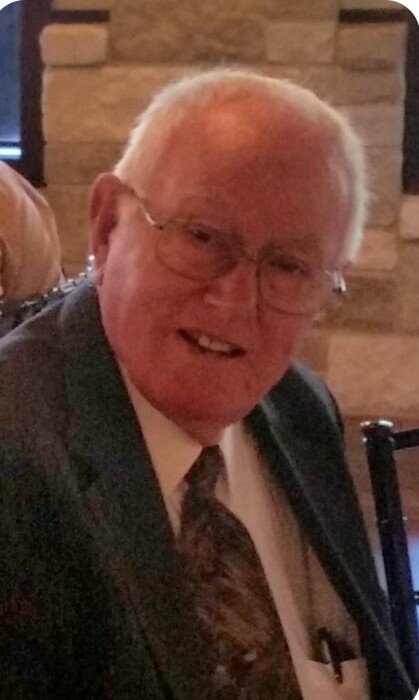
YOAKUM: William “Carl” Yaws, 94, passed away Thursday, September 10, 2026, at Yoakum Community Hospital. He was born July 3, 1932 in Cheapside to the late Carl and Mary Helen (McMeens) Yaws.
Carl was a lifetime resident of Yoakum, except for his time serving in the U.S. Army in France and Germany as an MP. He returned to his hometown of Yoakum and became the Yoakum Police Chief. He believed in community service and later served on the city council. He then spent the next 32 years as a railroad conductor with Southern Pacific Railroad. Carl was a lifetime member of Austin Street Baptist Church and served as a Deacon there. He was also a devoted lifetime member of the Yoakum Masonic Lodge. He was an adventurer and loved to travel, especially to his beloved Colorado. He has been blessed with 70 years of marriage to his sweetheart, Tessie (Karl) Yaws.
Survivors are: his wife, Tessie Yaws of Yoakum, daughters, Judy Sheleheda and Sharon Martinez, both of Yoakum; Three Grandchildren: Deric Sutherland (Stephanie) of Cincinnati, Ohio, Sarah Debord (Adrian) of Shiner, Jacob Sheleheda (McKenna) of Ft. Hood; Five Great-Grandchildren: Vivian Sutherland, Henry Sutherland, Devon Debord, Boston Barnett, Lila Thelen and Great-Great-Grandchild, Chloe Debord; sister, Connie Robinson (David); brothers, Ronnie Yaws (Martha) and Darrel Bock.
Proceeded in death by: his parents, son, David Yaws, Great-Great Grandchild, Aliyah Debord, brother, Wayne Yaws, sister, Darlene and brother-in-law, Alois Stary.
Pastor Dale Turner officiated over the funeral services and Carl was buried at Yoakum Oak Grove Cemetery.
Pallbearers are: Deric Sutherland, Jacob Sheleheda, Dennis Edwards, David Robinson, Roy Stary, and Pat Kacir.
Honorary pallbearers are Lance Benbow, Jesse Lopez, Darrel Bock, and all his SP Railroad buddies.
In Lieu of flowers, memorials may be given to Austin Street Baptist Church (“Kid’s Camp”).
A special thank you to Mariah Davila and Chloe and Heaven for taking care of Carl and making his days brighter.
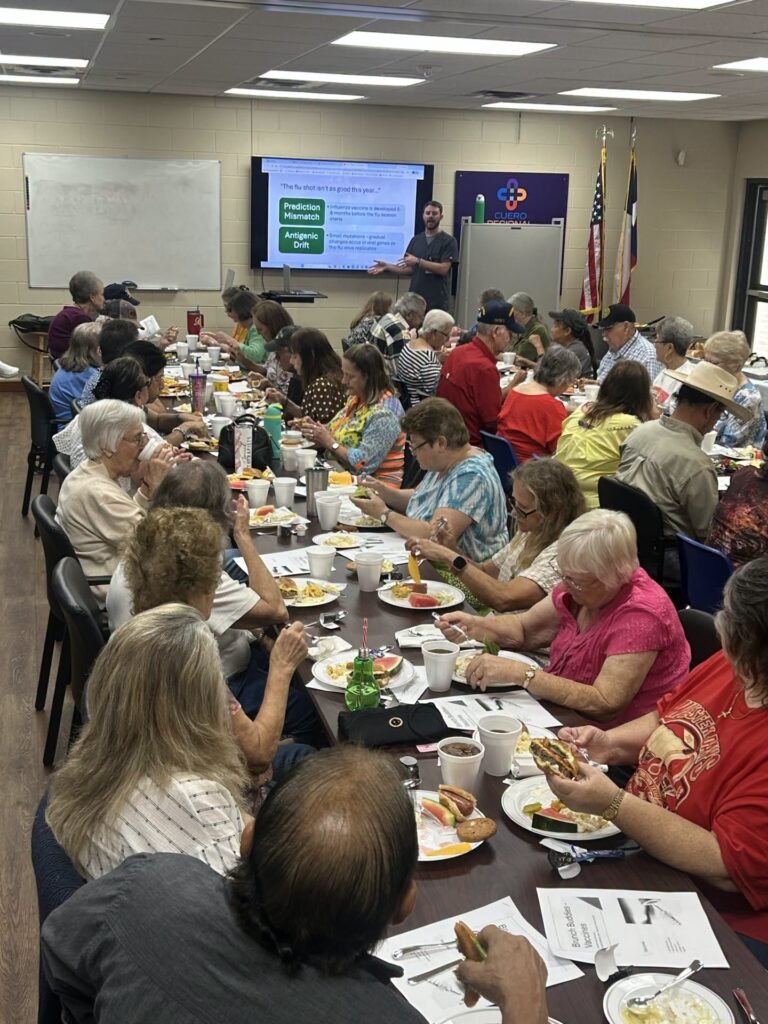
Cuero, Texas — Cuero Regional Hospital welcomed approximately 50 seniors from across the community last week for its Brunch Buddies & Bingo gathering, a morning designed to blend fellowship, fun, and important health education.
Guests enjoyed a delicious brunch while visiting with friends and neighbors, creating a lively and cheerful atmosphere throughout the event. The morning’s highlight was a spirited round of Bingo, where plenty of smiles, laughter, and friendly competition filled the room. Several attendees took home prizes, adding extra excitement to the day.
In addition to the social activities, participants received valuable information on recommended immunizations and staying current on essential vaccinations. The educational presentation offered practical guidance to help seniors make informed decisions about their health and wellness.
Cuero Health extended special appreciation to Cuero Nursing and Rehab, whose generous donation of several Bingo prizes helped make the event even more memorable.
The Brunch Buddies & Bingo program reflects Cuero Health’s ongoing commitment to supporting seniors through community‑centered activities that promote connection, engagement, and healthy living.
Major Medicaid reductions scheduled for November are raising alarms across rural Texas, and Cuero Regional Hospital is among the facilities bracing for impact. Earlier this year, hospital board member Kay Sheppard issued a clear warning: cuts to Medicaid reimbursement would hit rural communities first, straining emergency services, increasing uncompensated care, and threatening the long‑term stability of small hospitals.
Her concerns are now resurfacing as federal budget decisions come into focus. According to publicly available budget documents and reporting from multiple national outlets, recent federal spending packages shifted billions of dollars toward expanded immigration enforcement, detention operations, and private‑contractor housing facilities. Those increases were paired with reductions or caps in several domestic programs — including Medicaid reimbursements.
Supporters of the federal spending changes argue that the immigration measures were necessary to address border security and humanitarian challenges. Critics counter that the reallocation diverts essential healthcare funding away from vulnerable communities, funneling large sums to private companies that manage detention and housing operations.
POLITICAL ADVERTISEMENT
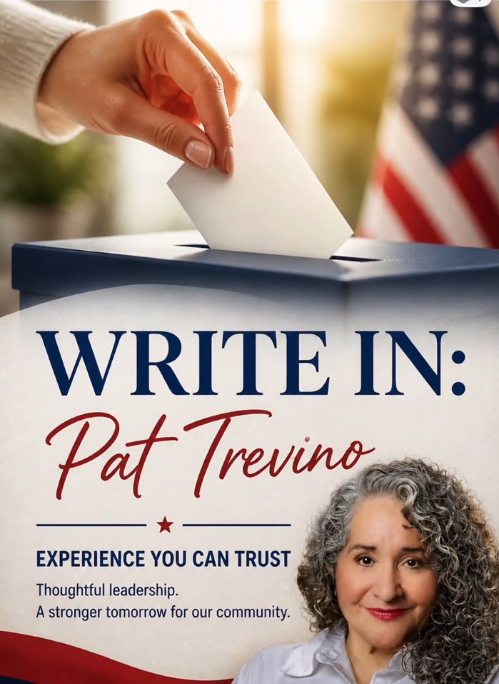
Political advertisement paid for by Write In Candidate Pat Trevino for DeWitt County Judge. No Campaign Funds were used.
Sheppard’s earlier message emphasized that Cuero Regional Hospital already operates on narrow margins. Medicaid plays a critical role in stabilizing emergency care, inpatient services, and long‑term treatment for seniors, disabled residents, and working families. When reimbursement drops, rural hospitals face immediate pressure:
uncompensated care rises,
preventive care declines,
chronic conditions worsen,
and the risk of service cuts or closures increases.
For communities like Cuero, the stakes are high. Losing access to local healthcare forces residents to travel long distances for basic treatment — a burden that disproportionately affects low‑income families and seniors.
Local leaders are urging residents to stay informed as November approaches and to contact state and federal representatives with concerns. Sheppard’s warning remains central: rural hospitals cannot absorb major funding losses without consequences for the communities they serve.
As the cuts take effect, Cuero Regional Hospital continues evaluating how to maintain essential services while navigating reduced reimbursement. The situation highlights a broader national debate about federal spending priorities — and the real‑world impact those decisions have on rural Texas.
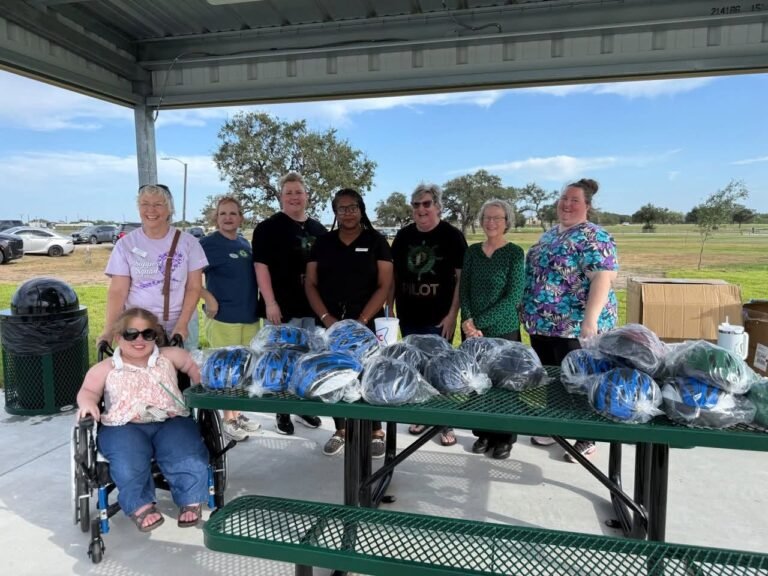
The Pilot Club of Cuero joined the community in celebrating a major milestone last week as the City of Cuero officially opened its new Municipal Skate Park. The club participated in the September event by providing free helmets to local youth, reinforcing its long‑standing mission of promoting brain safety, health, and injury prevention.
Members said they were thrilled to be part of a project that brings new recreational opportunities to families across Cuero. Throughout the afternoon, children lined up to receive helmets before taking to the ramps, ensuring that fun and safety went hand in hand. The club’s involvement added an important educational component to the celebration, reminding families that protective gear is essential for skating, biking, and other high‑energy activities.
The opening of the skate park marks another step in Cuero’s continued growth, offering a vibrant space where residents can gather, stay active, and build memories. Pilot Club members expressed gratitude to the city, volunteers, and supporters who helped bring the project to life, noting that community partnerships like this strengthen local well‑being.
As the park begins its first season of use, the Pilot Club looks forward to many years of shared experiences, new friendships, and perhaps even a few impressive new tricks from Cuero’s young skaters. Their contribution to the grand opening underscores a simple message: when the community comes together, safety and fun can thrive side by side.
The trumpets sounded, the angels came and the gates to heaven welcomed Elizabeth Marie Gohmert Haun Beard on September 11, 2026. She was born November 6, 1935 in Meyersville to the late Reinhold Henry and Linda Diebel Gohmert. On July 7, 1956 she married John William Haun and they welcomed three sons: Terry, Jeffery and Lee Haun. Later in life on October 21, 2003, she married Mickey Beard and together they shared a love of adventure and enjoyed the quiet life that country living in nature offers.
Many life lessons were learned just sitting on her front porch with her, listening to her tell the “good old days” stories like how she rode to school horseback and did her homework by kerosene lamp light. And if you had the honor to know her you heard many a Willie Nelson tune. Elizabeth was a woman of quiet dedication and her curiosity led her to pursue and discover much about the family and church history. She served as President of the Old Stone Church Historical Committee, Secretary of the St. John Lutheran Church Council, and was a Sunday School and Bible School teacher. Elizabeth was Secretary and President of the DeWitt County Historical Museum Board of Directors, served on the DeWitt County Historical Commission, the DeWitt County Wildflower Association, and the Cuero Community Hospital Pink Ladies. Although her absence will be felt forever, her love for and contributions to her family and church will be everlasting.
Waiting to welcome Elizabeth in heaven are her parents; her husband, Johnny; her son, Jeffery; her brothers, Reuben Gohmert and Charles Gohmert; her sisters-in-law, Virgie Gohmert and Joan Gohmert; her sister, Ruth Peters; brother-in-law, Elroy Peters; and stepdaughter, Amanda Beard.
Leaving behind to cherish her memory are her husband, Mickey Beard; her sons, Terry Ray Haun and wife, Pam, and Lee Charles Haun; her granddaughters, Nicole Denise Carver, Kelsie Elizabeth Murray (Brian), Laura Brooke Luchak (Andrew), Kirsten Kaye Carreon (Patrick), and Karrington Faith Haun; stepdaughter, Jana Koenning (Gary); stepson, Tommy Beard; nine great-grandchildren; and numerous nieces and nephews.
Pallbearers include her granddaughters’ husbands, Brian Murray, Patrick Carreon, and Andrew Luchak, her nephews, Gordon Gohmert and John Lloyd Gohmert, and Bobby Blain.
Honorary pallbearers are her granddaughters, Nikki, Kelsie, Brooke, Kirsten, Karrington and her step-daughter, Jana.
Visitation will begin at 9 am on Thursday, September 17, 2026 at St. John Evangelical Lutheran Church in Meyersville. A funeral service will begin at 10 am with Pastor John Boor officiating. Interment will follow at St. John Evangelical Lutheran Cemetery.
Memorials may be made to St John Evangelical Lutheran Church in Meyersville.
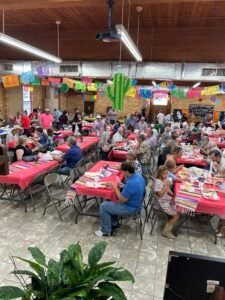
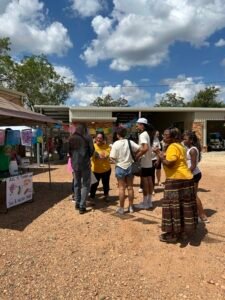
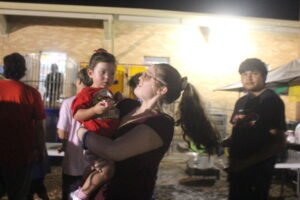
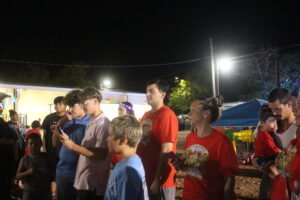
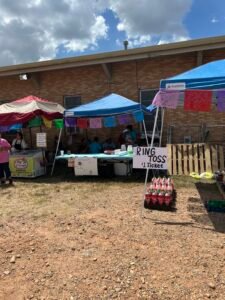
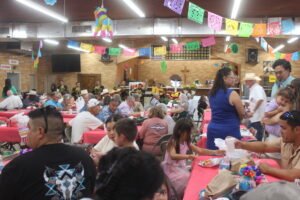
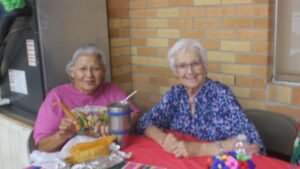
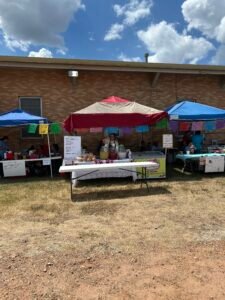
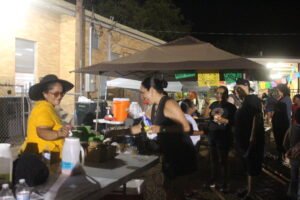
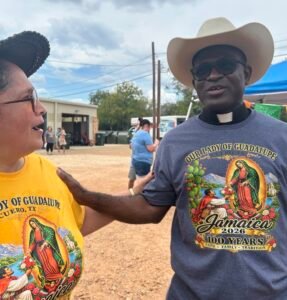
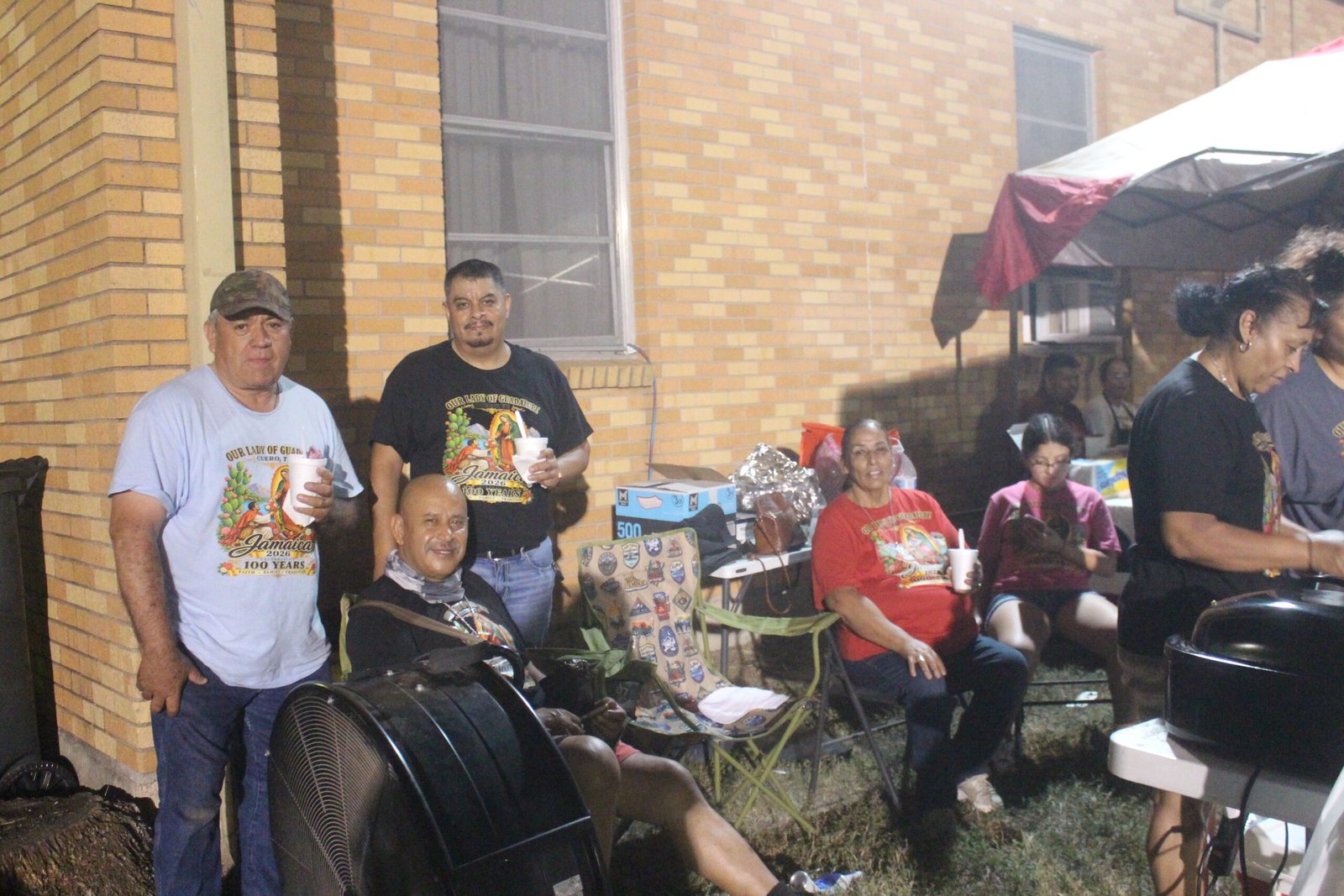
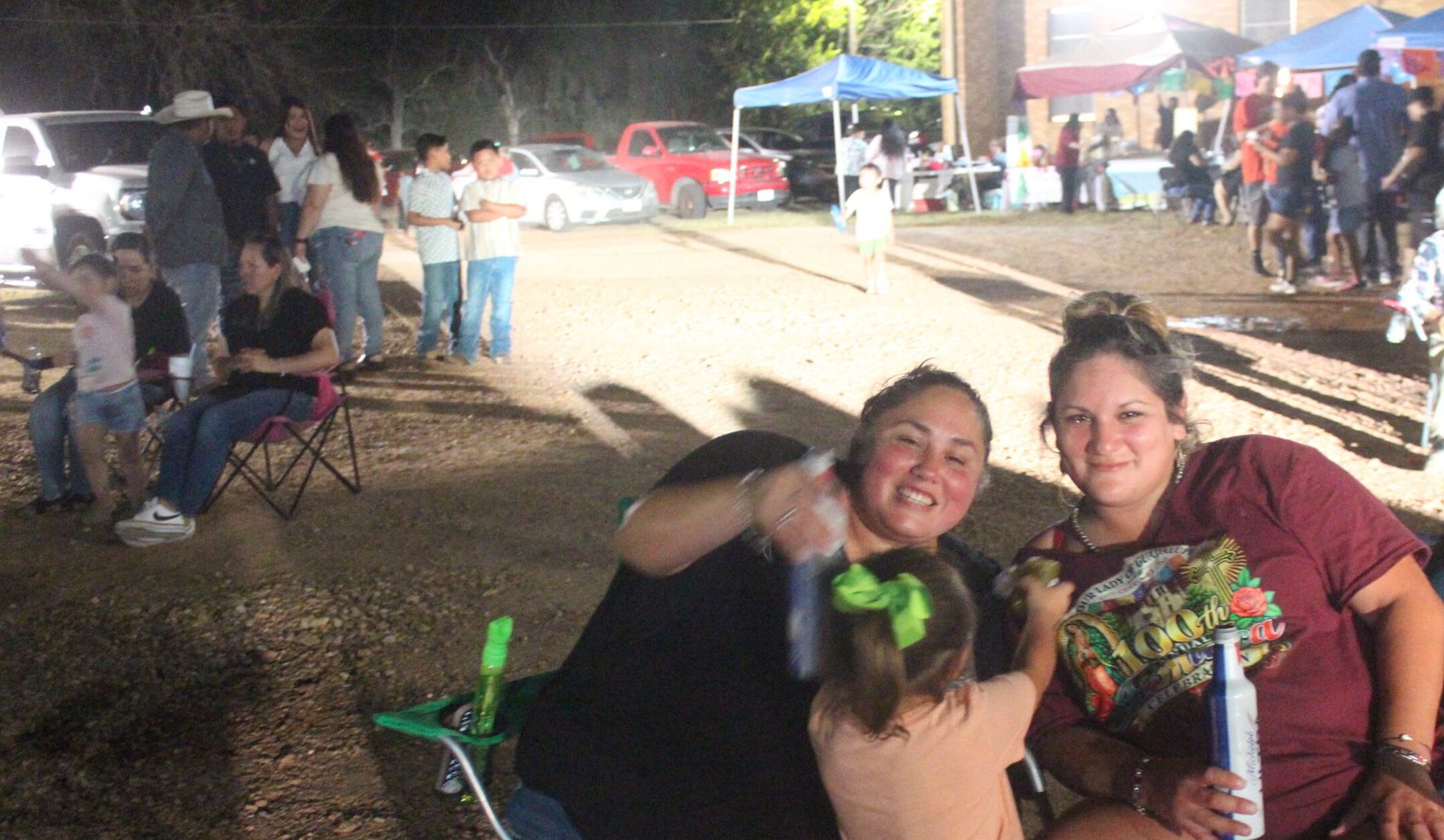
CUERO — Our Lady of Guadalupe Catholic Church marked its centennial Jamaica with a celebration that felt both historic and deeply familiar, bringing back the sights, sounds, and traditions that generations of Cuero families have helped sustain.
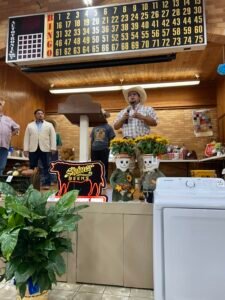
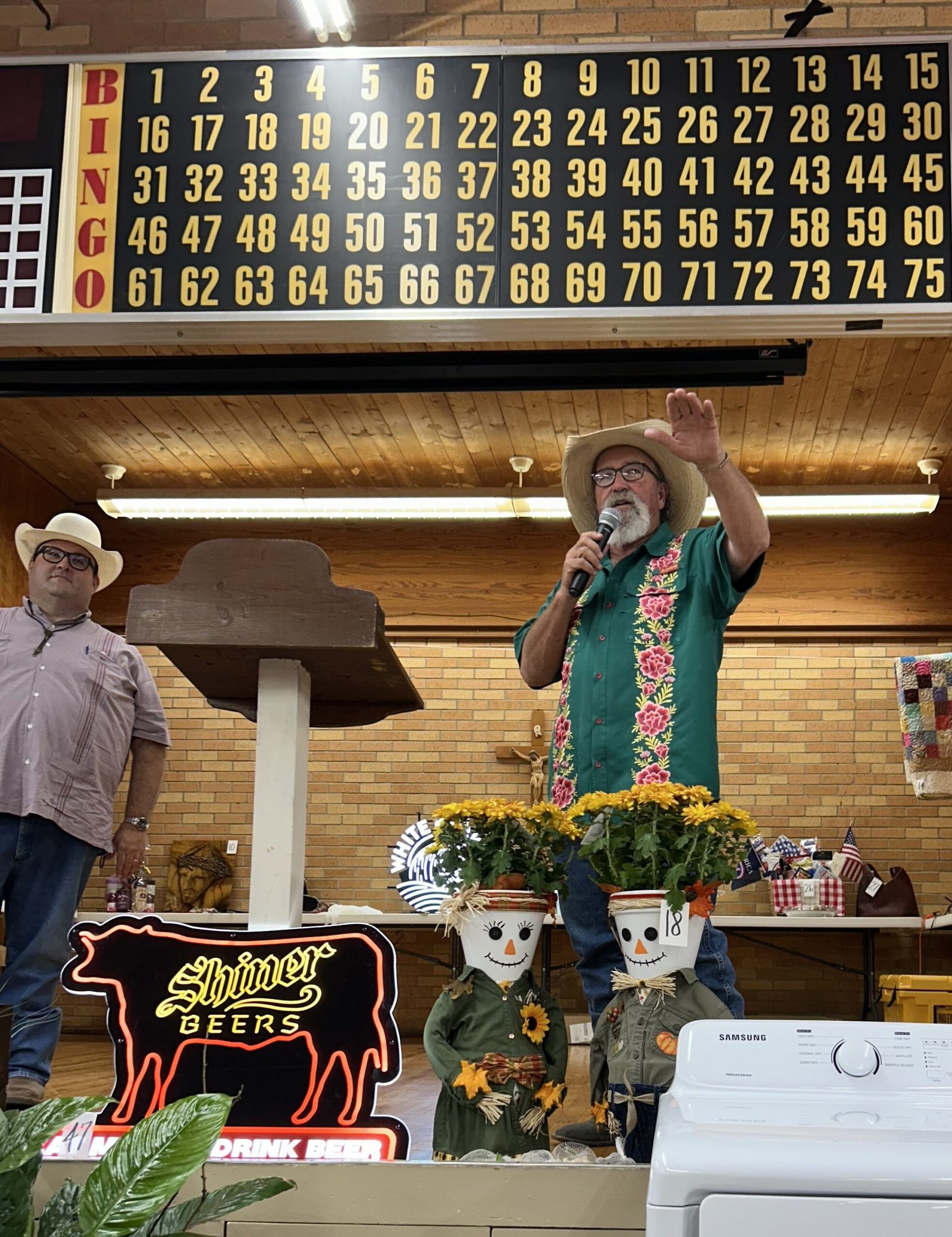
Our auctioneers, Brian Cromeens and Joe Adams — 14 years of showing up for OLG and keeping the tradition alive. (photo by Pat Trevino)
Joe Adams and his son‑in‑law, Brian Cromeens — auctioneers who have served the parish for more than 14 years — once again took the stage, continuing a role that has become part of the Jamaica’s rhythm and identity. Their steady presence reflects how much of the event’s success rests on long‑standing dedication.
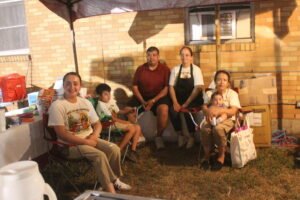
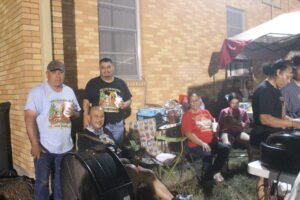
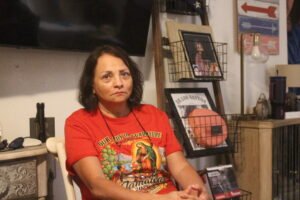
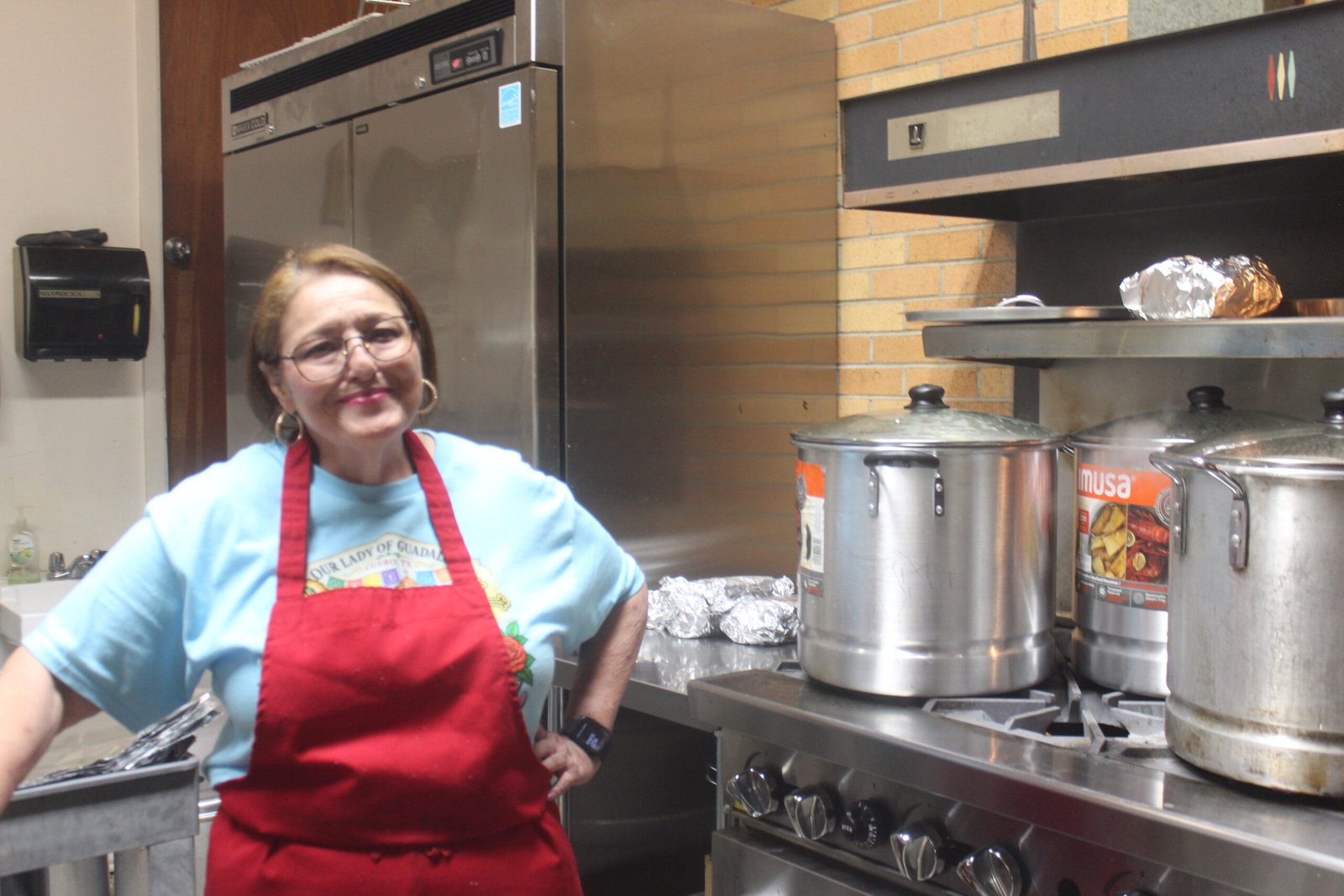
Here’s Roseann Varela — and missing from the photo is her husband David, but never missing from the work. The entire Varela family has cooked, cleaned, stayed late, made tamales, volunteered, and carried OLG traditions for more years than I can count. It’s hard to imagine a Jamaica without the Varela clan. (photo by Pat Trevino)
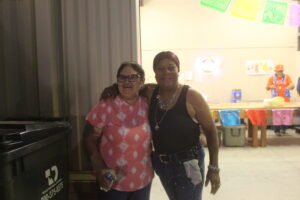
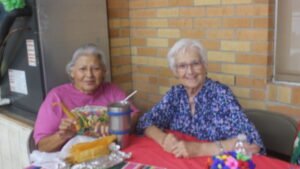
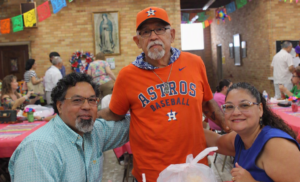
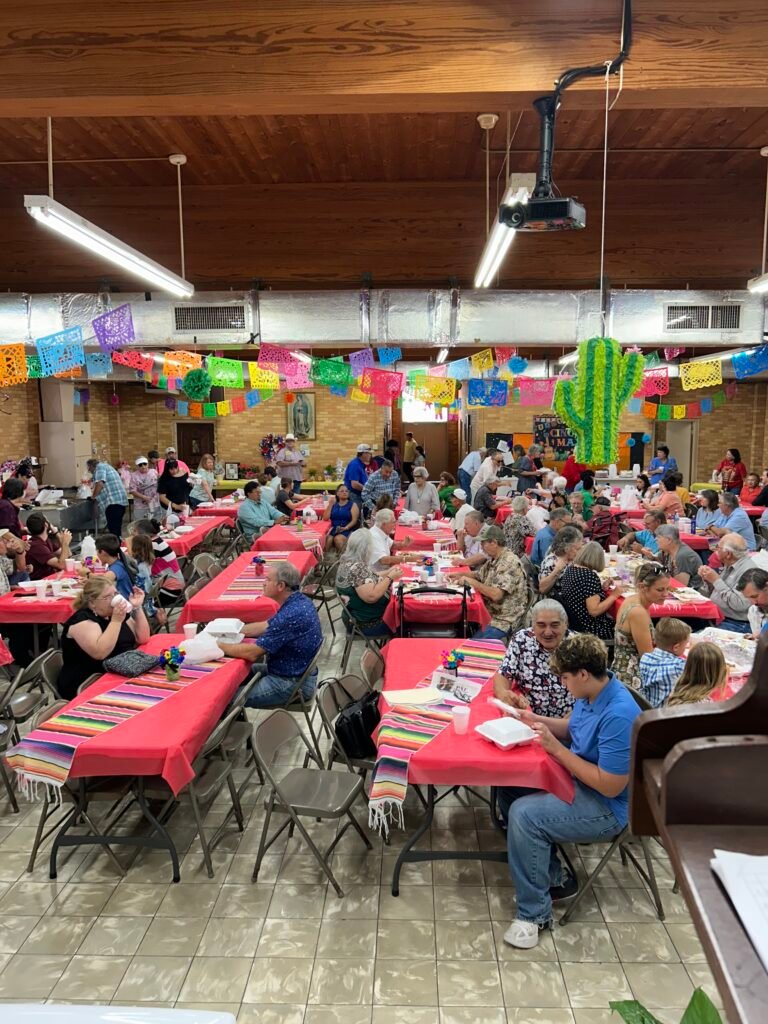
And of course, there would be no Jamaica without the families whose commitment spans decades: the Varela family, the Villarreal family, the Anzalduas, the Ybarras, the Liendo family, and many others whose names may not all be listed but whose faces and bloodlines are unmistakably woven into the parish’s history. For countless Cuero families, the Jamaica is more than an annual fundraiser — it is a tradition passed down from parents and grandparents who woke up early, worked hard, endured the heat, and ensured the celebration never faded.
POLITICAL ADVERTISEMENT
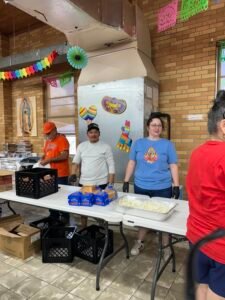
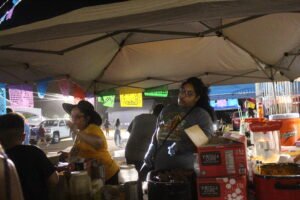
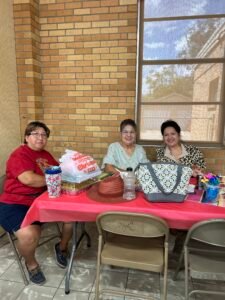
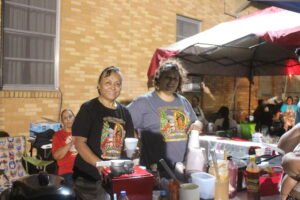
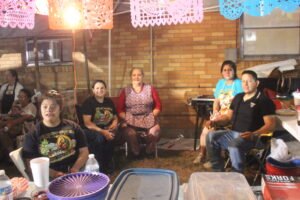
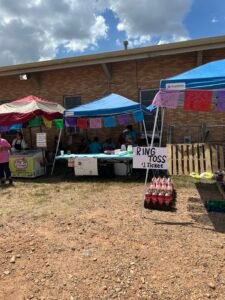
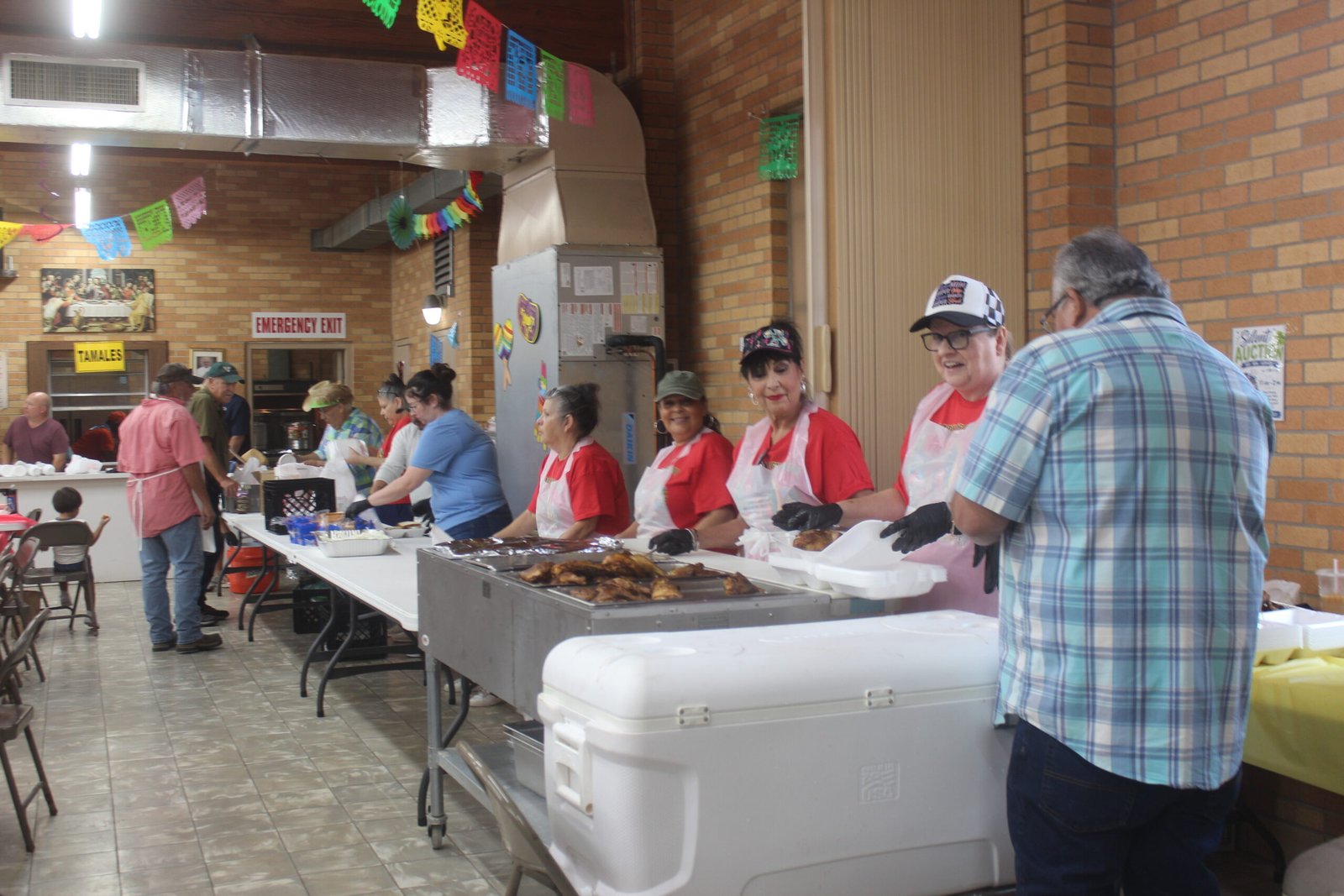
Political advertisement paid for by Pat Trevino Write -In candidate for DeWitt County Judge. No campaign funds were used.OLG volunteers hard at work — serving BBQ chicken plates or tamales with the same heart and dedication that keeps OLG’s Jamaica going year after year. (Photo by Pat Trevino)
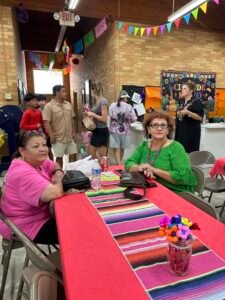
This year’s centennial also highlighted a growing group of new parishioners and volunteers who have embraced the responsibility of keeping the Jamaica strong. Their energy and willingness to step forward show that the tradition is not only being preserved — it is being renewed. These newer faces, working alongside the families who have carried the Jamaica for generations, reflect a parish community that continues to grow and evolve while honoring its roots.
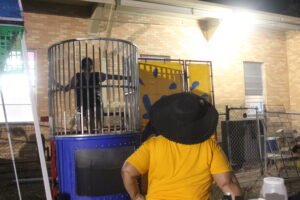
Isabel Patton one of the Jamacia organizers processing the news that Fr. Michael wouldn’t be taking a splash in the dunking booth… still smiling through it. (Photo by Pat Trevino)
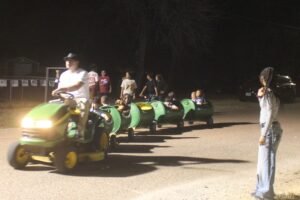
Several beloved activities returned after years of absence thanks to the persistence and dedication of volunteers such as Isabel Patton, Connie Trevino, and Sylvia Ortiz. The dunking booth, the fishing pond, face painting, the children’s train ride, and the cake walk all delighted families throughout the day. Long‑time parishioners and newer families worked side by side to make the celebration possible.
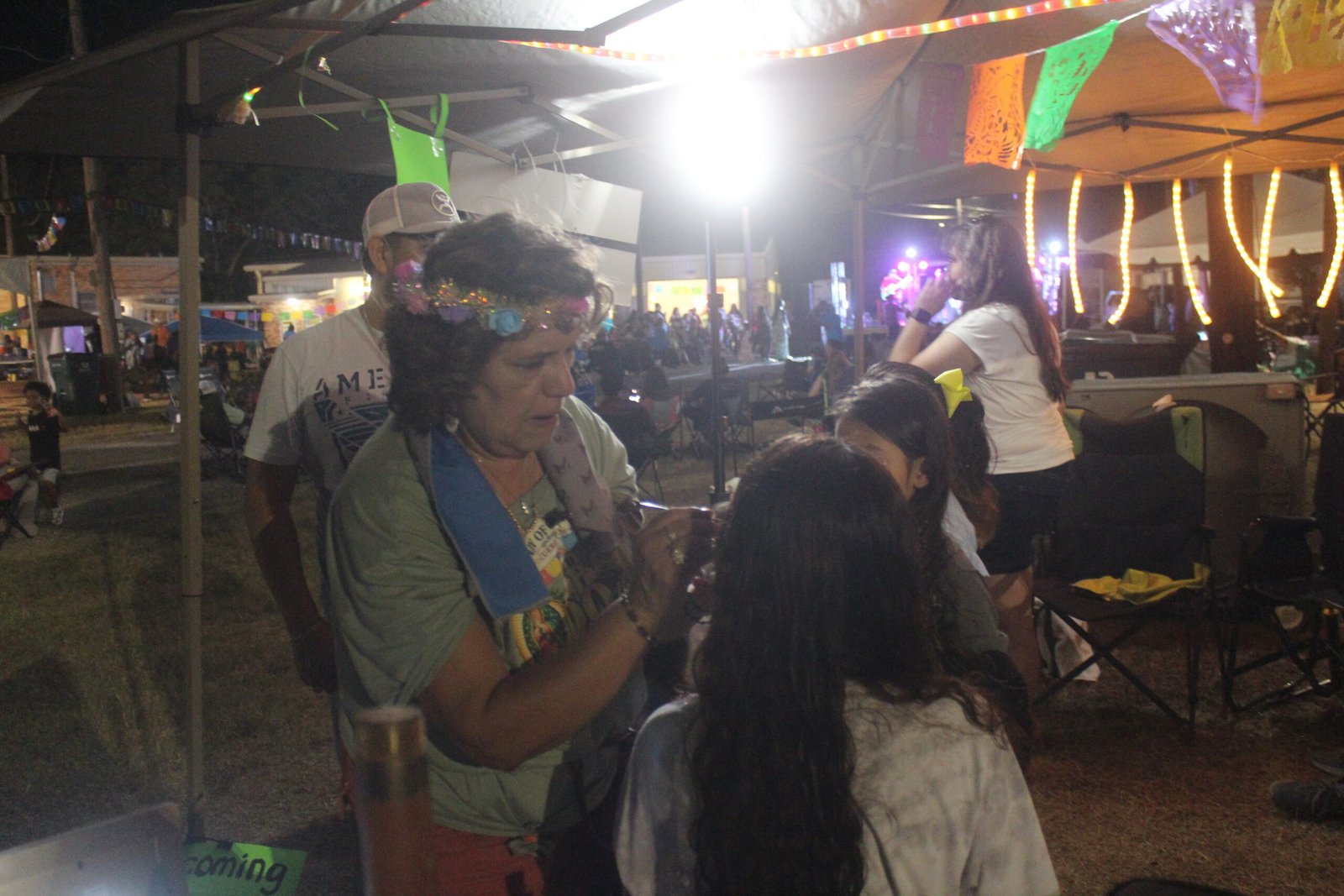
Sylvia Ortiz at the face‑painting booth, with Cynthia right beside her — making kids happy despite the Texas heat. (Photo by Pat Trevino)
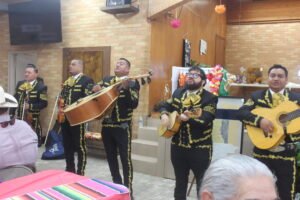
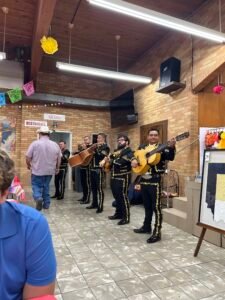
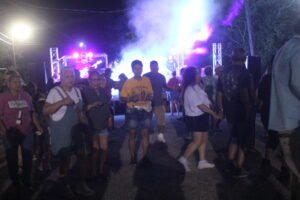
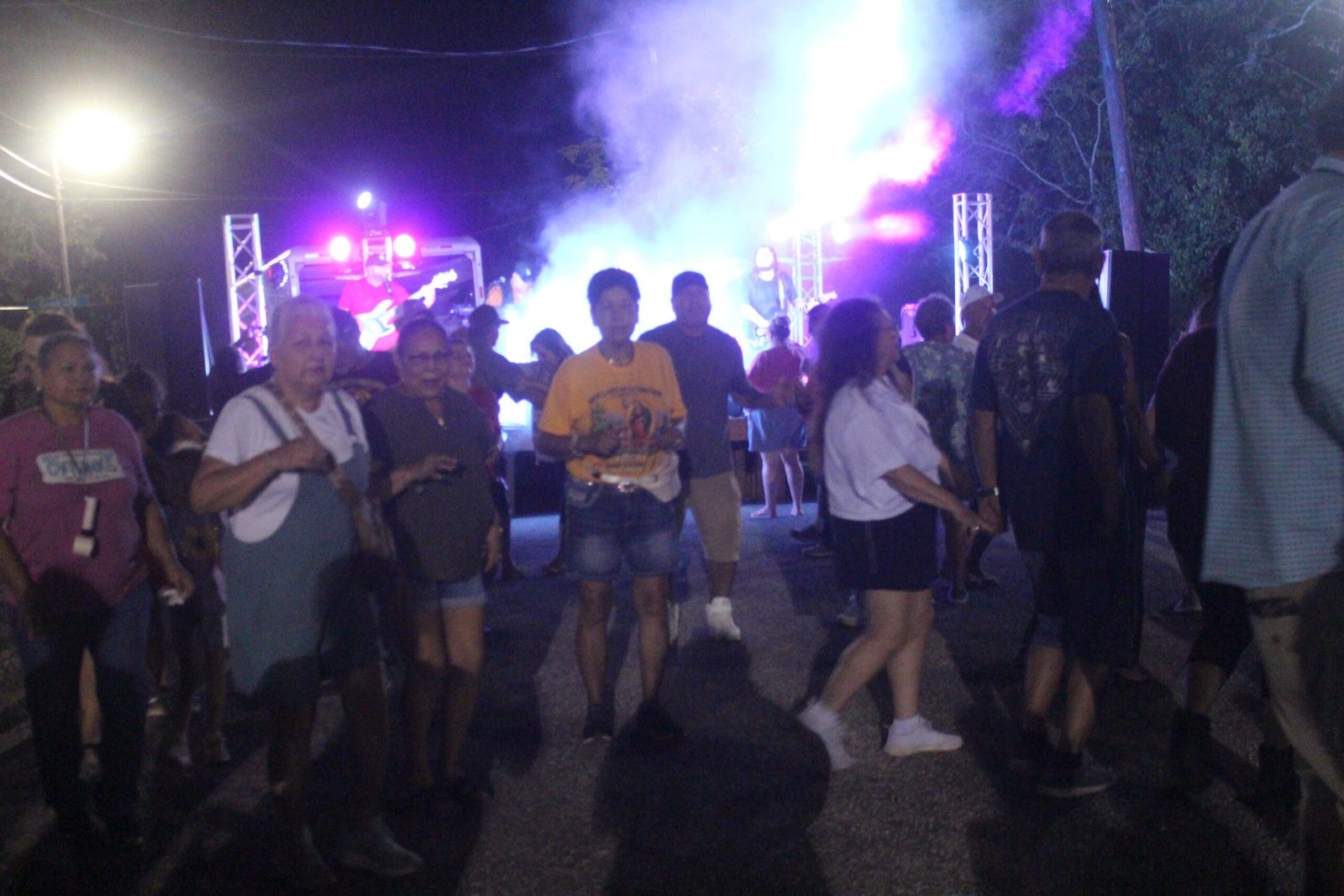
Music filled the church grounds throughout the afternoon and evening, adding to the festive atmosphere and reminding everyone why the Jamaica has long been known for its lively entertainment and cultural spirit.
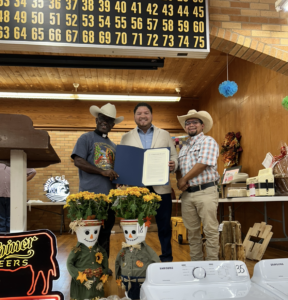
For many, the day stirred memories of earlier years — especially the era when the Hernandez family ran the Bingo booth, a favorite for generations. The prizes displayed in the center, the square bench where players gathered, and the excitement of calling out numbers created a familiar rhythm that parishioners still remember fondly.
The celebration also brought back thoughts of the pageantry that once defined the Jamaica, when queens were crowned and the community rallied around the tradition. Those moments of pride and ceremony remain part of the event’s history, adding to the sense of nostalgia felt throughout the centennial celebration.
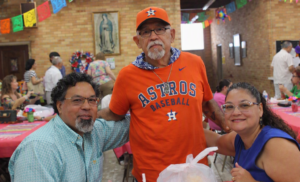
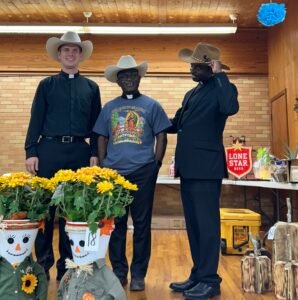
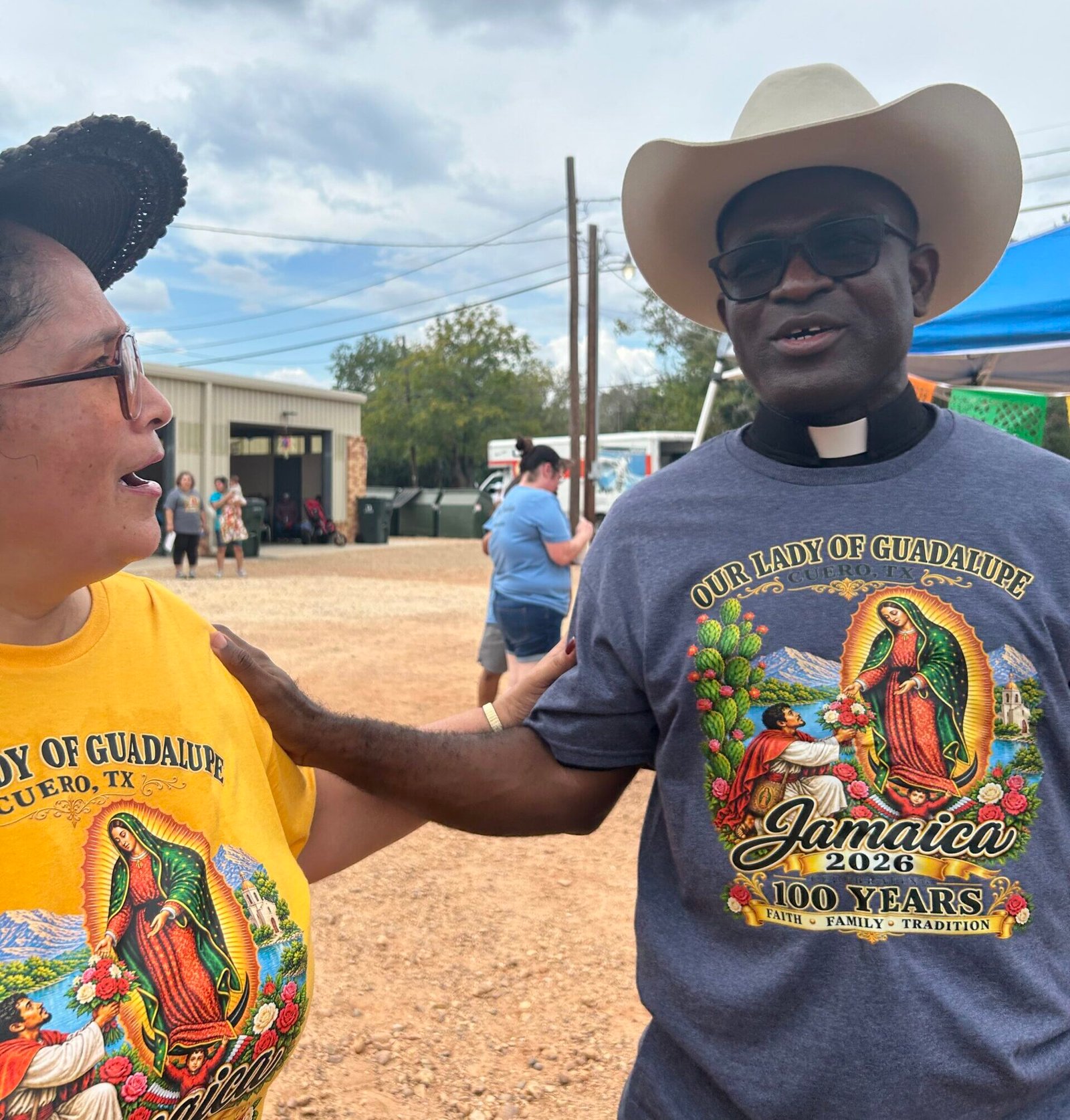
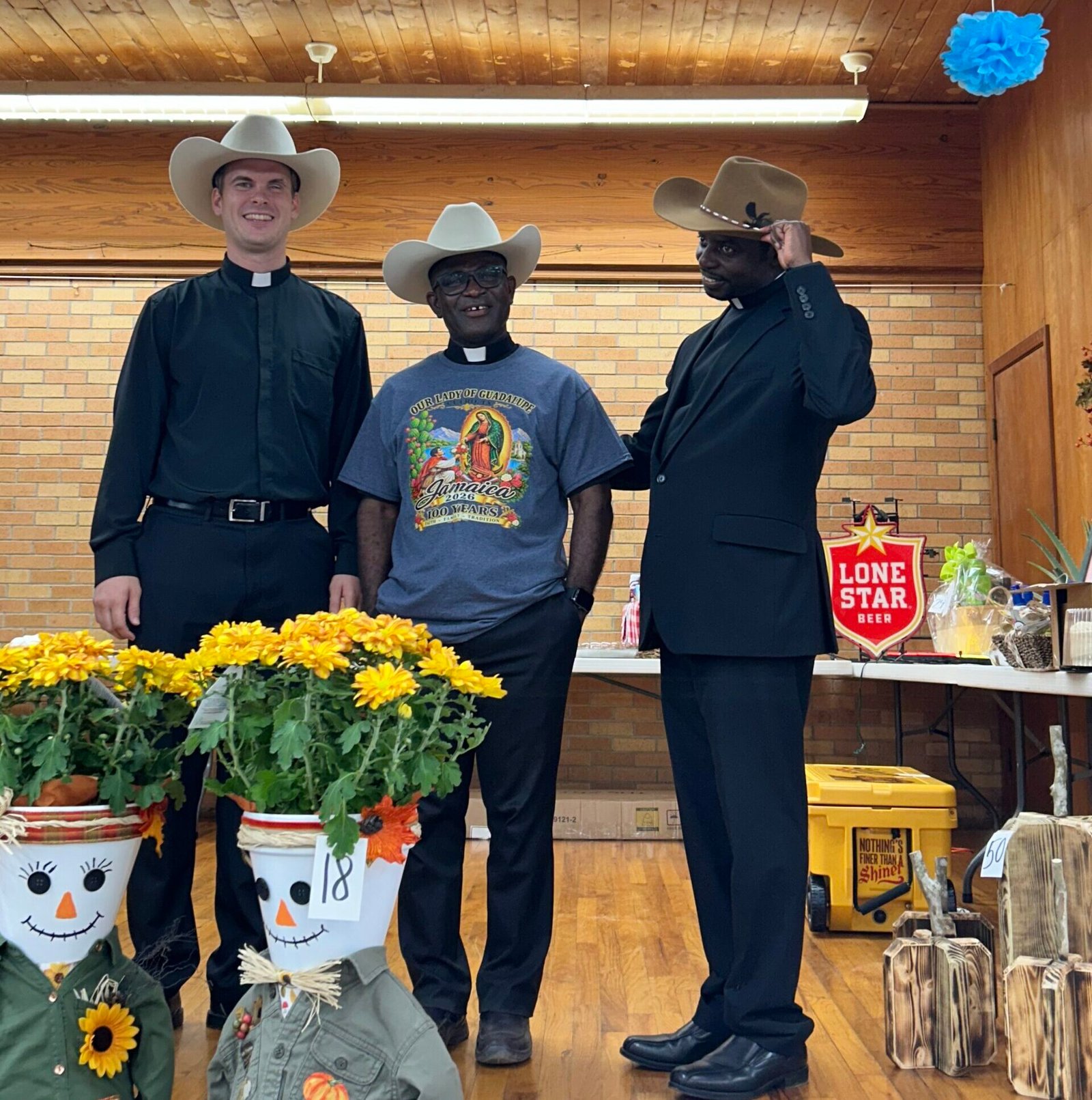
Los Tres Padres — Fr. Caleb Krischke, Fr. Michael Odartey‑Lamptey, and Fr. Richard — tipping their Texas hats to the Tejano spirit, surrounded by generations of parishioners who’ve kept this community’s faith strong and its traditions alive.
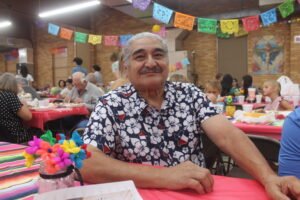
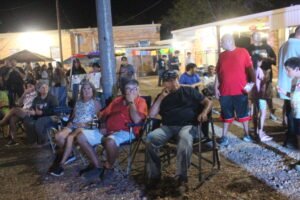
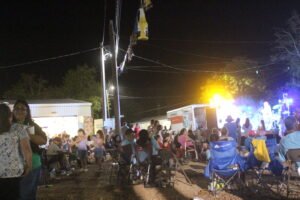
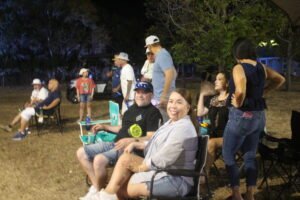
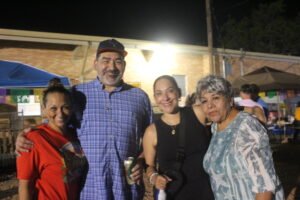
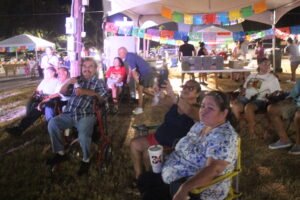
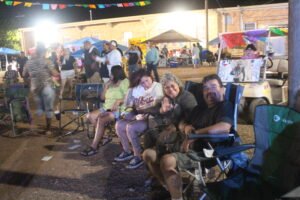
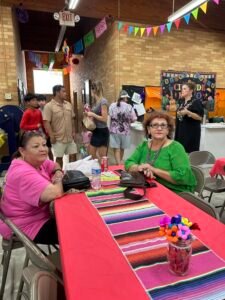
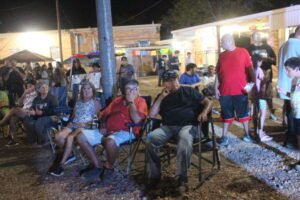
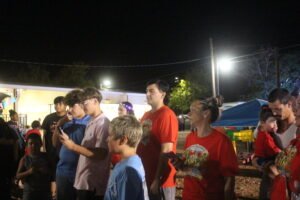
The centennial Jamaica offered more than activities and entertainment — it offered a sense of belonging. It was a day to see familiar faces, welcome those who have moved away and returned, and watch children experience the same joys their parents and grandparents once did. Despite the humidity and heat, the crowd’s spirit never faded.
As the parish celebrates its centennial year, the Jamaica continues to embody what has sustained Our Lady of Guadalupe for a century: faith, family, and community — carried forward by the people who show up year after year, and now by a new generation hopefully eager to keep the tradition alive.Gallery
Commissioner Ryan Varela
POLITICAL ADVERTISEMENT
Political Advertisement paid for by Pat Trevino Write-In Candidate for DeWitt County Judge. No campaign funds were used.
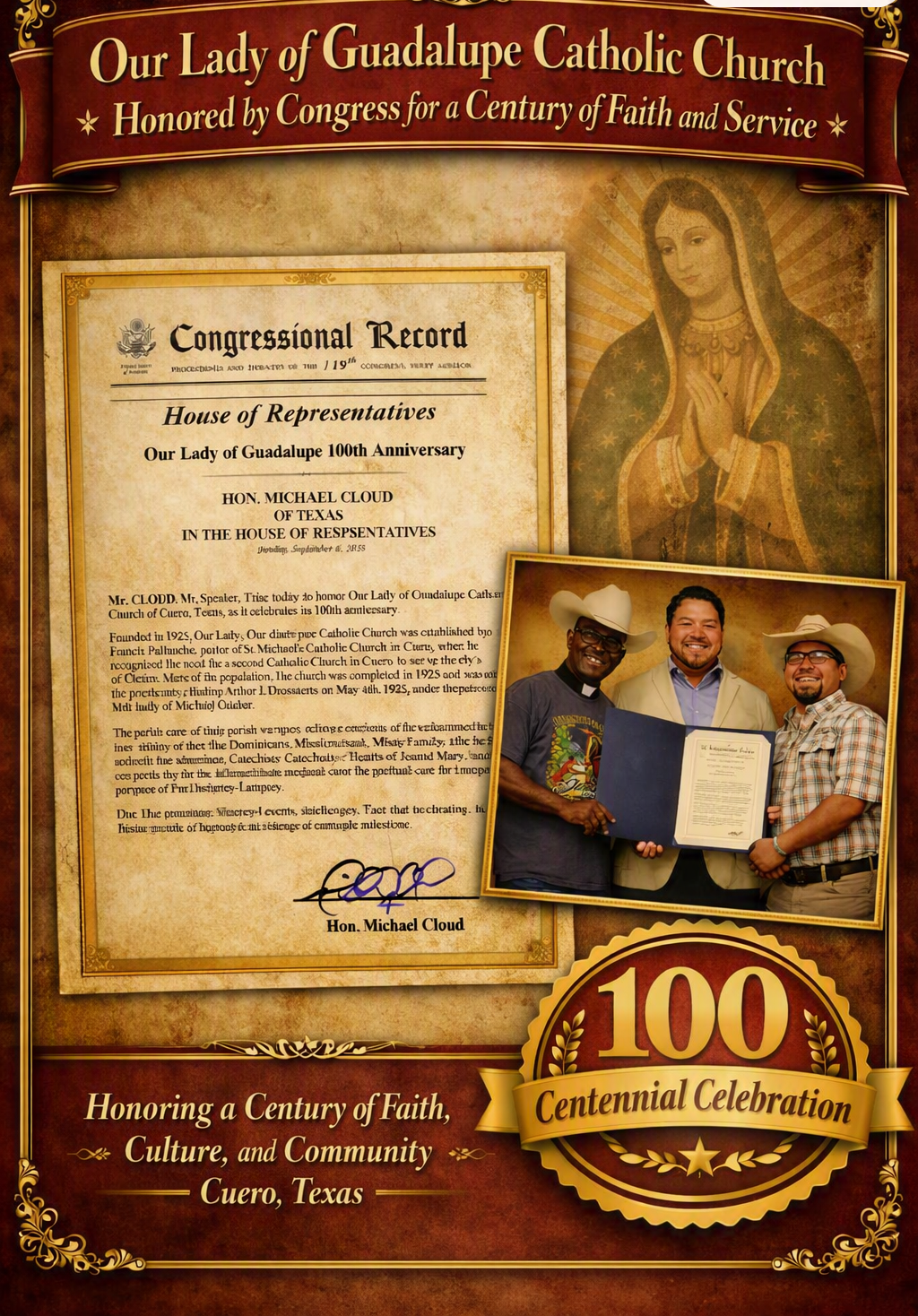
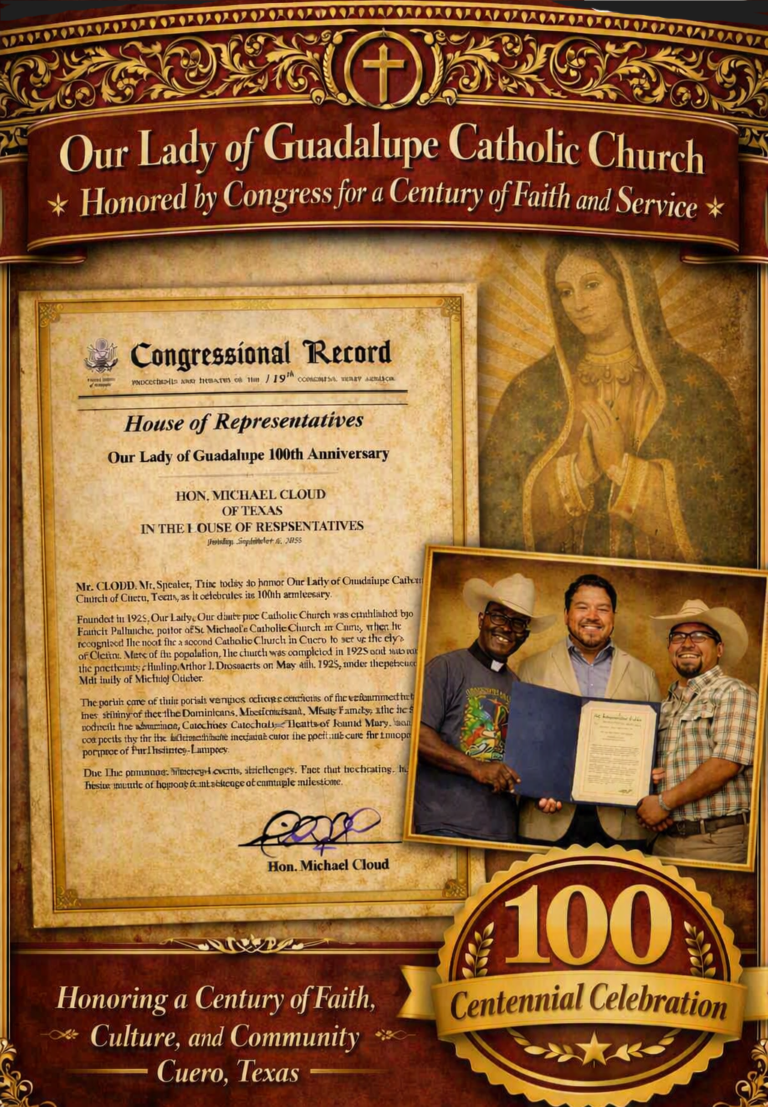
In a moment of enduring historical significance, Our Lady of Guadalupe Catholic Church of Cuero, Texas, was formally recognized by the United States House of Representatives in commemoration of its centennial celebration. The Congressional Record, presented by Congressman Michael Cloud, stands as a lasting tribute to the parish’s century‑long devotion, resilience, and cultural heritage.
Founded in 1925 by Fr. Francis Pallanche to serve Cuero’s Mexican American community, the parish became a cornerstone of faith and identity. Through fire, flood, and renewal, generations of parishioners rebuilt and carried forward the mission of Our Lady of Guadalupe, guided by the enduring spirit of service and unity.
The Congressional Record recounts this legacy — from the dedication of the first church by Bishop Arthur J. Drossaerts to the annual Jamaica celebrations that continue to unite the community in faith and fellowship. It honors the clergy, religious orders, and families whose steadfast devotion shaped the parish’s history.
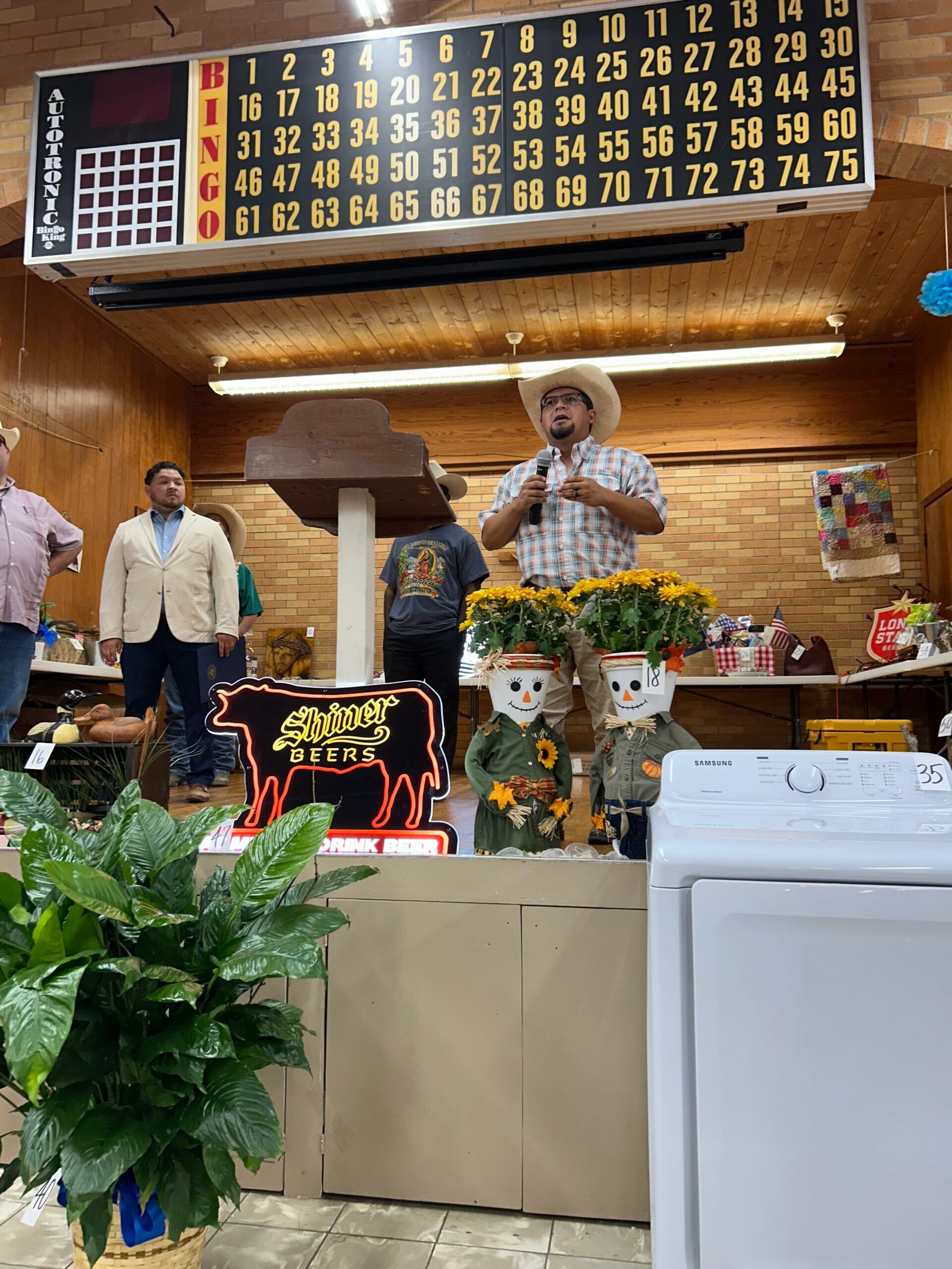
Commissioner Ryan Varela addresses the crowd from the stage at Our Lady of Guadalupe Parish Hall, speaking ahead of the auction and introducing Palacios, a member of Congressman Cloud’s team. Surrounded by the items set for bidding, Varela set the tone for the evening’s community celebration. (Photo by Pat Trevino)
This recognition was made possible through the efforts of DeWitt County Commissioner Ryan Varela, whose leadership and initiative were instrumental in preparing and submitting the application and supporting documentation for the Congressional acknowledgment. His contribution ensured that the parish’s century of faith and service received the national recognition it so richly deserves.
Presented during the recent OLG Jamaica held on September 6, 2026, as part of the parish’s centennial celebration, the Congressional Record stands as a symbol of enduring faith and the promise of generations to come. The parish’s story, now preserved in the official record of Congress, reflects the heart of Cuero itself — a community built on perseverance, compassion, and the grace of Our Lady of Guadalupe.
POLITICAL ADVERTISEMENT
Political advertisement. Paid for by Pat Trevino Write-In candidate for DeWitt County Judge. No Campaign funds were used.
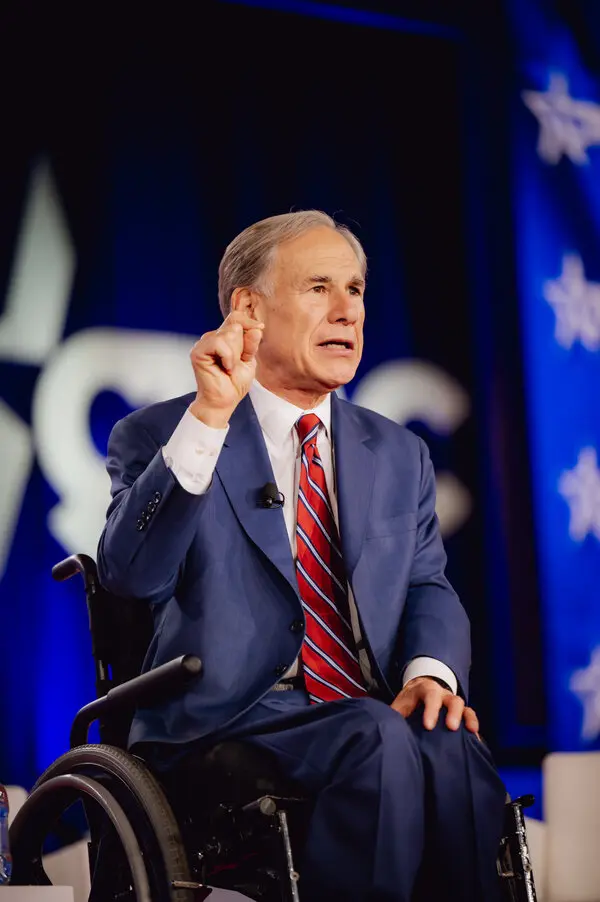
Gov. Greg Abbott’s newest round of campaign advertising delivers a blunt message: if your property taxes are rising, blame your local government. The ads insist that cities, counties, school districts, and special districts are responsible for every dollar on a homeowner’s bill, portraying them as reckless spenders undoing the “historic tax relief” he claims to have delivered. It is a message crafted for election season, simple enough to fit into a 30‑second spot, and sharp enough to redirect frustration away from Austin.
But the reality facing rural communities tells a very different story — one that Abbott’s ads never mention. While he publicly scolds local governments for rising taxes, his own policies have already inflicted deep financial harm on the very school districts that anchor rural Texas. And his push for vouchers, which he fought for across multiple legislative sessions, has placed rural schools in a more precarious position than ever.
The governor’s voucher campaign was not a side issue; it was the defining battle of the 2023 legislative year. When rural Republicans in the Texas House refused to support vouchers, arguing that they would drain resources from their already underfunded districts, Abbott responded by withholding support from major public‑school funding legislation. Bills that would have increased the basic allotment, provided teacher raises, strengthened rural‑district support, and expanded special‑education resources were left to stall or die as the voucher fight consumed the session. The basic allotment remained frozen at $6,160 — unchanged since 2019 — even as inflation, insurance costs, utilities, transportation, and staffing expenses surged.
Rural superintendents warned repeatedly that vouchers would destabilize their districts. They explained that rural communities do not have private schools to absorb students, meaning vouchers would simply siphon money out of public schools without offering families any real alternative. They pleaded for the Legislature to increase funding, not divert it. Their warnings went unheeded.
Now, as districts struggle with budget shortfalls, staff reductions, and rising operational costs, Abbott’s ads tell voters to blame local officials for the consequences. The governor’s message ignores the fact that school districts — especially rural ones — are operating under state‑imposed constraints, state‑mandated formulas, and state‑driven appraisal pressures. It ignores the unfunded mandates that counties and cities must absorb. And it ignores the political reality that the voucher fight itself blocked the funding increases schools desperately needed.
Political advertisement
Political Advertisement paid for by Pat Trevino Write-In Candidate for DeWitt County Judge.
And Here in DeWitt County, Abbott’s Message Points Directly at Your Local Officials — Even Though State Law Already Caps What They Can Do
When Abbott tells Texans to “blame your local government” for rising property taxes, he is pointing that finger squarely at the people who run DeWitt County: Judge Fowler, the Commissioners Court, our tax assessor‑collector Ashley Mraz, Sheriff Bowen, County Clerk Natalie Carson, as well as any elected and appointed officials who keep the city and county functioning day to day. His ads imply that these local leaders are freely raising taxes, overspending, or ignoring the needs of taxpayers.
But Abbott’s message leaves out one critical fact: the State of Texas already imposes strict caps on how much counties, cities, and school districts can raise property tax revenue. Local politicians cannot simply raise taxes at will — even if they wanted to. Since 2019, Texas law has limited most local governments to 3.5% revenue growth per year without voter approval. School districts are capped even tighter. If a county or city exceeds the cap, the law forces an automatic election so voters can decide.
That means Judge Fowler and the Commissioners Court are already operating under one of the strictest local‑government tax caps in the country. They cannot legally raise your property taxes beyond the state‑mandated limit unless you, the voter, approve it. Abbott knows this. His Legislature passed it. Yet his ads pretend the cap does not exist.
So when Abbott tells Texans that “local governments are hiking your taxes,” he is blaming officials who are legally prohibited from doing what he accuses them of. He is shifting responsibility away from the state’s appraisal system, away from the state’s school finance formulas, and away from the voucher fight that blocked school funding — and placing it on the shoulders of local leaders who are already constrained by Austin.
And the irony is impossible to ignore: many of these same local officials publicly support Abbott, and you see them standing in photo opts beside the very lawmakers who have their foot on their necks. It raises a legitimate question about whether some of them fully understand how state‑imposed caps and mandates actually work. They allow the governor and the Legislature to make misleading claims about them without correcting the record for the public. That silence goes directly against their own self‑interest — and against the public’s interest — simply because they feel compelled to play the political game. It is baffling, and it deserves to be called out.
The Public Deserves to Know Who Helped Create This Crisis
And the public deserves to know exactly who helped put rural communities in this situation. Sen. Lois Kolkhorst voted FOR the statewide voucher bill — a vote that directly contributed to the budget shortfalls and layoffs now hitting rural school districts. Rural superintendents warned this would happen. They said vouchers would drain money from public schools that have no private alternatives. They said rural districts would be hurt first and worst.
Kolkhorst ignored those warnings and voted for vouchers anyway. That is not an opinion — that is her recorded vote. And voters in DeWitt County deserve to know who supported a policy that stripped resources from their schools and left local officials scrambling to manage the fallout.
Rep. A.J. Louderback, who now represents DeWitt County in the Texas House, was not yet in office during the earlier voucher votes — but he is closely aligned with the statewide officials who pushed the voucher agenda, and his current positions will directly affect future school‑funding decisions considering he is closely aligned with:
Ken Paxton
Dan Patrick
MAGA-aligned statewide officials
Plain Talk: Silence Is a Choice
When local governments hide the truth, they don’t protect themselves — they just let the damage keep piling up. Our local officials need the backbone to tell Governor Abbott directly that they don’t appreciate being blamed for something state law won’t even allow them to do. And if they won’t stand up and say it, then they need to accept whatever fallout comes from their own constituents. Silence is a choice, and people will read it that way.
Communities like Cuero deserve honesty about why their tax bills look the way they do. They deserve leaders who will speak openly about the consequences of state policy, not quietly accept blame for problems they did not create. And they deserve a property tax system built on transparency and cooperation, not blame‑shifting and political pressure.
When local governments hide the truth, they do not protect themselves. They simply allow the damage to continue.
(This is an editorial. The opinions expressed are the author’s, but all legislative votes and factual claims cited in this piece are accurate and supported by official public records.)








 Gallery