Home Blog Page 61

Celebrating Hispanic Heritage Month: Honoring the Legacy of David L. Ruiz

Staff Writer | September 15, 2025

From September 15 to October 15, communities across the nation observe Hispanic Heritage Month, a time to recognize the rich histories, cultures, and contributions of Hispanic Americans. In Cuero, Texas, this month carries special meaning as Cuero Online News honors the life and legacy of David L. Ruiz, a beloved public servant, faith leader, and advocate for the underserved.

David Ruiz, who passed away in November 2023, embodied the spirit of Hispanic Heritage Month through decades of tireless service. Born and raised in Cuero, Ruiz served six years on the Cuero City Council, where he championed inclusive policies and helped bring the Texas Department of Criminal Justice to the area—an effort that expanded local employment and infrastructure. He was also instrumental in founding the Cuero Youth Center, creating a safe and empowering space for young people.

His civic engagement extended beyond city hall. Ruiz led voter registration drives that earned recognition from Governor Ann Richards, and he served as a delegate to the Texas Democratic Convention, ensuring that Cuero’s voice was heard at the state level.

But Ruiz’s impact wasn’t limited to politics. As a member of Our Lady of Guadalupe Catholic Church, he guided the bereavement committee, organized funeral dinners, and supported families during their most difficult moments. He also served as Scout Master for Troop 244, president of the Annual Jamaica Festival, and a volunteer with Habitat for Humanity, helping expand housing access for those in need.

Whether driving a school bus for Cuero ISD, running his local bait shop, or mentoring youth, David Ruiz lived a life of quiet leadership and unwavering compassion. His legacy is a reminder that Hispanic heritage is not just about cultural pride—it’s about service, stewardship, and standing up for those without a voice.

This Hispanic Heritage Month, Cuero Online News honors David L. Ruiz not only for what he did, but for how he did it—with humility, faith, and fierce dedication to his community. His story is Cuero’s story, and his legacy continues to inspire.

Correction: [instead of city replaced with Cuero Online News] – Sept 16, 2025 @10:13pm

Charlie Kirk’s Death and the Convenient Amnesia of Mainstream Media

By Pat Trevino | September 15, 2025

In the aftermath of Charlie Kirk’s assassination, Republican leadership and right-wing media outlets leaned hard on a familiar scapegoat: “the left.” The implication was swift and politically convenient—liberals, Democrats, LGBTQ individuals, and racial minorities were blamed for the ideological chaos. But this framing isn’t just lazy. It’s a calculated deflection from the real fracture threatening not only our country but the Republican Party: its own internal war.  People keep forgetting the left is the party pushing for gun control.  We’re the party who are outraged that children are being killed because Republicans don’t want to discuss gun control.  And yet Pam Bondi and mainstream media are blaming the radical left.  WE DON’T HAVE A RADICAL LEFT. 

If by “radical left” they mean the faction within the Republican Party itself, then they’re absolutely right.  But blaming Democrats creates a dangerous ideological disconnect-especially given what’s unfolding in the media around Kirk’s assassination.  The Republican President, a Republican-led FBI, and right-leaning media outlets are spinning this narrative to deflect responsibility and redirect public outrage.  It’s a calculated misdirection, and frankly, I shouldn’t be surprised given the way in which President Trump made accusation without evidence. 

Mainstream coverage did not rush to unpack the ideological feud behind Kirk’s death. Early reports leaned on vague references to “political violence,” while MAGA-aligned voices flooded social media with cries of “Civil War.” Within hours, critics of Kirk were doxxed, harassed, and in some cases fired from their jobs. Bomb threats targeted several universities with predominantly minority student populations. The tactics weren’t just punitive—they were ideological enforcement, punishing anyone who refused to conform to the movement’s increasingly rigid Christian nationalist framework and its dangerous march toward authoritarian control.

(Pictured left to Right Pepe the Frog, Taylor Robinson and Nick Fuentes) Robinson left behind cultural traces and digital cues that suggest proximity to Groyper ideology, but not formal affiliation. Clearly more evidence linking him to White Christian Nationalist circles versus anything resembling leftist or Democratic ideology. The breadcrumbs are clear: meme references, online behavior, and symbolic gestures that echo Groyper culture. But there’s no manifesto, no formal membership, and no declared ideology. It’s not a smoking gun—it’s a residue trail. The kind that extremist movements specialize in irony, plausible deniability, and cultural signaling that’s just loud enough to be recognized, but quiet enough to be denied.

Rep. Chip Roy and other Republicans have ramped up efforts to discredit the Southern Poverty Law Center—especially after SPLC included Charlie Kirk’s Turning Point USA in its latest report on hate and extremism. Rather than confronting the documented rise of far-right and white nationalist movements, they’ve flipped the narrative: accusing SPLC of being part of an anti-American agenda. It’s a calculated tactic, designed not to challenge extremism but to silence one of the few organizations still tracking it. In this reversal, SPLC isn’t just criticized—they’re blamed for the very hate they expose.

Meanwhile, Utah Governor Spencer Cox stood beside FBI officials and admitted what many were privately thinking: “I kept praying, please don’t let it be one of our own.” His words—raw and revealing—acknowledged the uncomfortable possibility that the shooter might be white, conservative, and ideologically adjacent to Kirk himself.

It wasn’t until independent and international outlets began reporting on social media speculation that the public learned of Tyler Robinson’s alleged ties to Nick Fuentes and the Groyper movement—a faction that had long branded Kirk a traitor to their extremist cause. Whether mainstream media deliberately withheld this context or simply failed to investigate, the result was a dangerously incomplete narrative. The truth isn’t just inconvenient—it’s deeply unsettling.

Robinson’s bullet casings were inscribed with cryptic messages drawn from far-right meme culture, including antifascist references that Groypers have co-opted and distorted. His social media history included coded language and visual cues associated with Groyper subculture. He also appeared in a Facebook photo mimicking the “Slav squat” pose popularized by 4chan, wearing a black Adidas tracksuit—a visual echo of the Pepe-style frog imagery Groypers use to signal affiliation. While law enforcement has not confirmed formal membership, these symbols, references, and Robinson’s documented disdain for Kirk align with the Groyper movement’s long-standing hostility toward him.

Yet instead of connecting these dots, mainstream media gave airtime to Fuentes’s denial—allowing him to claim he was being “framed” by the press, while ignoring his years of inciting hostility toward Kirk and encouraging followers to disrupt his events. Why aren’t they taking that into consideration.  Kirk and Fuentes had bad history together.  Authorities have the proof, but nah! it’s much easier to blame it on the Democrats. This wasn’t just a missed opportunity for truth—it was a failure of editorial courage.

Image of Groypers www.isdglobal.org

The Groypers didn’t just emerge from MAGA—they’ve been at war with it. Led by white nationalist Nick Fuentes, they’ve spent years heckling Kirk at Turning Point USA events, accusing him of being too moderate, too pro-Israel, and too inclusive. Kirk wasn’t targeted by political opponents across the aisle. It wasn’t Democrats or liberals who followed him from campus to campus, disrupting events and sowing chaos. He was targeted by extremists within his own ideological neighborhood. This wasn’t fringe-on-fringe violence. It was ideological cannibalism.

Republican elites continue to weaponize the term “left” as a catch-all for dissent. In their rhetorical shell game, anyone who challenges the party’s radical flank becomes “the left”—even if they’re lifelong Republican conservatives.  This tactic masks a deeper truth: the GOP is hemorrhaging unity, and the most dangerous insurgents aren’t Democrats—they’re Republicans who’ve abandoned any pretense of shared values.

By refusing to name their own extremists, Republican leaders protect their base while scapegoating the opposition. And the media plays along, parroting the “leftist threat” while ignoring the right-wing purges happening in plain sight. Kirk’s death becomes sanitized: a lone extremist, a tragic loss, and no reckoning.

The truth is more complicated. Charlie Kirk wasn’t killed by political enemies from the other side—he was targeted by people from within his own movement. This wasn’t about Democrats vs. Republicans. It was a sign of deep division inside the Republican Party itself. If the media wants to be honest, they need to stop blaming outsiders and start telling the real story: the Republican Party is so divided it’s begun to devour its own.


What investigators are saying: Pam Bondi’s rush to label Robinson a product of “leftist ideology” isn’t just premature—it’s politically convenient. With no manifesto, no group affiliation, and no coherent belief system, the accusation rests on cultural shorthand, not evidence. This is how the term “leftist” gets weaponized: not to describe a worldview, but to trigger fear. It’s a distraction tactic, and it masks a deeper fracture within the GOP itself.
By scapegoating the SPLC and invoking vague ideological threats, they’re not fighting extremism. They’re enabling it.

Gospel Fest Returns to Cuero for a Soulful Day of Music and Community

By Staff Writer
September 15, 2025

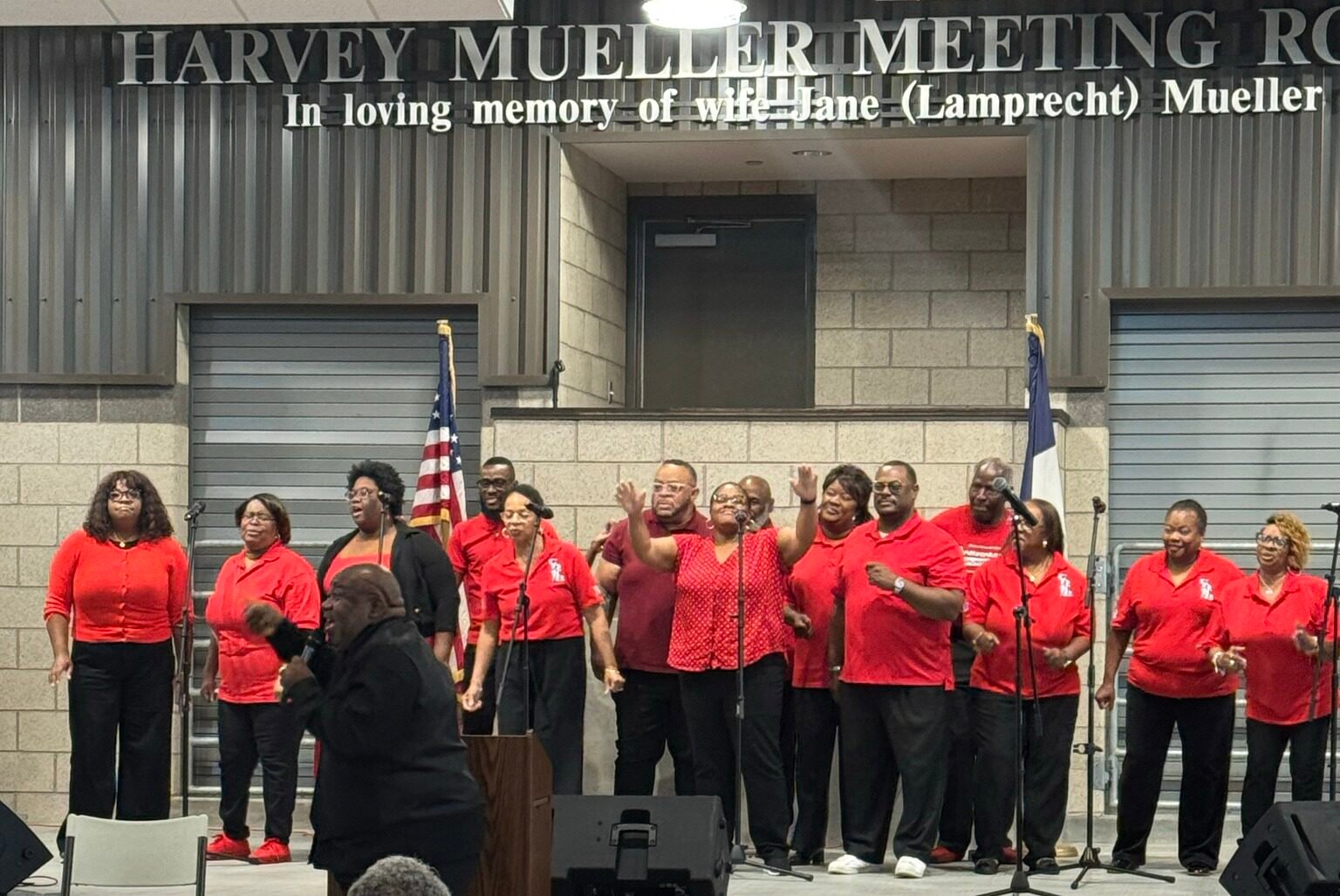
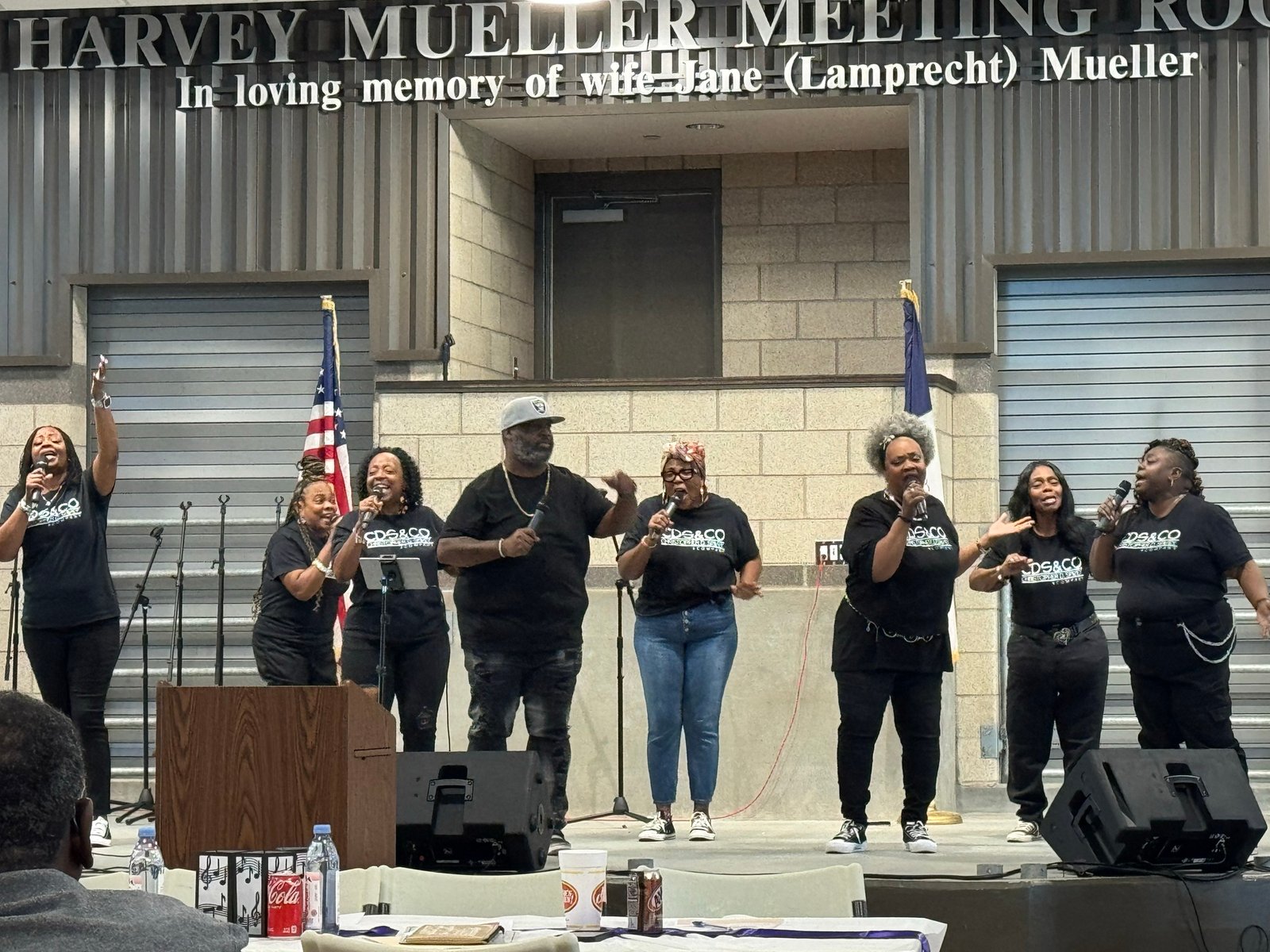
CUERO, TX — The Restoration Foundation Celebration is bringing back one of Cuero’s most uplifting traditions: the Gospel Fest, now entering its fourth year. Set for Friday, October 11, the event promises an afternoon filled with inspiring music, local vendors, and joyful fellowship at the Friar Ag Center.

Running from 1:00 PM to 6:30 PM, the day kicks off with vendor booths open from 1:00 to 2:30 PM, offering attendees a chance to shop, connect, and support local businesses. The main program begins at 2:30 PM, featuring a lineup of gospel performances and entertainment designed to restore the mind, body, and soul.

Organizers describe the event as a “joyful restoration,” inviting families, faith communities, and music lovers to come together in celebration. The Gospel Fest is part of Day 2 of the Restoration Foundation Celebration, a multi-day event focused on healing, unity, and spiritual renewal.

Held at the Friar Ag Center, located off US Highway 87 in Cuero, the venue offers ample space for attendees to enjoy the festivities in a welcoming and spirited atmosphere.

More details, including the performance lineup and vendor list, will be released as the event approaches. For updates, follow local community boards or contact the Restoration Foundation directly.

Mark your calendars—this is one celebration you won’t want to miss. 🎶

Connect to Hunt Elementary Family Newsletter

Click the link below to connect with what is happening at Hunt Elementary School:

Hunt Elementary Family Newsletter

Table of Contents

  • Gardening with Grandparents
  • Friendly Reminders/Updates
  • HuntElementaryBullyBuster/KindnessClub
  • District and Campus Events


Terry Lee Koehler – April 11, 1956 to September 13, 2025 (69)

0

Terry Lee Koehler was born on April 11, 1956, in Corpus Christi, Tx to Denton Ray “Buddy” and Mary (Kirchoff) Koehler. He went home to be with the Lord on Saturday September 13, 2025, after a long battle with cancer.

The Houston Astros lost a die-hard fan. Terry was amazing the way he could quote Stats on most any player on the team. He absolutely loved baseball and as a youth pitched, taking his team to the playoffs one game shy of the Little League World Series.

Terry spent 27 years working at Valero refinery both in Corpus and Houston. He was a team player in his job as well. His co-workers loved him, not just for his knowledge of baseball but also his knowledge of his job and willingness to share that knowledge.

Terry retired early so he could care for his parents in their aging years, this was time spent that he really enjoyed. Anyone who knows Terry knows his giving heart and his desire to care for others. Family meant everything to Terry, his love for his 3 sons, 7 grandchildren, who affectionately called his Papau (a name he was very proud of), and he loved his brother and sister very much.

Survivors of he and his former wife, Diane (Walker) Koehler, are sons Robert Dale and Ashley Koehler of Magnolia, Benjamin David and Linda Koehler of New Braunfels, Jonathan Duane and Elizabeth Koehler of Spring, and 7 grandchildren. Terry is also survived by his sister Diana Lynn Hughes of Gillett and brother Jeffrey Glenn and Judy Koehler of Seguin.

Terry is preceded in death by his parents.

Visitation will be held on Wednesday, September 17, 2025, from 5-7 pm at Massey Funeral Home in Yorktown, Tx. Funeral Service will begin at 10 am Thursday, September 18, 2025, at Massey Funeral Home with Rev. Tim Muehlbrad officiating. Interment to follow at Nordheim Cemetery.

Honoring Culture and Legacy: Hispanic Heritage Month

Staff Writer | September 15, 2025

Each year, from September 15 to October 15, the United States observes Hispanic Heritage Month, a vibrant celebration of the histories, cultures, and contributions of Americans whose ancestors came from Spain, Mexico, the Caribbean, and Central and South America. The timing is no accident—it aligns with the independence anniversaries of several Latin American nations, making it a month rich in historical resonance.

  • 1968: Hispanic Heritage Week was first established by President Lyndon B. Johnson, during the height of the civil rights movement, to recognize the growing influence of Hispanic communities.
  • 1988: President Ronald Reagan signed legislation expanding the observance to a full month.
  • 1989: President George H. W. Bush issued the first official proclamation for Hispanic Heritage Month.

The start date, September 15, was chosen because it marks the independence day for five Central American countries:
🇨🇷 Costa Rica
🇸🇻 El Salvador
🇬🇹 Guatemala
🇭🇳 Honduras
🇳🇮 Nicaragua

Mexico celebrates its independence on September 16, Chile on September 18, and Belize on September 21.

There are 21 countries considered Hispanic, defined by Spanish being their official language and cultural heritage rooted in Spain. These include:

Region Countries
North America Mexico
Central America Costa Rica, El Salvador, Guatemala, Honduras, Nicaragua, Panama
South America Argentina, Bolivia, Chile, Colombia, Ecuador, Paraguay, Peru, Uruguay, Venezuela
Caribbean Cuba, Dominican Republic, Puerto Rico
Europe Spain
Africa Equatorial Guinea

While Latino refers to people from Latin America (including non-Spanish-speaking countries like Brazil), Hispanic is tied to Spanish language and heritage. The distinction matters, especially in cultural and political contexts.

Hispanic Heritage Month is more than a calendar event—it’s a national acknowledgment of the profound impact Hispanic Americans have had on every facet of society:

  • Arts & Music: From salsa to muralism
  • Politics & Advocacy: Civil rights leaders and elected officials
  • Science & Innovation: Pioneers in medicine, engineering, and space
  • Military Service: Over 60 Hispanic Americans have received the Medal of Honor

It’s also a time to reflect on the diversity within Hispanic communities—Chicano, Afro-Latino, Indigenous, and more—and to honor the resilience and richness of cultures that have shaped the American experience.

Cuero Event Celebrates Native Plant Month with Tree Care Workshop

Staff Writer | September 15, 2025

In celebration of Native Plant Month, Keep Cuero Beautiful is hosting an educational event focused on the proper care of two beloved Texas trees: oaks and crepe myrtles. The workshop, titled “Proper Care of Trees: Oaks & Crepe Myrtles,” will take place on Thursday, September 18th at the Cuero Library.

🌳 Event Details

  • Coffee & Networking: Begins at 9:30 a.m.
  • Program Start: 10:00 a.m.
  • Location: Cuero Library
  • Speaker: Anthony Netardus, DeWitt County AgriLife Extension Agent

Anthony Netardus, known for his practical expertise and community engagement, will lead the session. Attendees are encouraged to bring questions, as the program aims to provide hands-on guidance for maintaining healthy trees in the South Texas climate. Whether participants are seasoned gardeners or new to native landscaping, the event promises valuable insights into seasonal care, pruning techniques, and disease prevention.

🌿 Community Engagement
Keep Cuero Beautiful continues its mission to promote environmental stewardship through accessible education and local partnerships. This tree care workshop is part of a broader effort to encourage sustainable landscaping practices and celebrate the ecological heritage of the region.

For more information, residents can contact Keep Cuero Beautiful at 361-275-2112.

Whispering Oaks Hosts Fall Harvest Festival to Celebrate Community and Autumn Joy

0

September 15, 2025

Cuero residents are invited to mark their calendars for a heartwarming afternoon of seasonal celebration at the upcoming Fall Harvest Festival, hosted by Whispering Oaks Rehab & Nursing. The event will take place on Friday, October 3rd from 2 PM to 4 PM at 105 Hospital Drive, bringing together families, staff, and community partners for a festive gathering filled with joy and connection.

Guests can look forward to a variety of activities including games, crafts, music, and delicious snacks, all set against a backdrop of autumn colors and community spirit. The team at Whispering Oaks has partnered with local organizations to make this year’s festival extra special, ensuring that every visitor—from young children to longtime residents—feels welcomed and celebrated.

Whether you’re a longtime Cuero local or new to the area, the Fall Harvest Festival offers a perfect opportunity to connect, celebrate, and support the mission of Whispering Oaks Rehab & Nursing. For more information, contact Krystal Galindo at 361-243-6571.

Are You Raising the Next Tyler Robinson?

What Studies Reveal About White Youth Radicalization in Conservative Households

Tyler Robinson didn’t grow up in chaos.
He wasn’t raised in poverty.
He wasn’t groomed by gangs or foreign ideologies.
He was raised in a white, conservative, Christian household—by parents who believed they were doing everything right.

His father was in law enforcement.
His family attended church.
They watched the news, voted Republican, and taught him to fear the world outside their values.

And then Tyler picked up a gun and killed Charlie Kirk—a man from his own movement. His own ideological tribe.

This wasn’t a fluke. It was a pattern. And the data backs it up.


What the Studies Say

According to the Southern Poverty Law Center’s Youth Radicalization in Focus report, young white males are increasingly radicalized in environments where exclusionary beliefs are normalized. The study found that:

  • Parents and caregivers often unknowingly reinforce extremist narratives through fear-based moral teachings, political media, and religious absolutism
  • Youth radicalization is rarely sudden—it’s a slow process shaped by family values, online exposure, and cultural grievance
  • Online hate spaces targeting white youth are thriving, often disguised as patriotism or faith-based communities

The National Institute of Justice confirms that far-right extremism now outpaces all other forms of domestic terrorism. Since 1990, far-right extremists have committed more than 227 ideologically motivated attacks, resulting in over 520 deaths—far more than attacks from far-left or Islamist groups.

A 2024 thesis from Saint Mary’s University further explored the emotional traits of radicalized white youth, finding that feelings of isolation, entitlement, and suppressed rage were common among members of groups like the Proud Boys and America First.


The Homegrown Threat

Parents who believe their homes are immune to radicalization often overlook the slow drip of ideology:

  • Sermons that preach fear instead of grace
  • Cable news that turns empathy into weakness
  • Dinner table rants that make difference feel like danger
  • Online spaces that reward outrage and dehumanization

Tyler Robinson didn’t become a killer overnight.
He was groomed—by a culture that told him his way of life was under attack, and that violence was a righteous defense.


What Parents Must Ask

Are we raising children to be resilient—or rigid?
Are we teaching them to coexist—or to conquer?
Are we modeling empathy—or enforcing purity?

Because if we keep telling our sons that:

  • Gays are ruining America
  • Muslims are infiltrating
  • Mexicans are invading
  • Democrats are evil
  • Empathy is weakness

Then we shouldn’t be surprised when they crack.
When they pick up a gun.
When they become the next Tyler Robinson.


The Real Question

Are you raising your child to live in the world as it is—or to destroy it because it doesn’t match the script?

Until we confront that question, we’re not just failing our kids.
We’re building the next tragedy.


SOURCES:

Key Statistics on Domestic Terrorism & White Nationalist Violence

  • Far-right extremists have committed far more ideologically motivated homicides than far-left or radical Islamist extremists since 1990. One study counted 227 far-right attacks resulting in over 520 deaths, compared to 42 far-left attacks causing 78 deaths.
  • From 2001 to 2016, there were 85 deadly attacks by violent extremists in the U.S. Most were carried out by far-right actors, though attacks linked to jihadist extremists caused more deaths overall due to events like 9/11.
  • The National Institute of Justice found that militant white supremacist extremism has outpaced all other forms of domestic terrorism in recent years. Their research highlights how radicalization is often fueled by online communities, ideological grievances, and perceived threats to identity.
  • Prior to 2017, white nationalist groups were being actively monitored by federal agencies. The FBI and DHS had issued multiple warnings about the growing threat of far-right extremism.
  • But once Trump took office, resources and attention shifted. Programs focused on countering violent extremism were restructured or defunded, and official rhetoric often downplayed the threat of white nationalist violence—even after events like Charlottesville.
  • A 2020 thesis from Johns Hopkins argued that the U.S. lacks a coherent strategy to combat domestic terrorism, especially white nationalist violence. It called for federal legislation to criminalize domestic terrorism and address systemic failures in counterterrorism policy.

    • Lone Wolf Report: SPLC’s 2015 study found that 74% of domestic terror incidents between 2009–2015 were carried out by lone actors or small cells—making them harder to detect and disrupt. The report warned that domestic terrorism was being overshadowed by the focus on foreign jihadist threats. (*And now on our focus on the border and ICE raids)
    • Presidential Transition Priorities (2020): SPLC flagged that white supremacist extremists were responsible for the majority of domestic terror deaths in 2019, the deadliest year since the Oklahoma City bombing. They urged the federal government to confront the mainstreaming of white nationalism and dismantle institutions that reflect white supremacist ideology.
    • Annual Hate & Extremism Reports: SPLC tracks hate groups, including white nationalist, neo-Nazi, and anti-government militias. Their recent reports show a surge in far-right organizing, disinformation campaigns, and threats to election workers.

    Psychology Studies on Radicalization & Extremism

    Here are three standout studies that dig into the psychological roots of extremist behavior:

    1. Rational Emotive Behavioral Conceptualization
      • Radicalization involves irrational beliefs, absolutist demands for fairness, and intolerance of uncertainty.
      • Extremist ideologies often appeal to individuals seeking control or significance in chaotic environments.
      • Full study PDF
    2. Significance Quest Theory (Kruglanski et al.)
      • Radicalization is driven by a deep need for personal significance.
      • Violence becomes justified when it’s framed as a path to meaning or group belonging.
      • Social networks and ideological echo chambers reinforce this process.
      • Full study PDF
    3. Social-Developmental Model of Radicalization (Beelmann, 2020)
      • Early life adversity, authoritarian personality traits, and exposure to group discrimination increase susceptibility.
      • Radicalization unfolds in three stages: developmental risk, ideological adoption, and behavioral action.
      • Intervention is most effective between ages 8–12, when prejudice and identity formation begin.
      • Psychology Today summary

By: Concerned Citizen

Editor’s Note from Cuero Online News:
This article was submitted by a contributor who requested anonymity. The author identifies as a concerned citizen and chose not to disclose their name publicly, citing personal safety and the sensitive nature of the topic. Cuero Online News respects this decision and has verified the submission in accordance with our editorial standards.